THE AUSTRALIA ROOMAustralian computing heritage

THE AUSTRALIA ROOM / THE COLLECTION

The Gear.

Meet the machines.
And the things that made them useful.

Australian computing, seen up close: computers, screens, modems, software and the printed record around them.

The collection: 105 entries · 134 selected photographs.
Names come from visible labels and linked references. Uncertain identifications are marked. Dates and specifications of individual examples are not assumed.

Browse the collection ↓
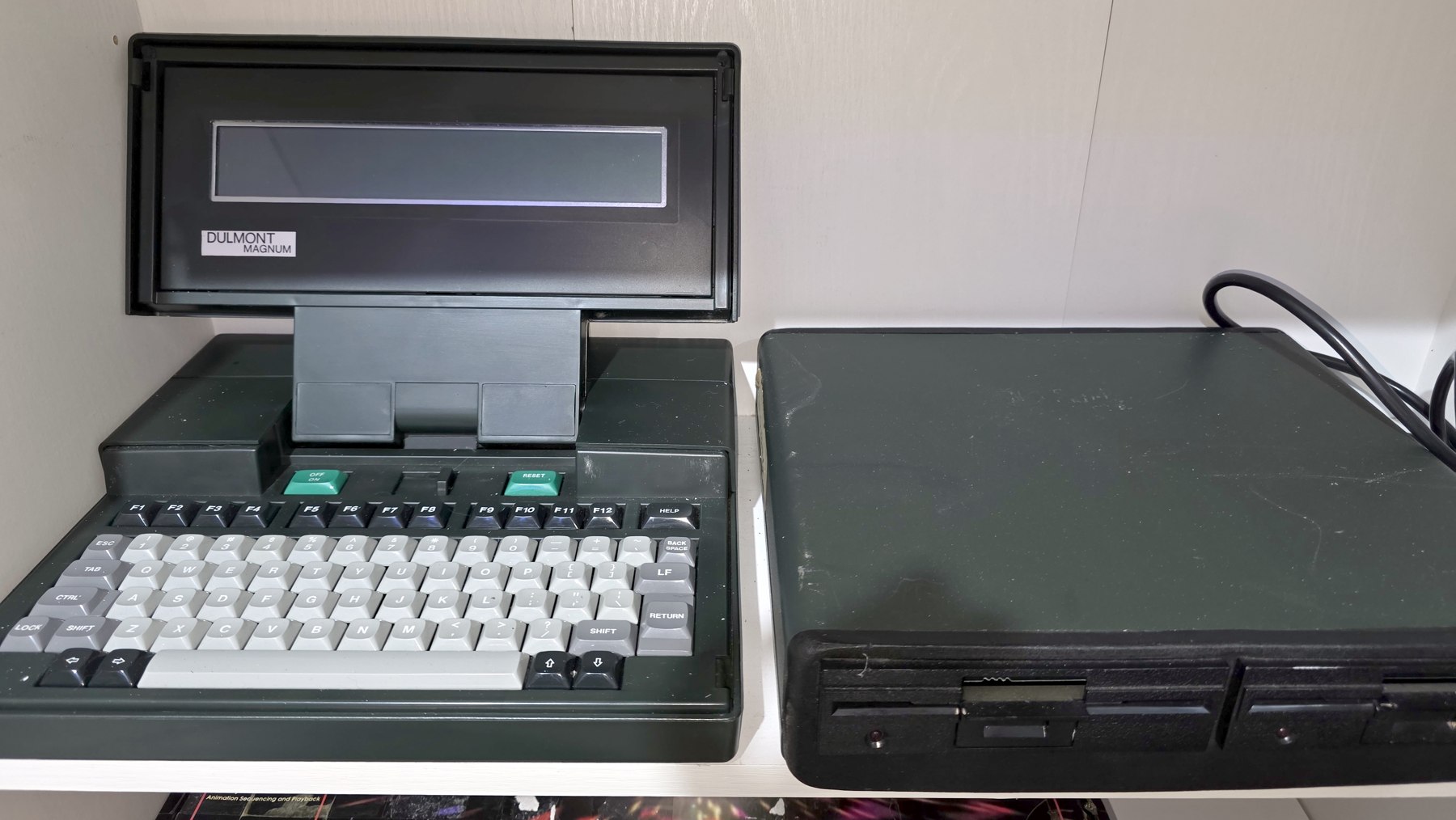
Dulmont Magnum portable beside its twin-floppy expansion box
Dulmont Magnum · Australian portable computing

Dulmont Magnum — collection photograph

Computers

Dulmont Magnum

Label identified

An Australian-designed portable computer with a folding LCD screen and built-in keyboard, photographed beside a matching twin-floppy expansion box. Powerhouse documents the Magnum as a Sydney-made early laptop with software held in ROM. The exact memory and screen variant of this example still needs its underside label checked.
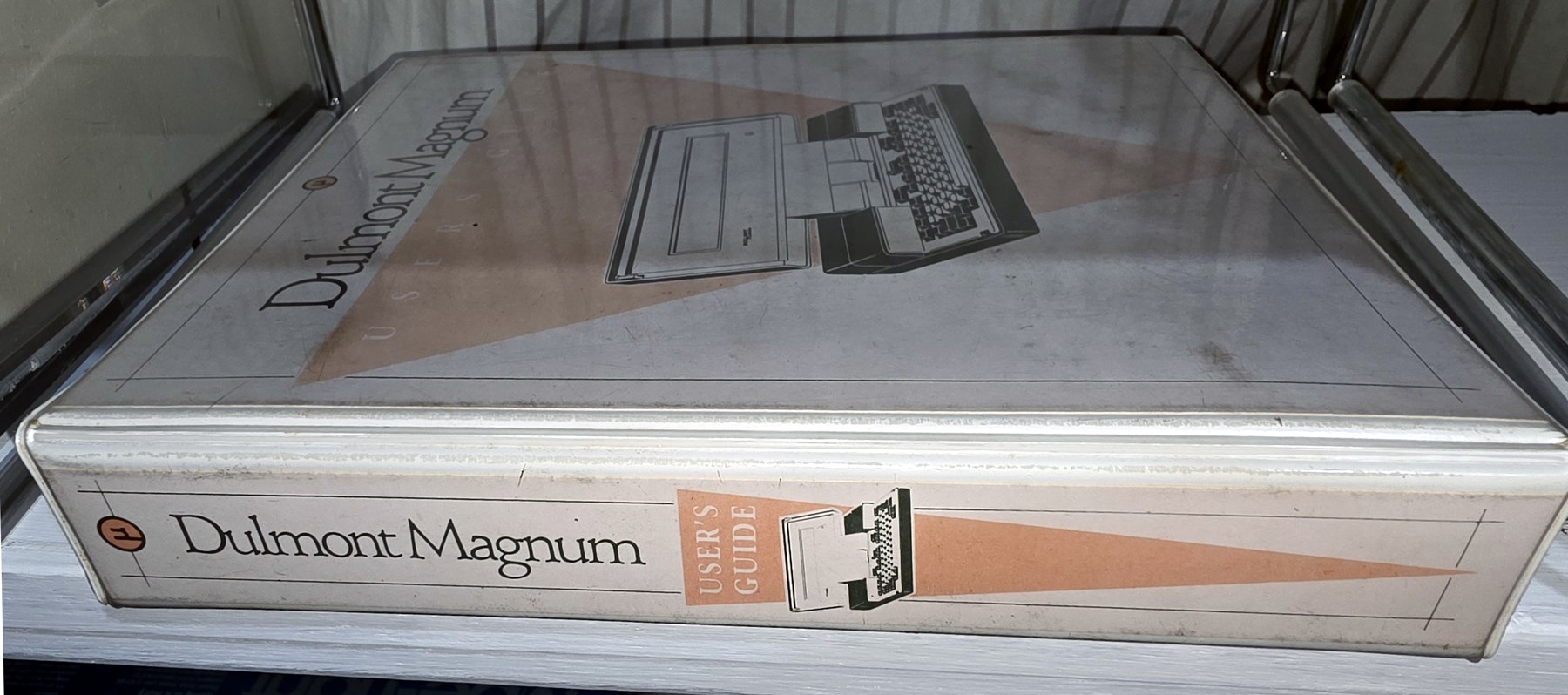
Additional view of Dulmont MagnumView additional photograph ↗Historical reference ↗
Microbee 64 — collection photograph

Computers

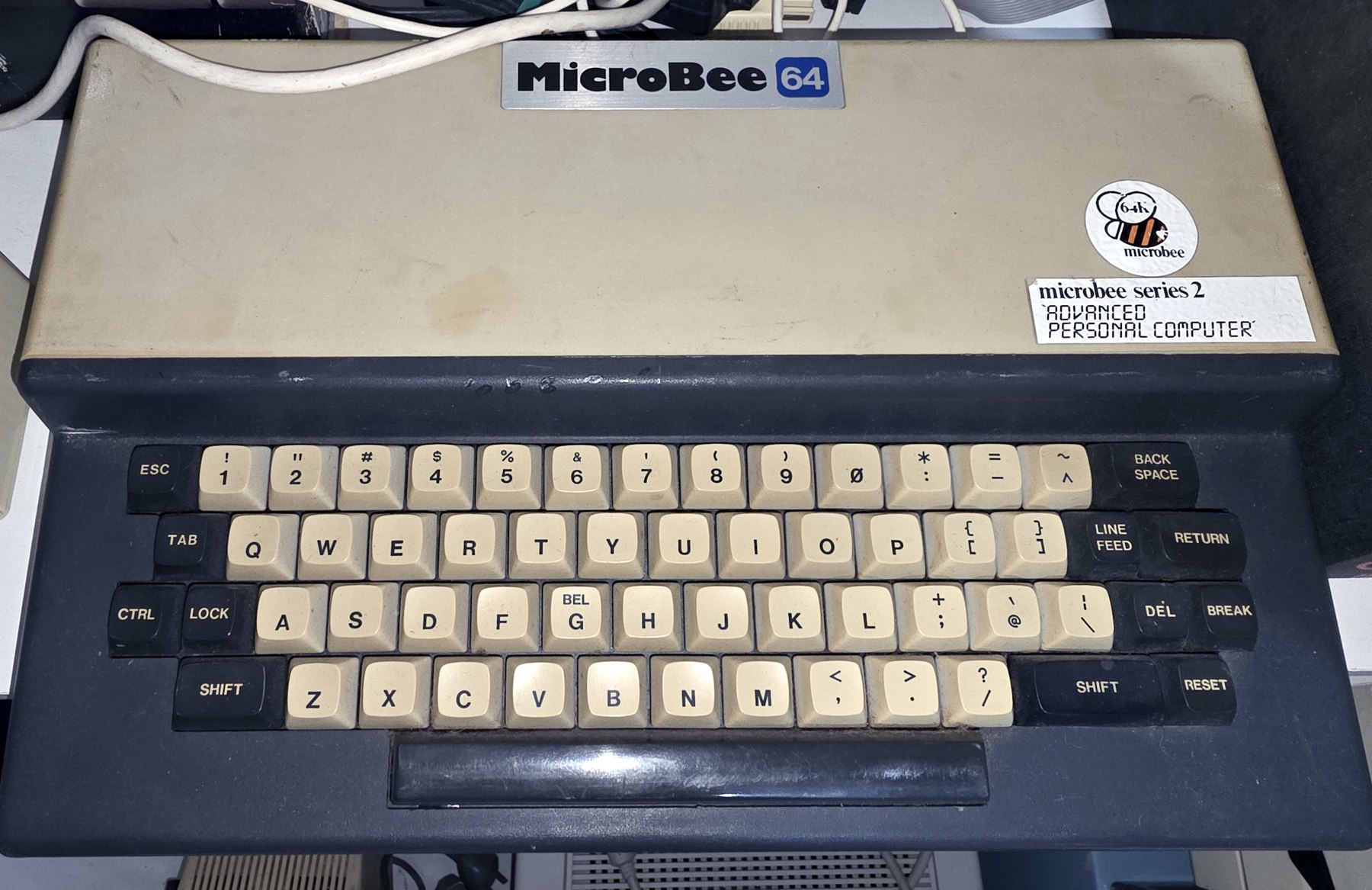
Microbee 64

Label identified

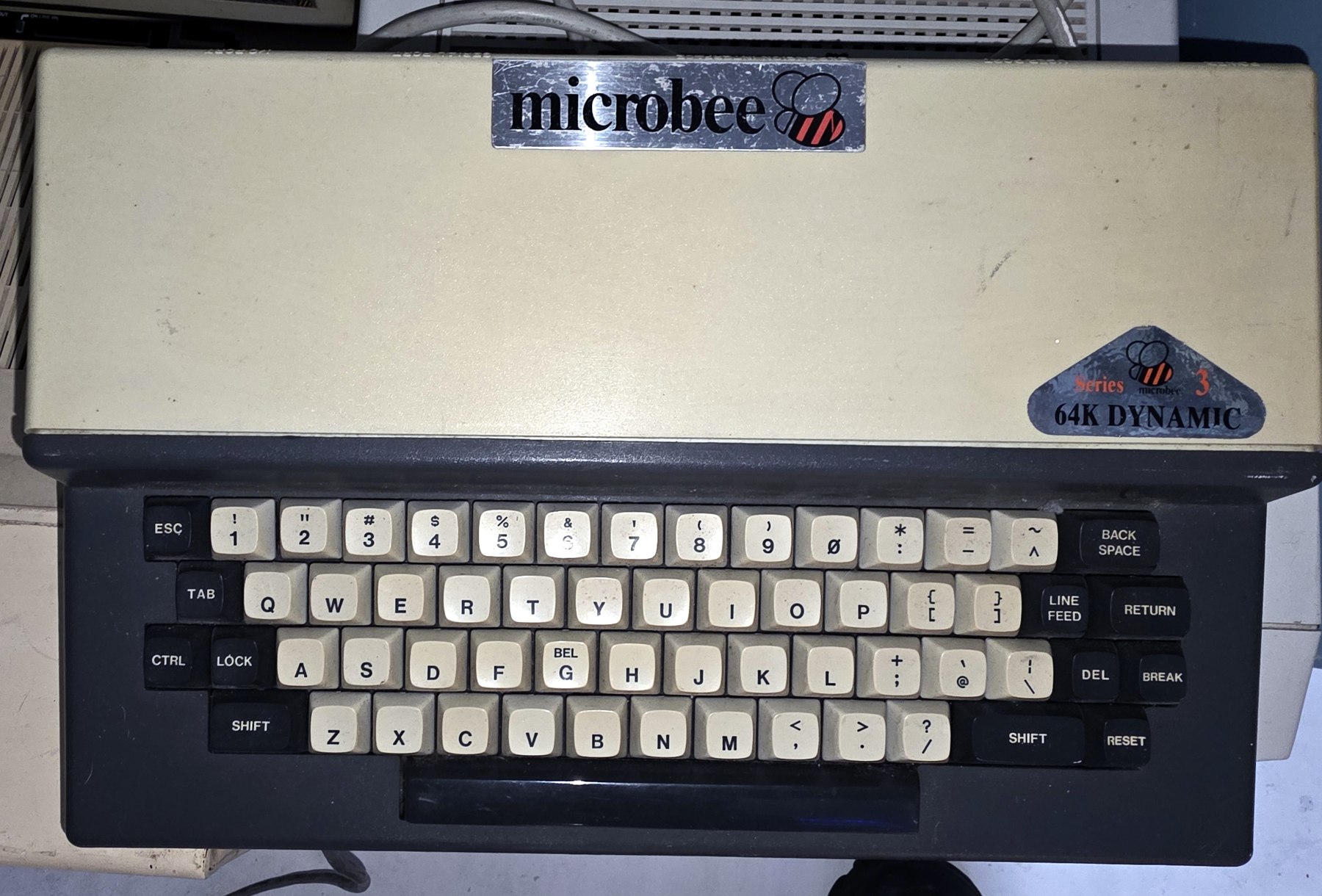
Two Microbee 64-labelled examples, shown together as a model family rather than duplicate catalogue entries. One has a “64K Dynamic” badge; the other carries a Microbee 64 label and a Premium Computer sticker. Their keyboard layouts differ, so both photographs are retained. Internal board revisions and installed memory have not been verified.

Additional view of Microbee 64View additional photograph ↗
Microbee / Microfusion systems — collection photograph

Computers

Microbee / Microfusion systems

Label identified

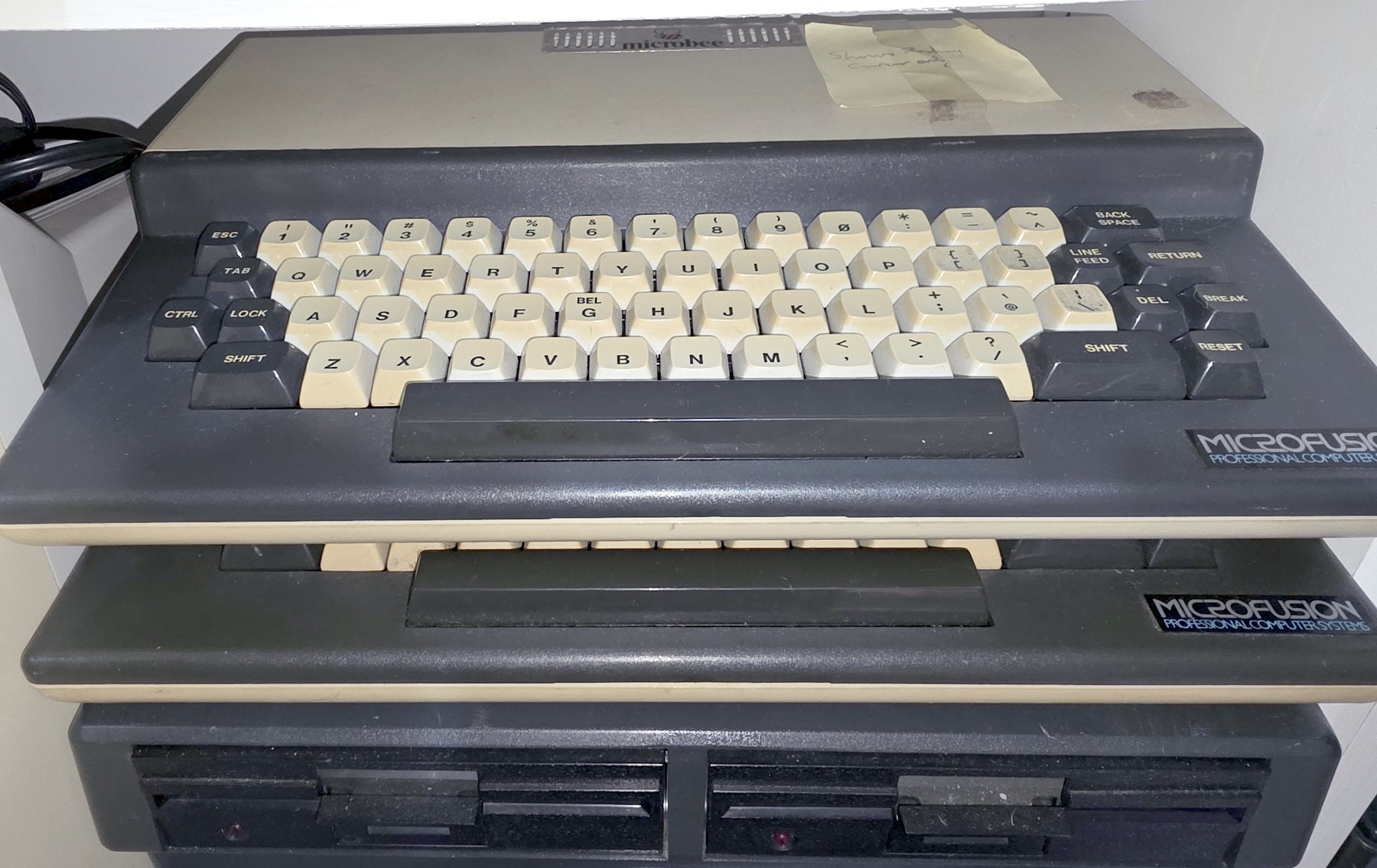
Two stacked Microbee-style computers carry Microfusion Professional Computer Systems badges, with twin floppy drives below. A first-hand examination published by Microbee Technology documents Microfusion-labelled Microbees with replacement coreboards and CIFANET firmware. These examples would need internal inspection before assigning that same configuration.

Historical reference ↗
Telecom Computerphone — collection photograph

Computers

Telecom Computerphone

Label identified

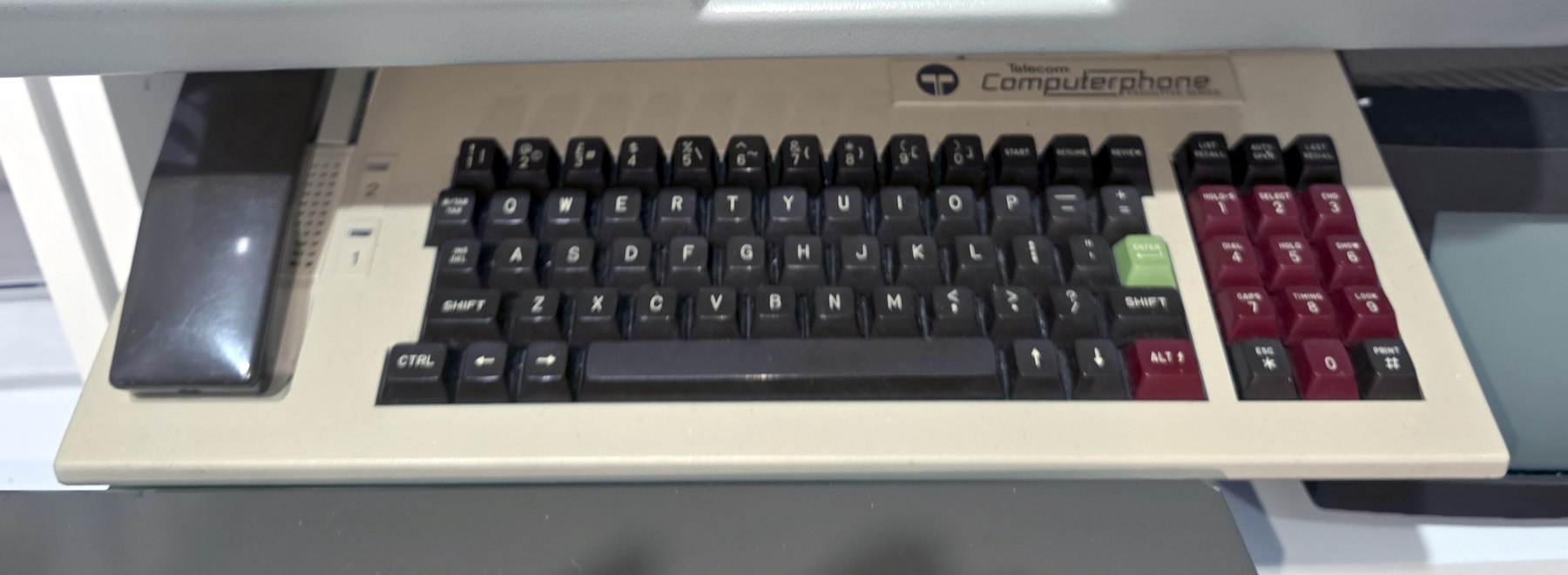
A computer and telephone combined in one desktop unit, with an integrated handset and distinctive coloured keys. The Museum of Australian Democracy documents its built-in modem and access to Telecom’s Viatel service. This is an Australian-market product; that does not by itself mean it was manufactured in Australia.

Historical reference ↗
Micro Byte / MBS PC230 — collection photograph

Computers

Micro Byte / MBS PC230

Label identified

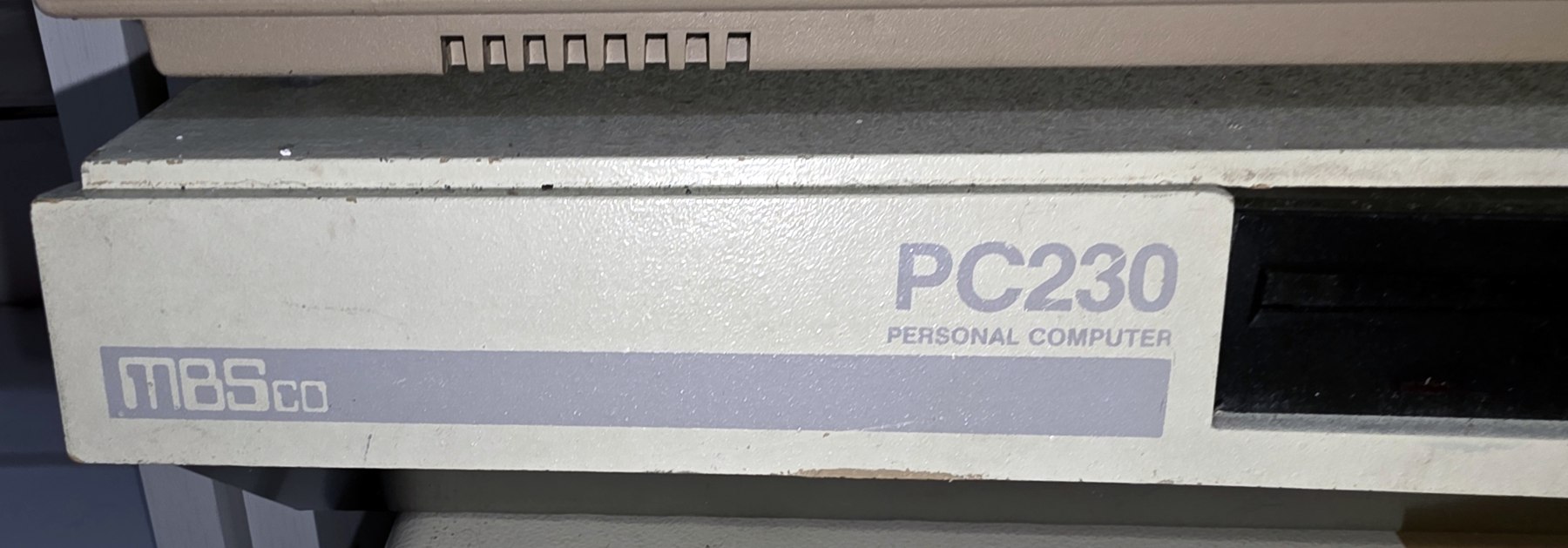
The fascia identifies this as an MBS PC230 Personal Computer. Micro Byte’s August 1988 manual describes the PC230 family with an NEC V30 processor, integrated graphics and a SCSI disk controller. The photograph records the front badge; the installed hardware in this particular unit remains unchecked.

Historical reference ↗
ERACOM ERA-50 — collection photograph

Computers

ERACOM ERA-50

Label identified

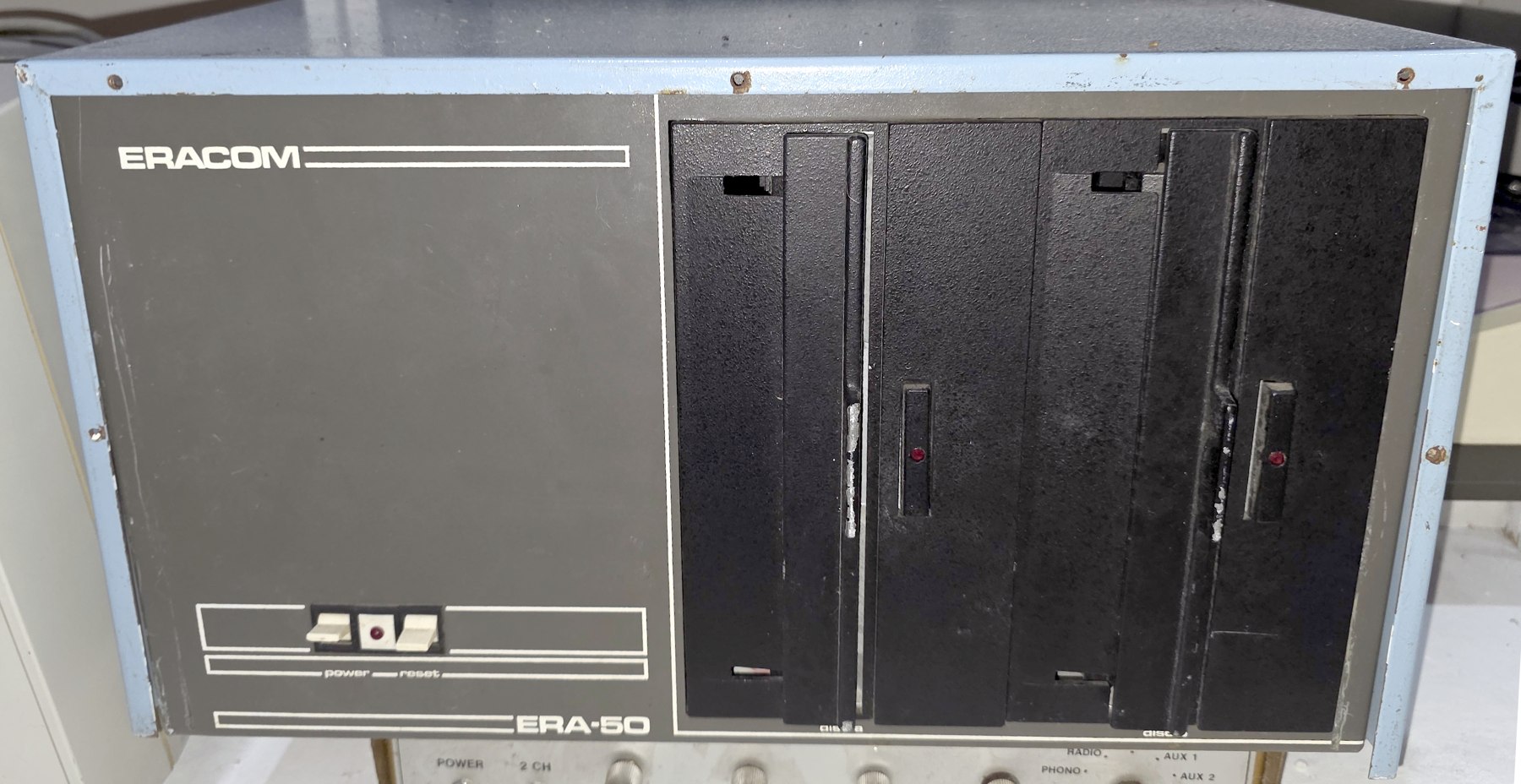
The ERACOM and ERA-50 names are clearly visible beside two vertically mounted floppy drives. A contemporary letter from ERACOM president William Caelli describes the ERA-50 as an 8085-based 8-bit computer and mentions CP/M, MP/M and UCSD Pascal use. This photograph does not establish which software is installed.

Historical reference ↗
MBS Glass Typewriter — collection photograph

Computers

MBS Glass Typewriter

Label identified

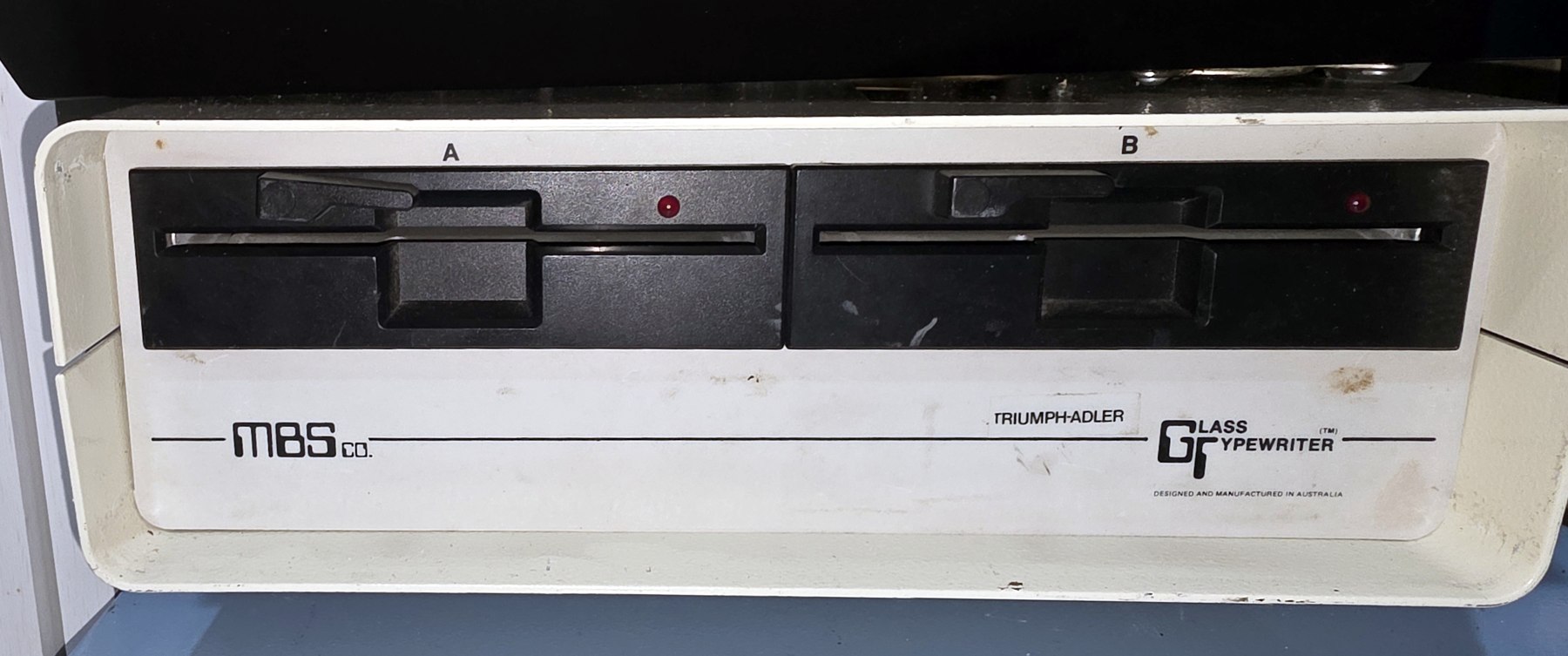
A twin-floppy unit labelled MBS Co., Triumph-Adler and Glass Typewriter. Its front panel explicitly states “Designed and manufactured in Australia”. The photograph identifies the product branding, but not its precise model, processor or configuration. Those details await a rear label or internal photograph.

Dick Smith Challenger — collection photograph

Computers

Dick Smith Challenger

Label identified

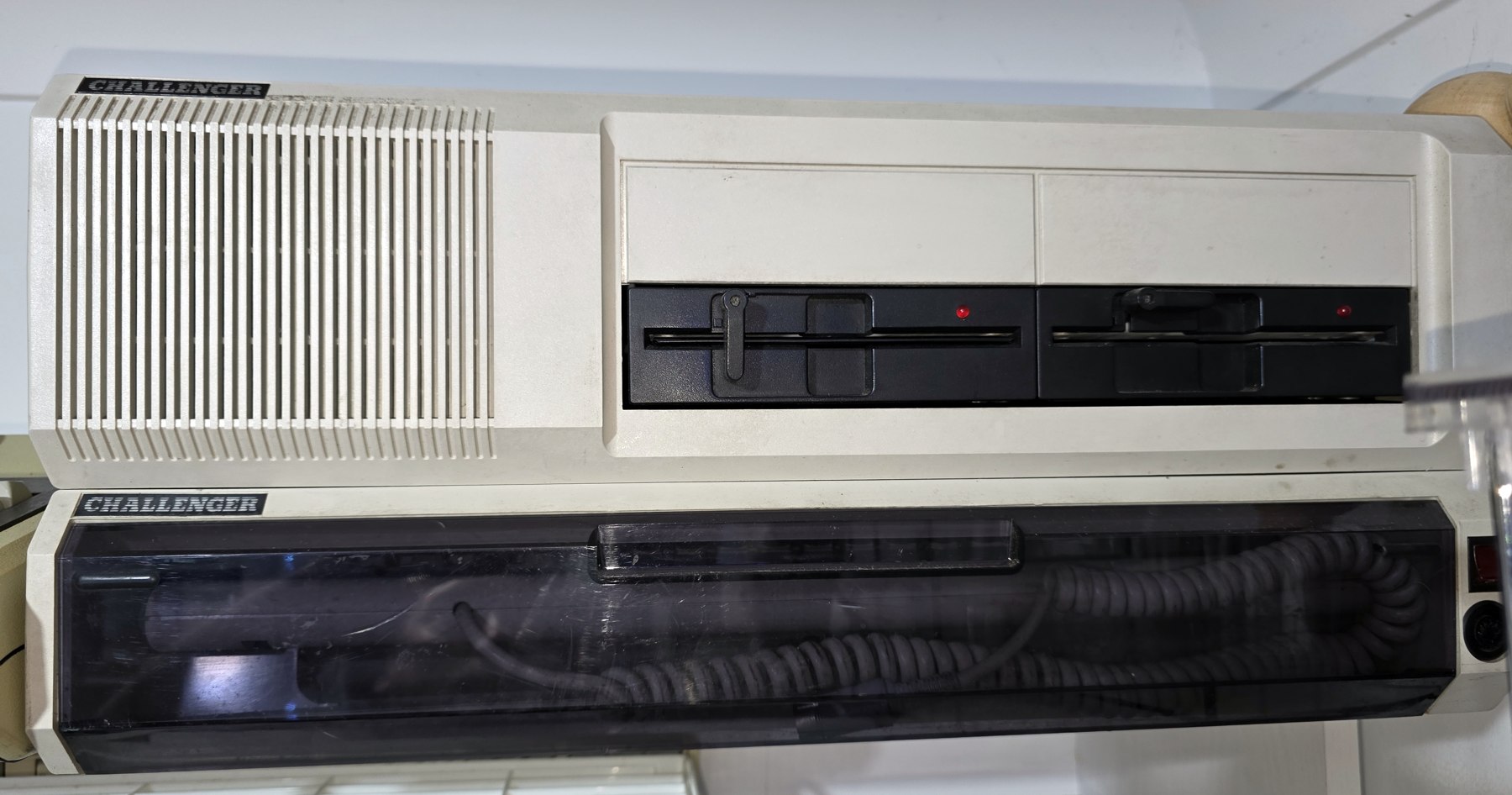
The Challenger name appears on both the twin-drive expansion unit and the keyboard/system unit beneath its smoked cover. Dick Smith’s contemporary advertising offered the Challenger as an IBM-compatible system sold in two parts. It belongs to the Australian retail computing story, rather than being evidence of Australian manufacture.

Historical reference ↗
Dick Smith CAT — collection photograph

Computers

Dick Smith CAT

Label identified

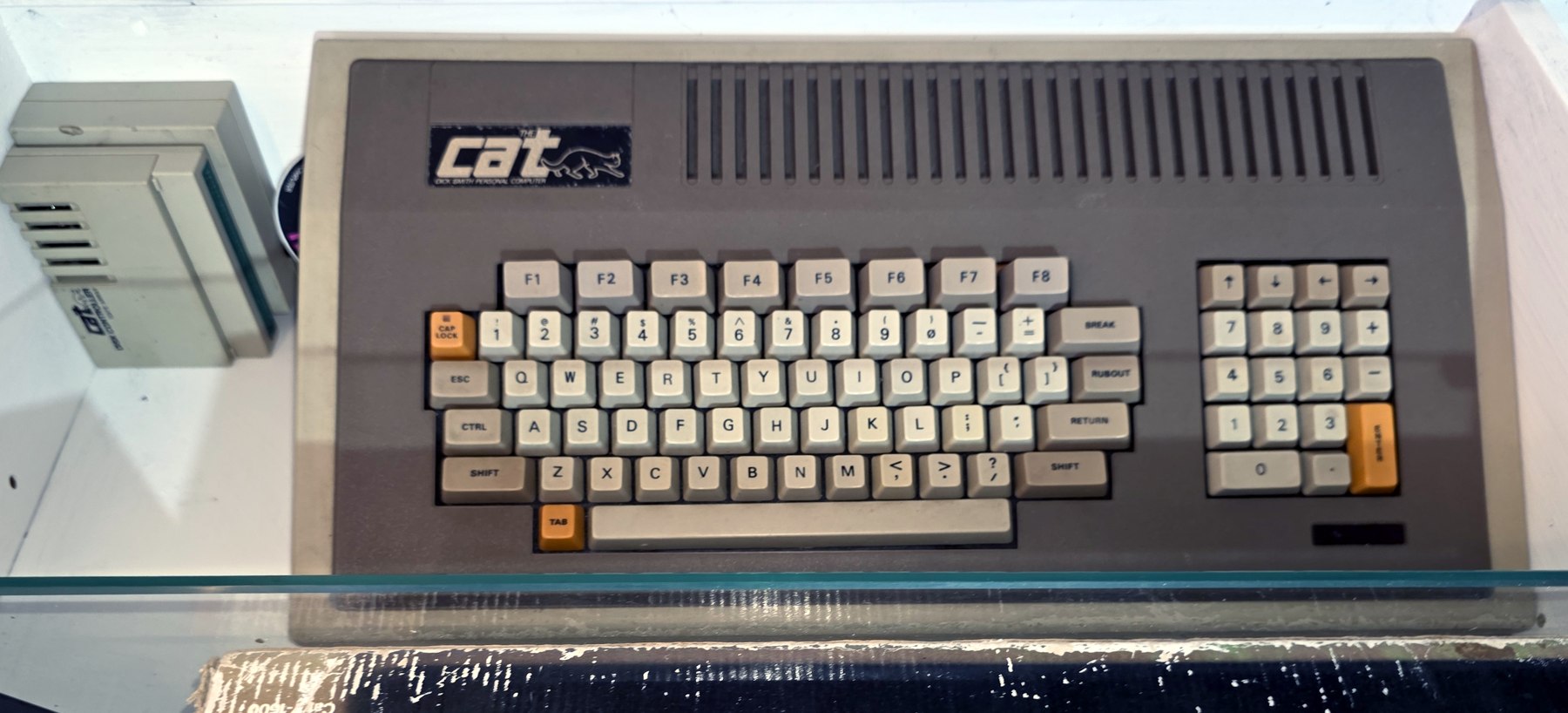
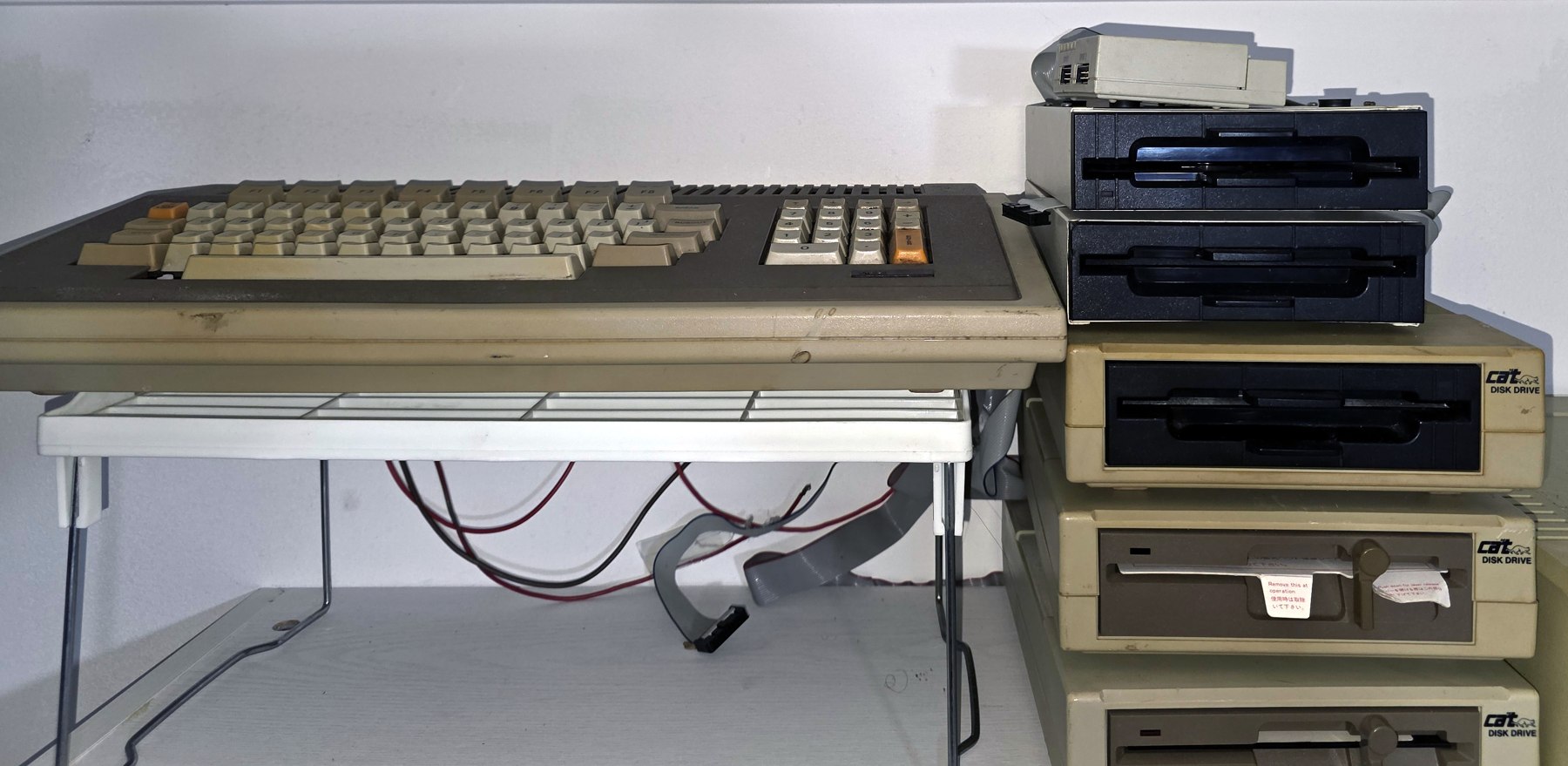
The clearer second-upload photograph confirms the CAT branding and distinctive keyboard layout. Other views show a CAT-style keyboard and CAT-labelled disk drives. Contemporary Dick Smith advertising describes the CAT as Apple II-compatible; the photographs are grouped by model family, without assuming they all show one physical machine.

Additional view of Dick Smith CATView additional photograph ↗Additional view of Dick Smith CATView additional photograph ↗Historical reference ↗
SKAI Attaché — collection photograph

Computers

SKAI Attaché

Label identified; specifications unconfirmed

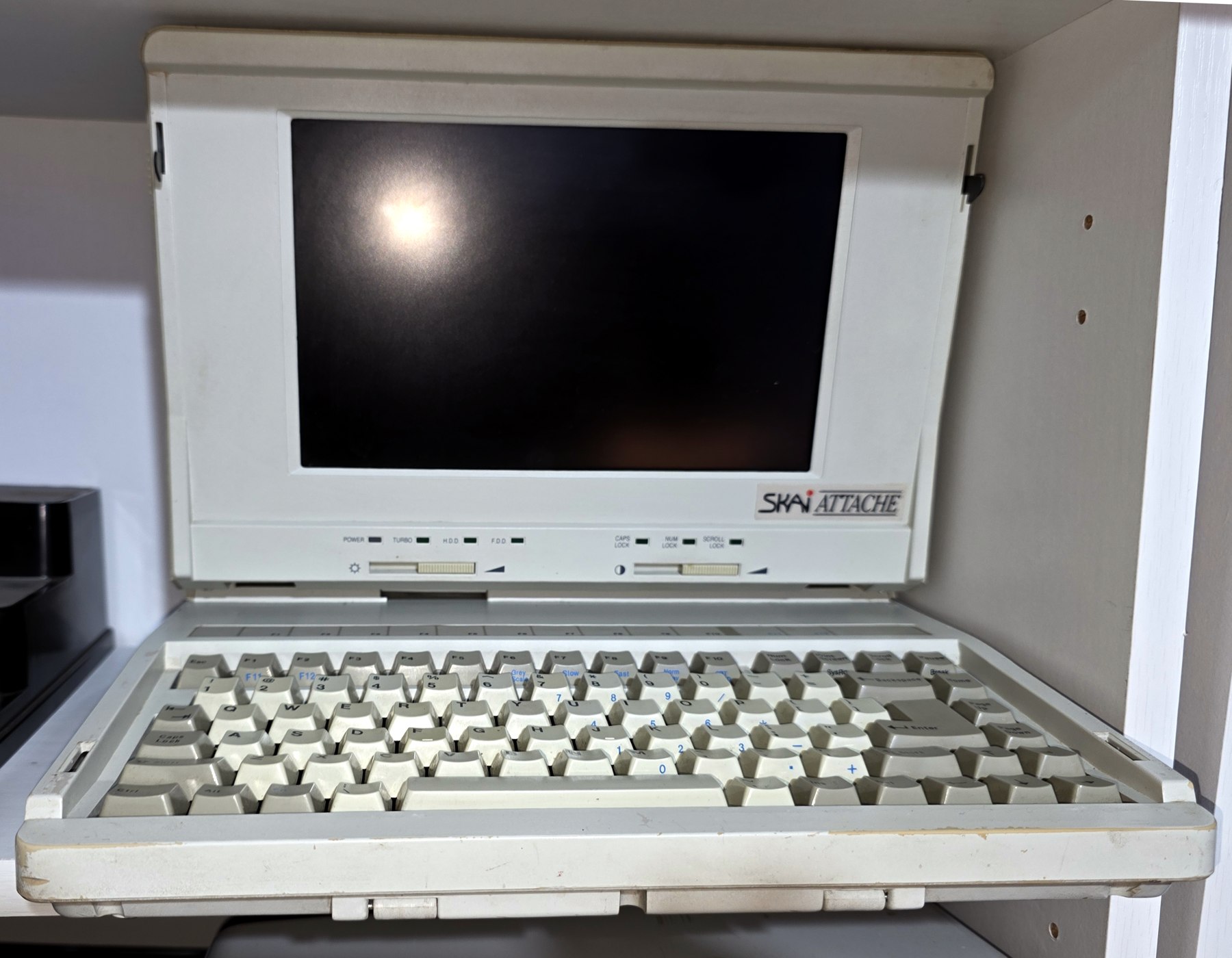
The screen bezel reads SKAI Attaché. This portable has a folding display, an integrated keyboard and separate display-adjustment sliders. The brand and product name are visible; its underlying manufacturer, processor and production date are not established by this photograph.

PortaPak portable — probable — collection photograph

Computers

PortaPak portable — probable

Probable identification

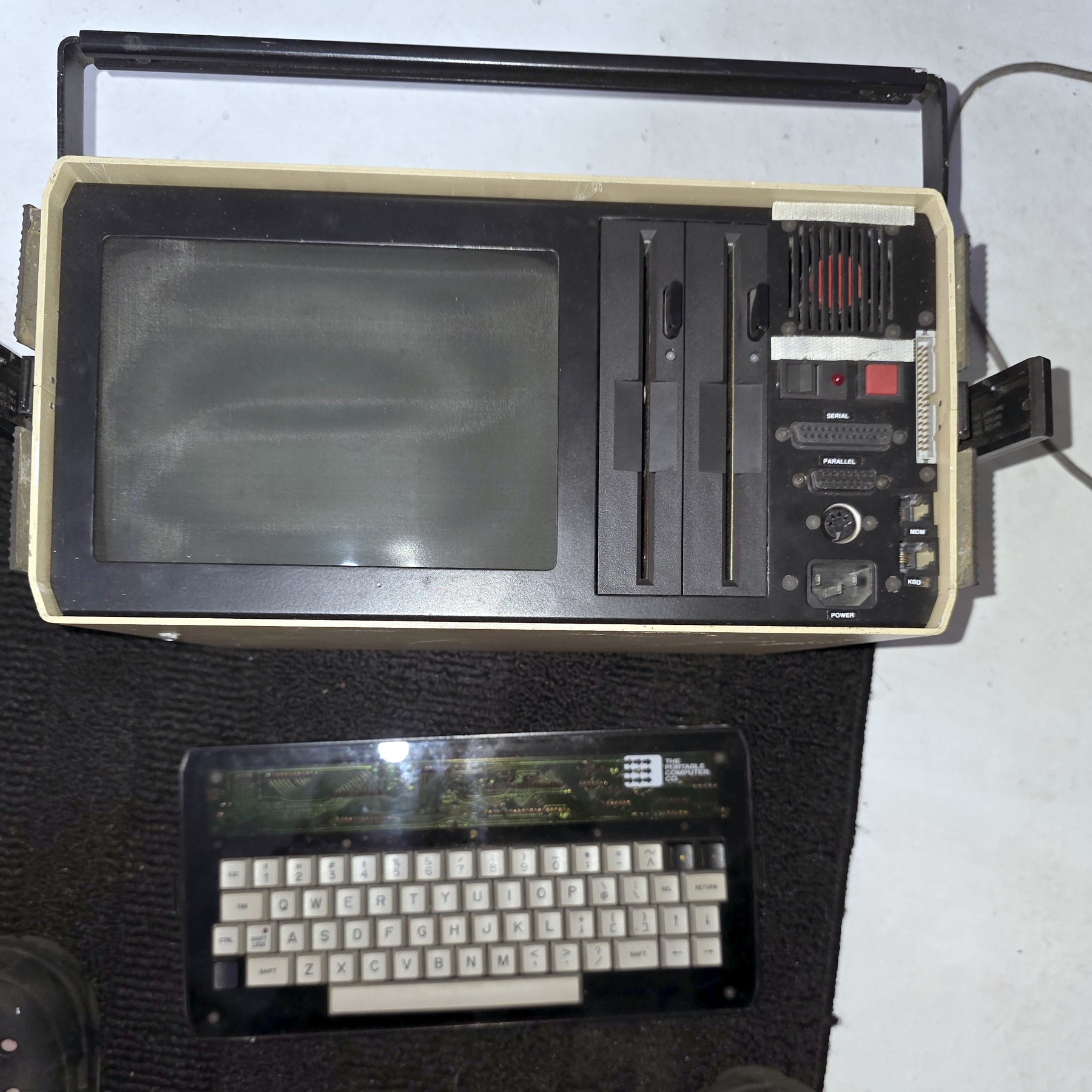
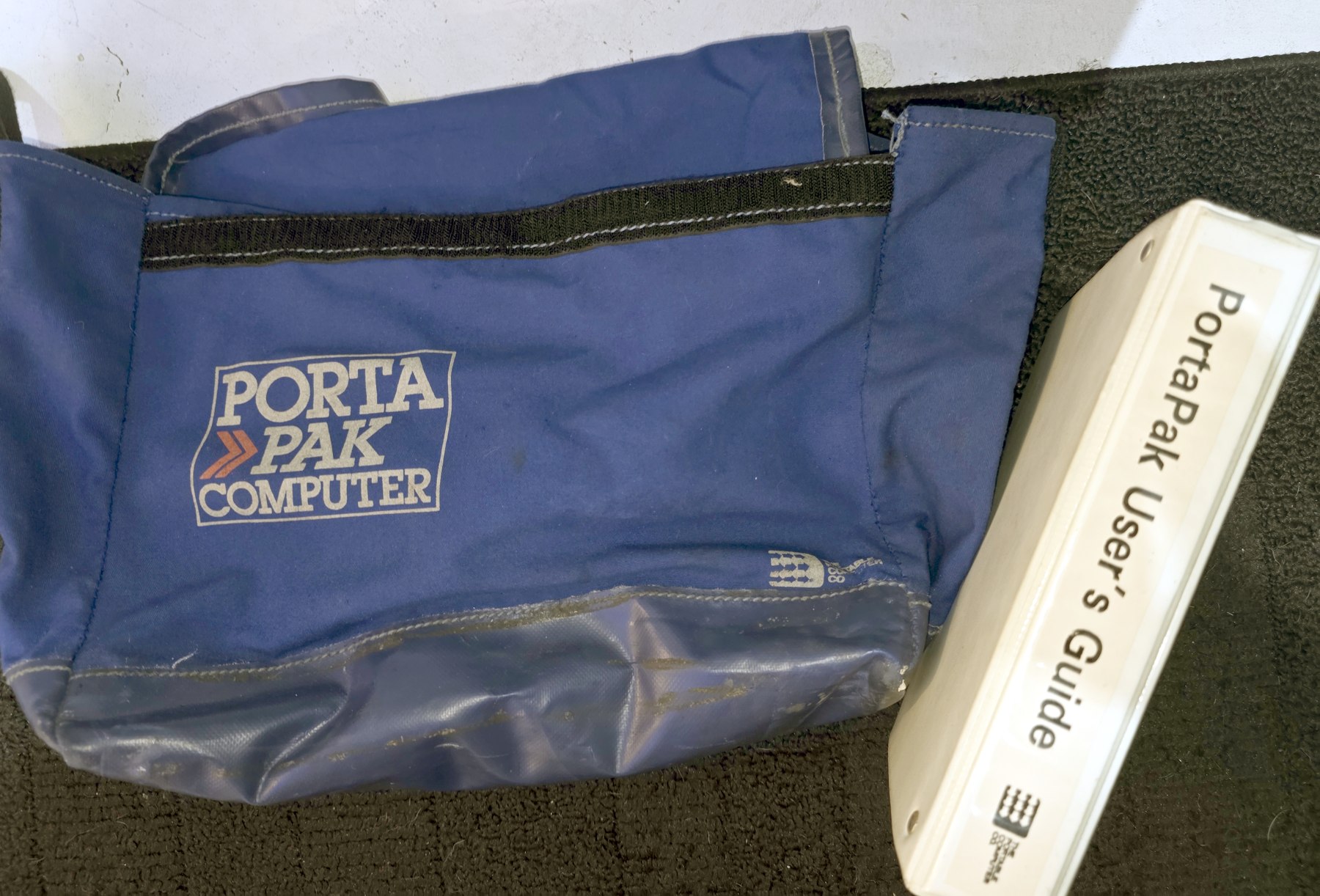
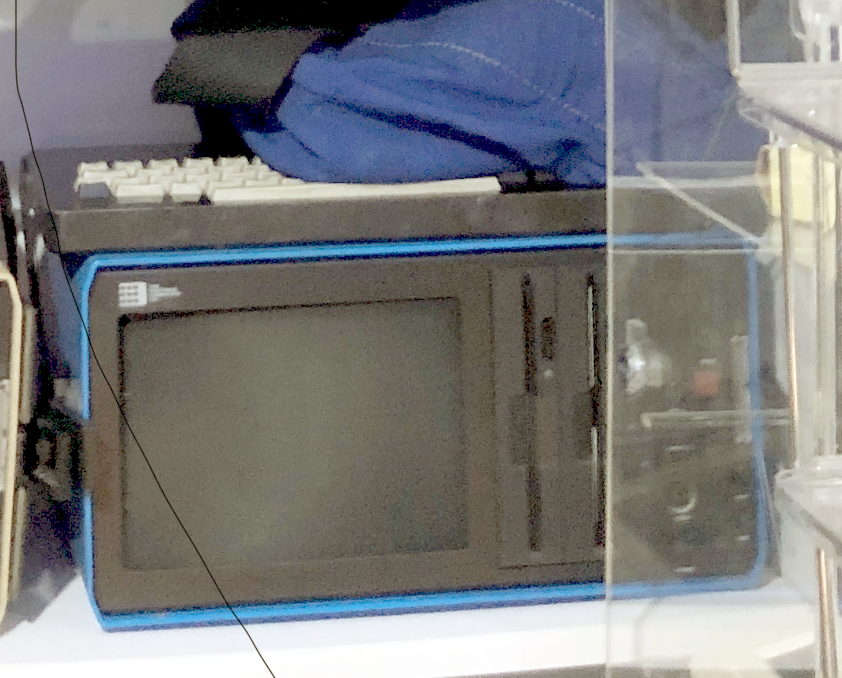
A portable with a built-in CRT, two vertical floppy drives and a separate compact keyboard. The keyboard bears The Portable Computer Co. branding; a companion photograph shows a PortaPak carrying bag and user guide. Together these strongly suggest a PortaPak. A contemporary advertisement describes an Australian-designed CP/M portable, but the exact version here remains unconfirmed. A further supplied photograph, named blue-Portapak, records a blue-cased example; it is retained as a distinct example.

Additional view of PortaPak portable — probableView additional photograph ↗Additional view of PortaPak portable — probableView additional photograph ↗Historical reference ↗
Dulmont Magnum family — probable — collection photograph

Computers

Dulmont Magnum family — probable

Probable identification

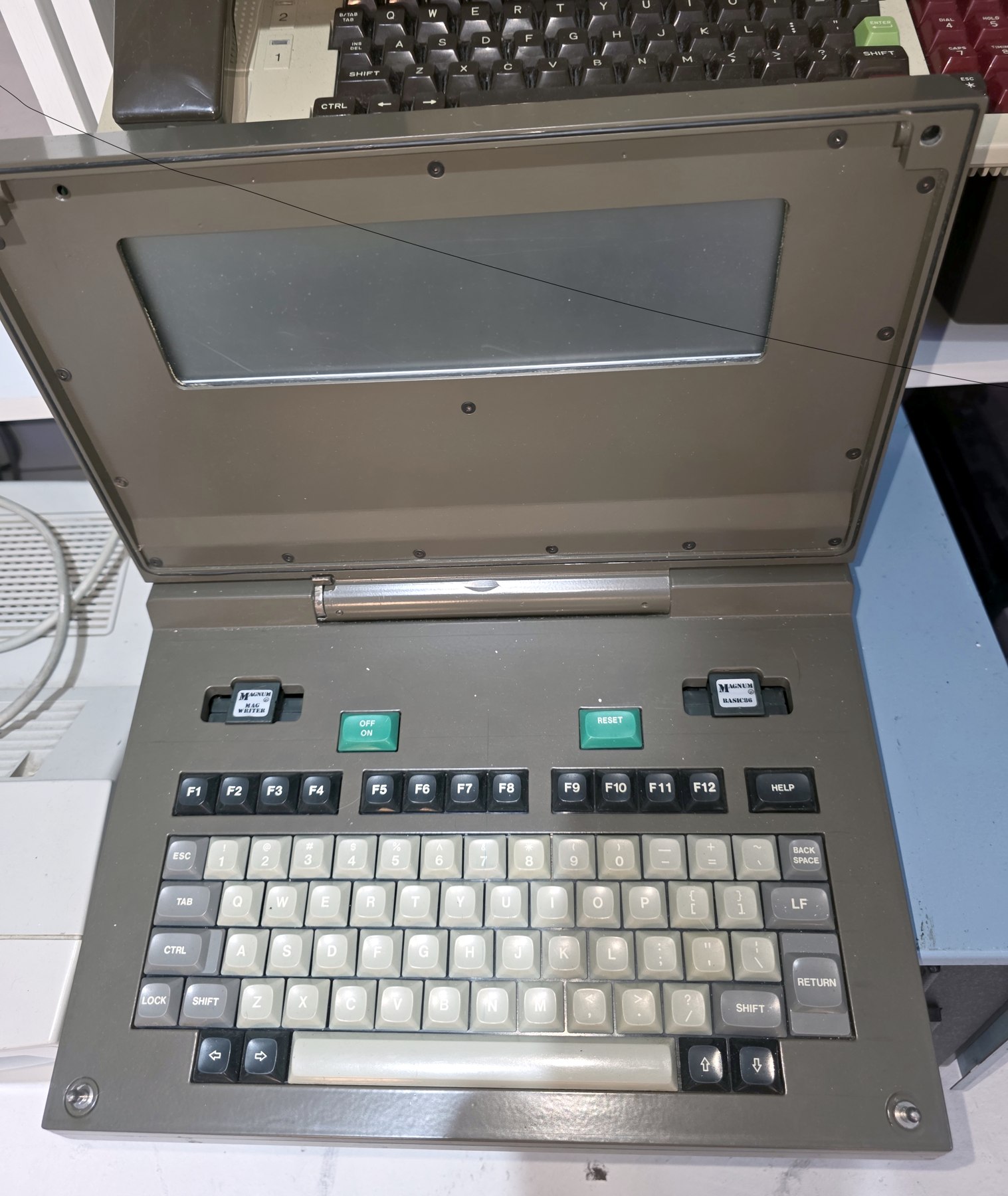
This brown portable has the Magnum family’s distinctive keyboard, green ON and RESET keys, and two software-cartridge positions. Its screen housing differs from the labelled green Magnum elsewhere in the collection. It is retained as a separate example, not removed as a duplicate. Exact model and revision need confirmation.

Historical reference ↗
Pulsar Electronics desktop unit — collection photograph

Computers

Pulsar Electronics desktop unit

Brand identified; model unconfirmed

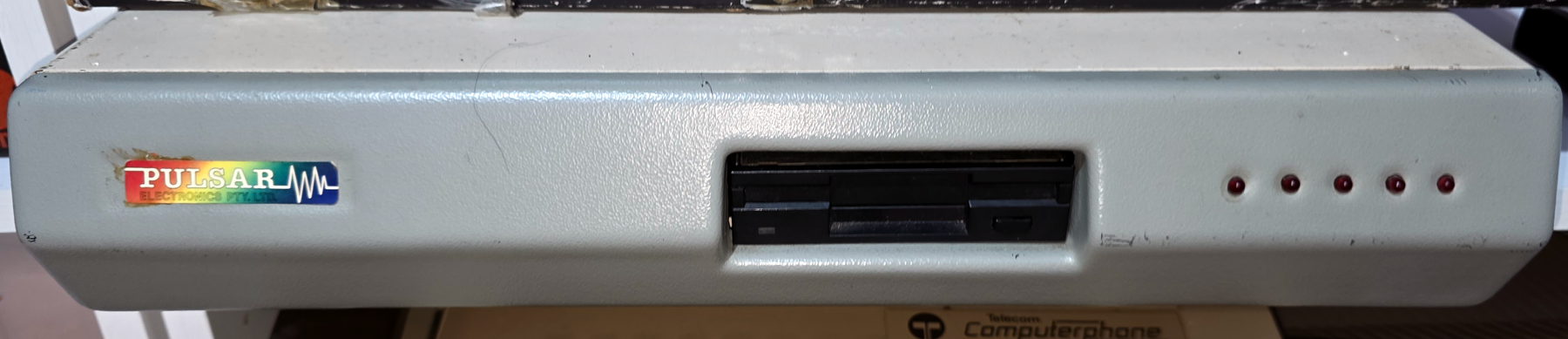
A clearer front view shows the Pulsar Electronics badge, a drive opening and a row of indicator lights. The exact model is not visible, so it is not assigned to the Little Big Board or another Pulsar design without further evidence.

Moebius Todatech desktop PC — collection photograph

Computers

Moebius Todatech desktop PC

Brand identified; model unconfirmed

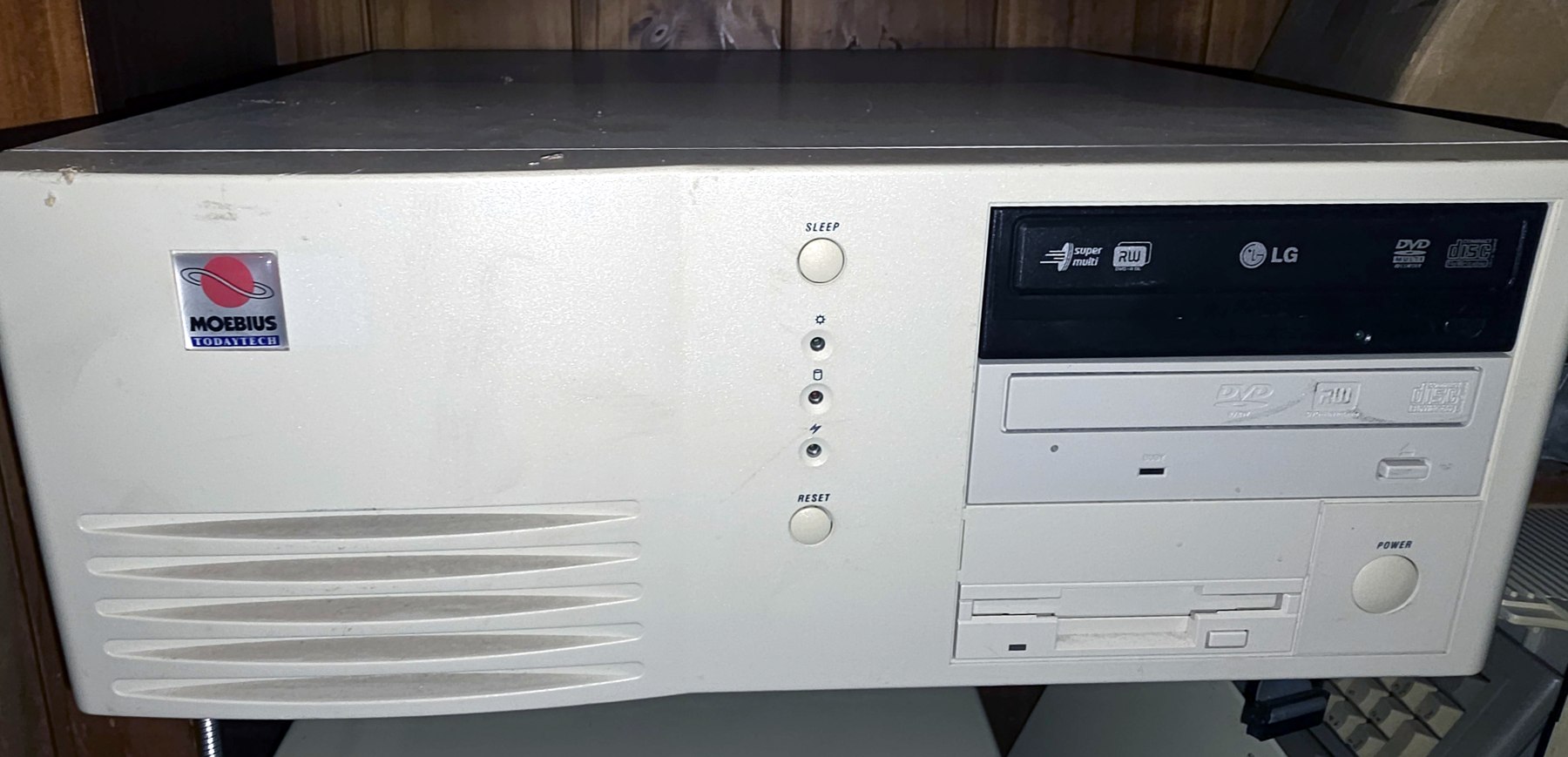
The front badge reads Moebius Todatech. Two optical drives and a 3½-inch floppy drive are fitted to this desktop case. This is a later PC-era item within the wider collection; neither its processor nor its original configuration can be determined from the front panel.

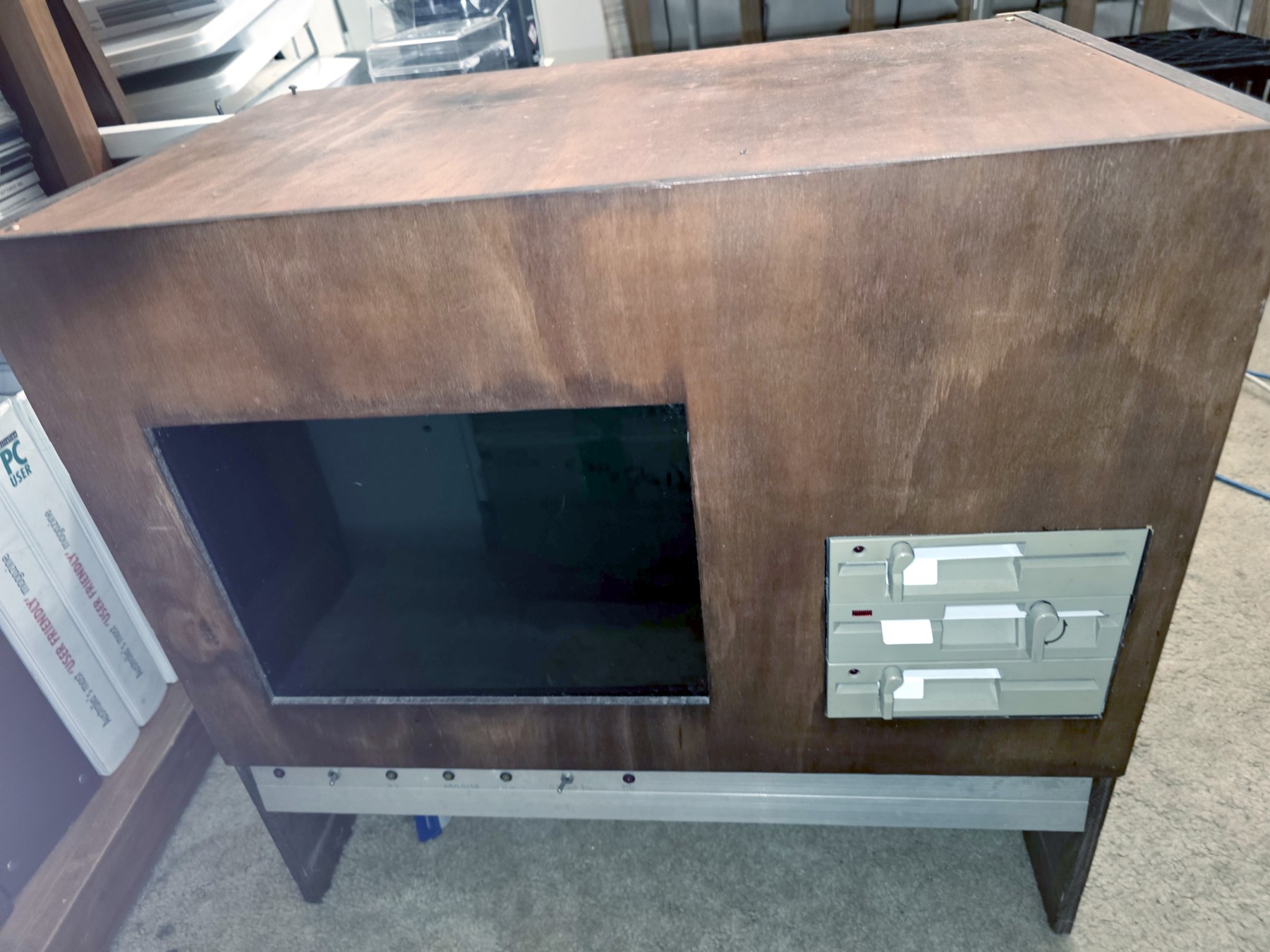
Computer in a wooden cabinet — collection photograph

Computers

Computer in a wooden cabinet

Awaiting identification

A CRT and two floppy drives are built into a large timber enclosure. It is a striking custom-looking construction, but the photo contains no readable maker or model label. The underlying computer and the cabinet’s builder are awaiting identification.

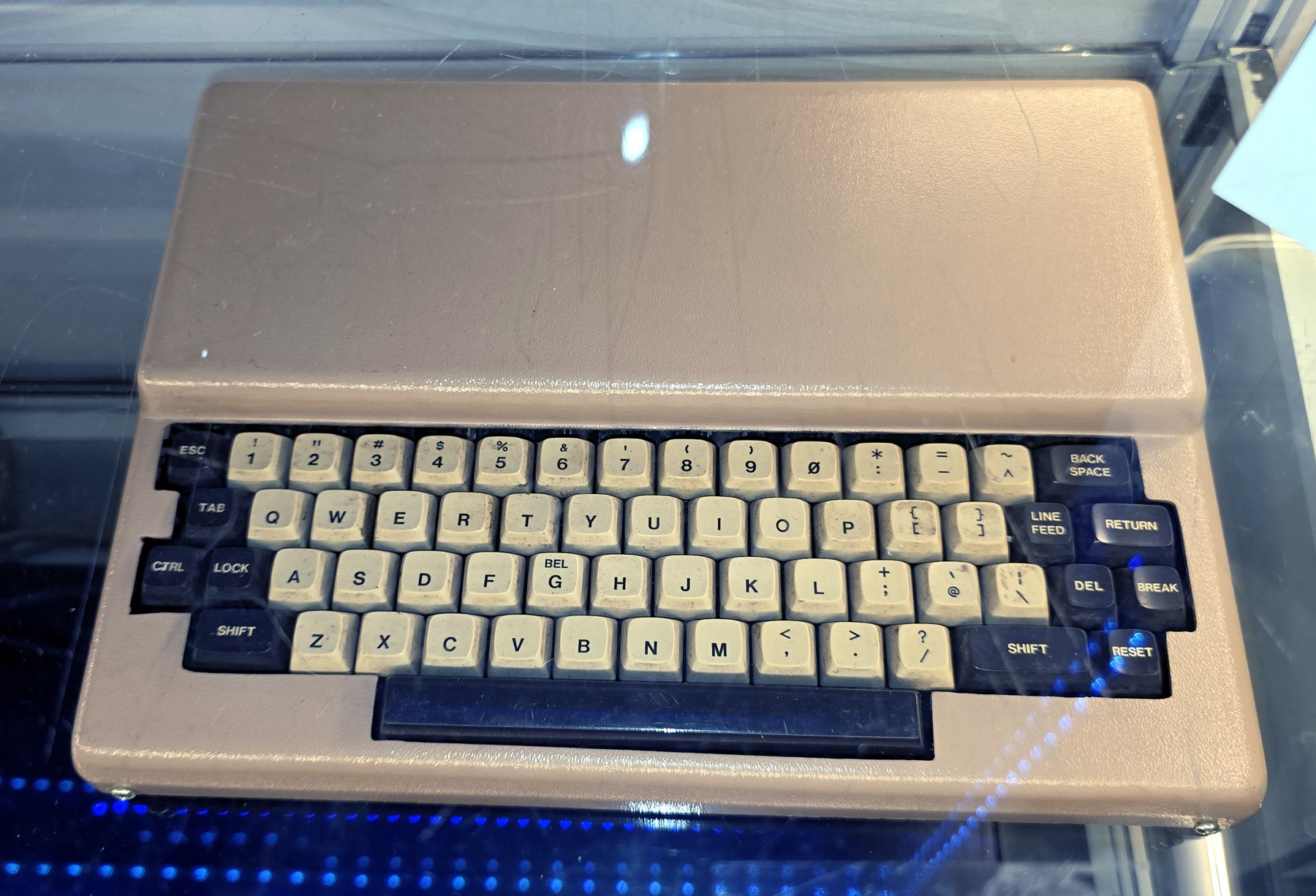
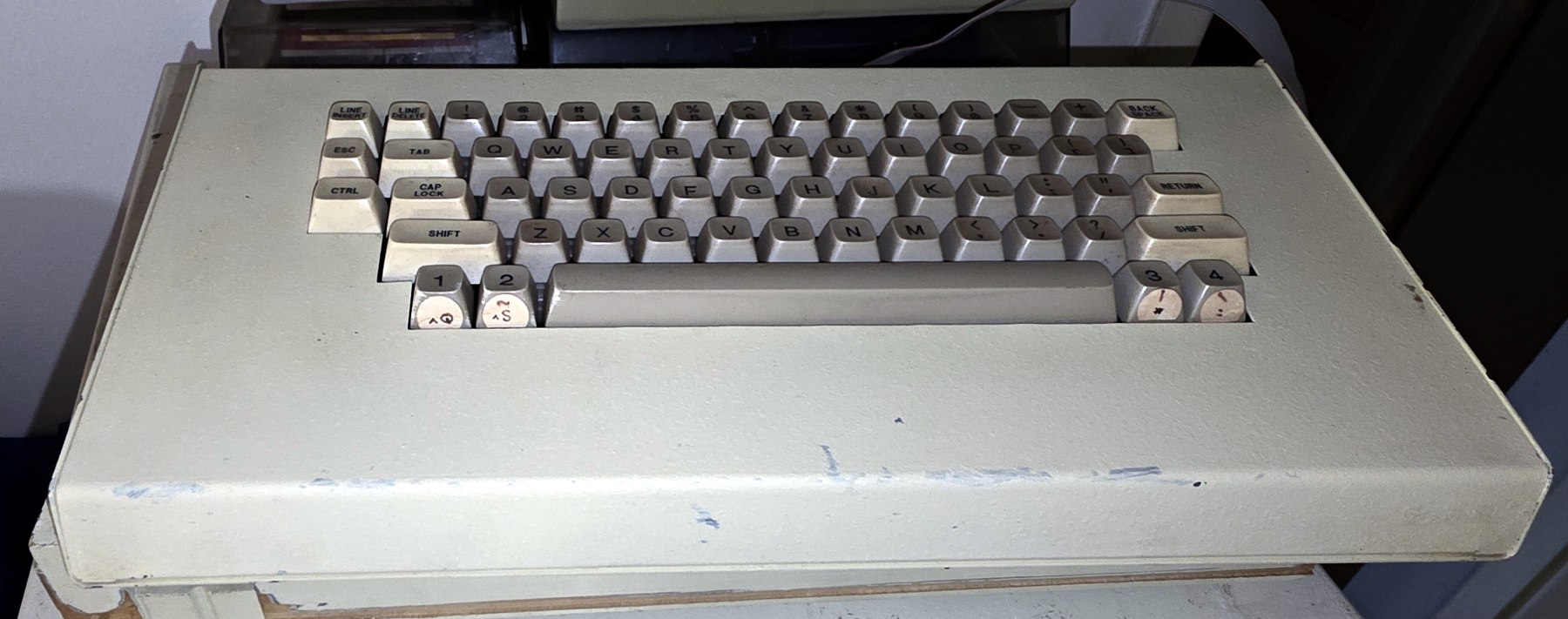
Unlabelled metal-cased keyboard computer — collection photograph

Computers

Unlabelled metal-cased keyboard computer

Awaiting identification

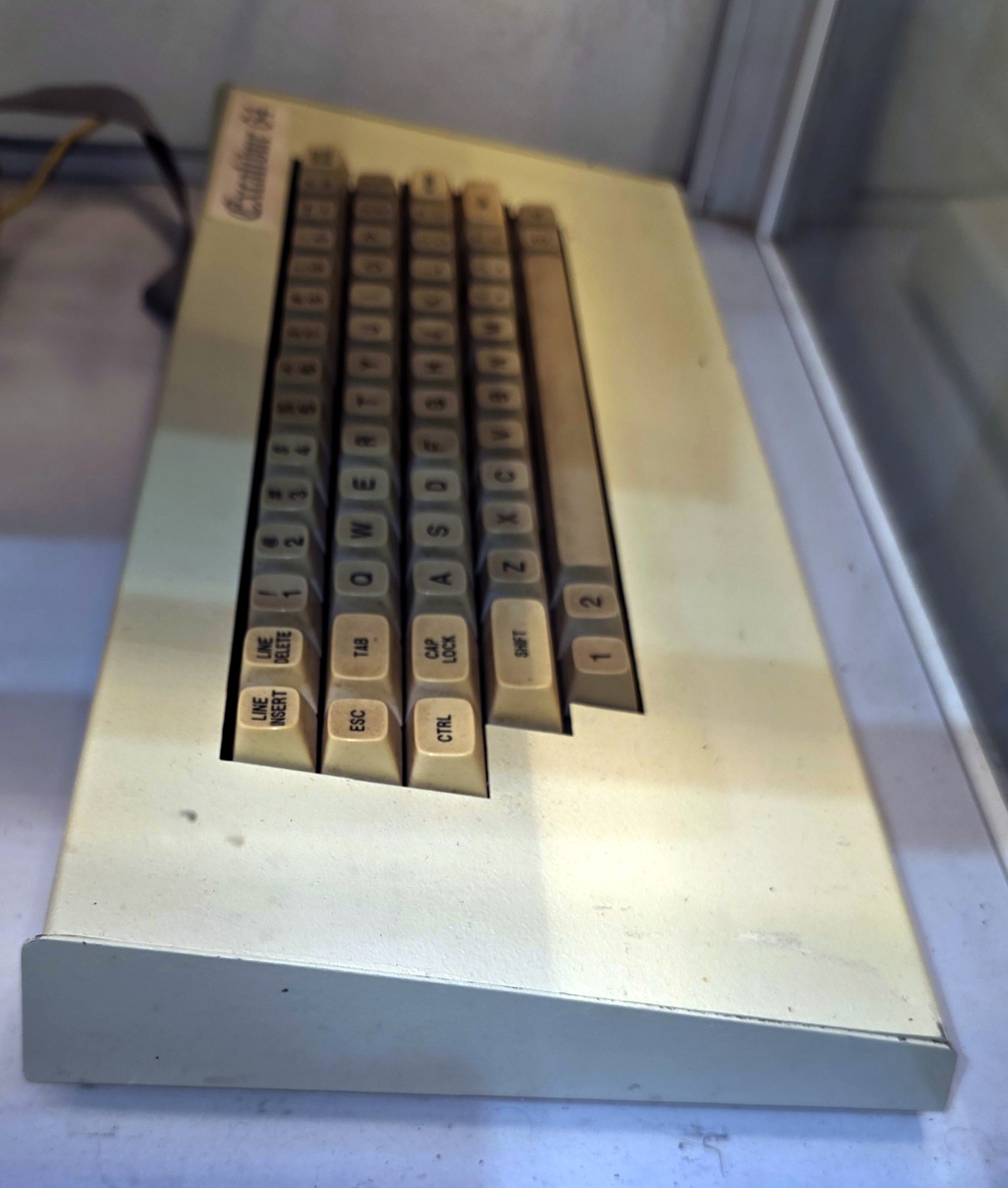
A compact keyboard is mounted in a pale, sloping metal enclosure. The photograph shows the key layout clearly but no maker’s badge. It could be a computer or a keyboard/terminal assembly; internal boards or rear-panel labels are needed before naming a design.

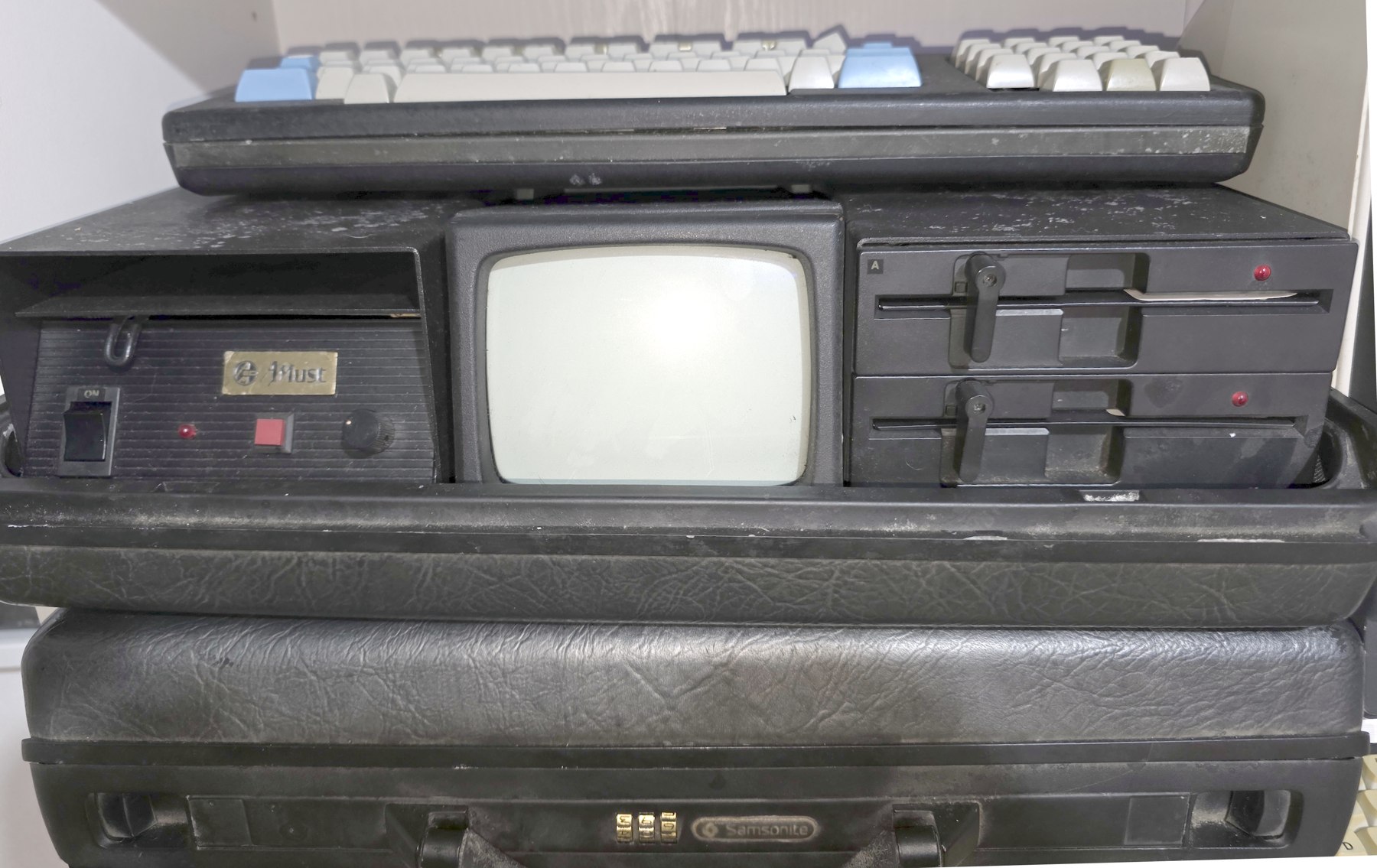
Unidentified transportable computer — collection photograph

Computers

Unidentified transportable computer

Awaiting identification

A small central CRT is flanked by controls and two floppy drives, with a separate keyboard above and a carrying case below. The badge is not clear enough for a confident transcription. The distinctive transportable format is visible, but the maker and model remain unconfirmed.

Stacked chassis — rear view — collection photograph

Computers

Stacked chassis — rear view

Awaiting identification

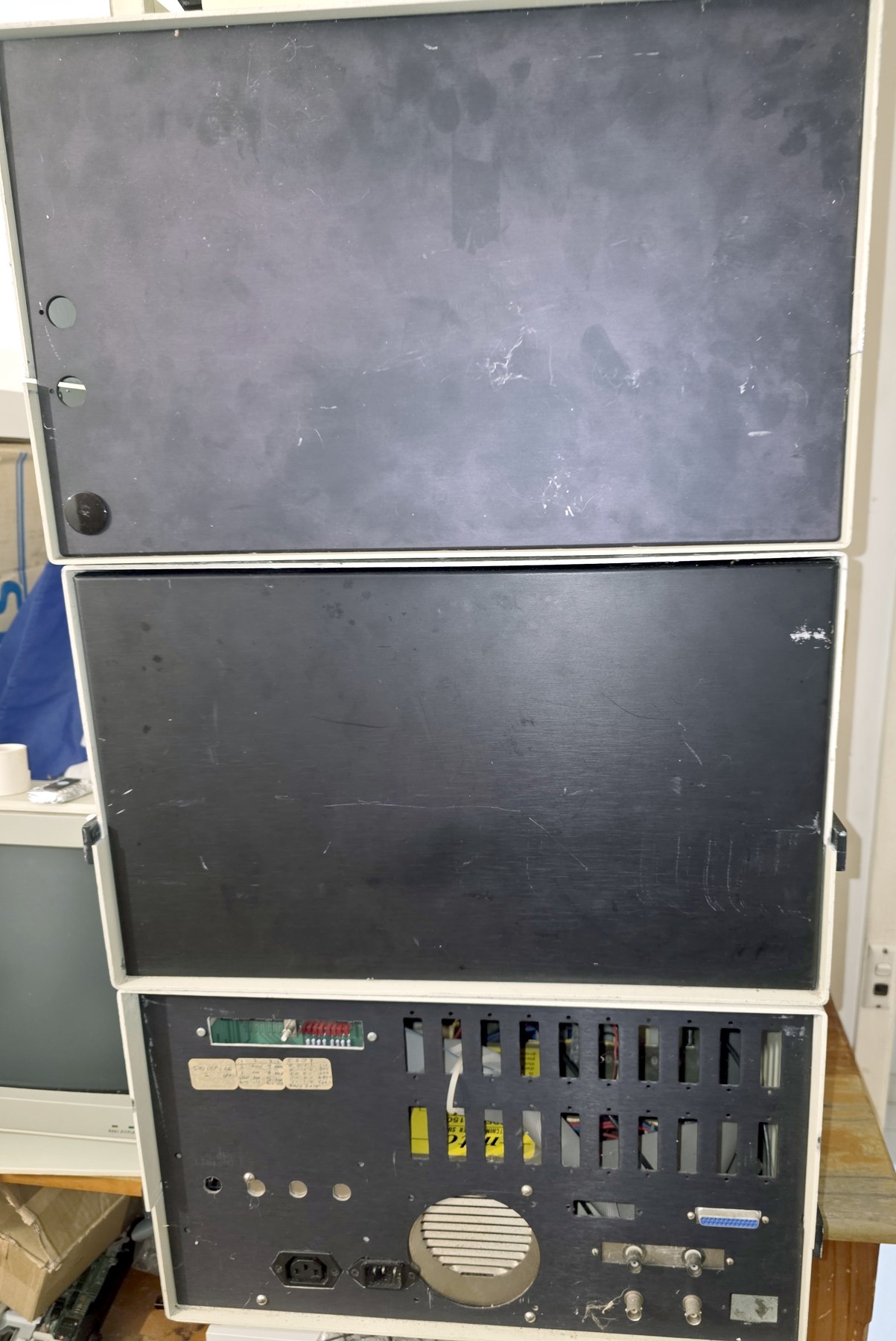
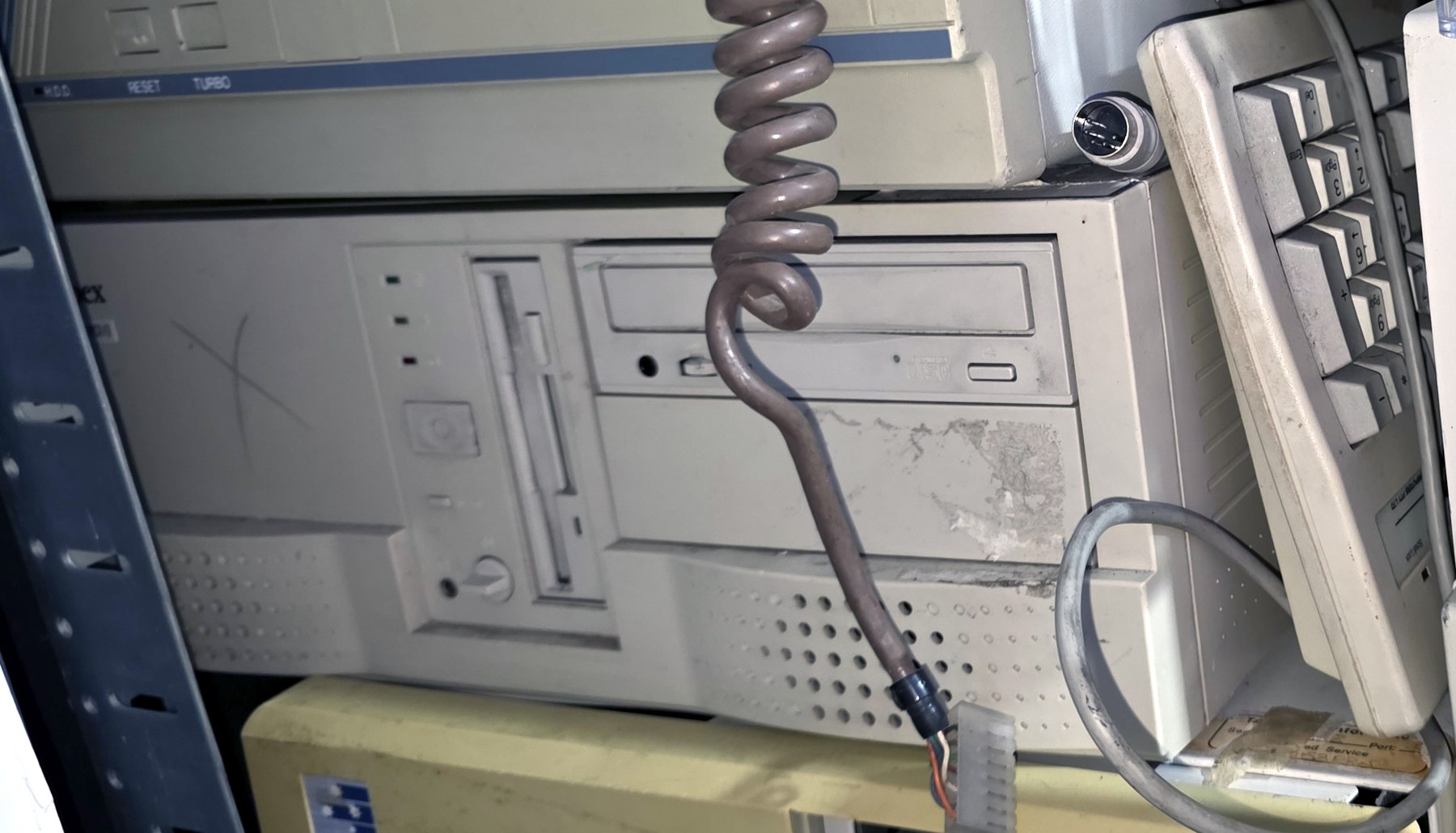
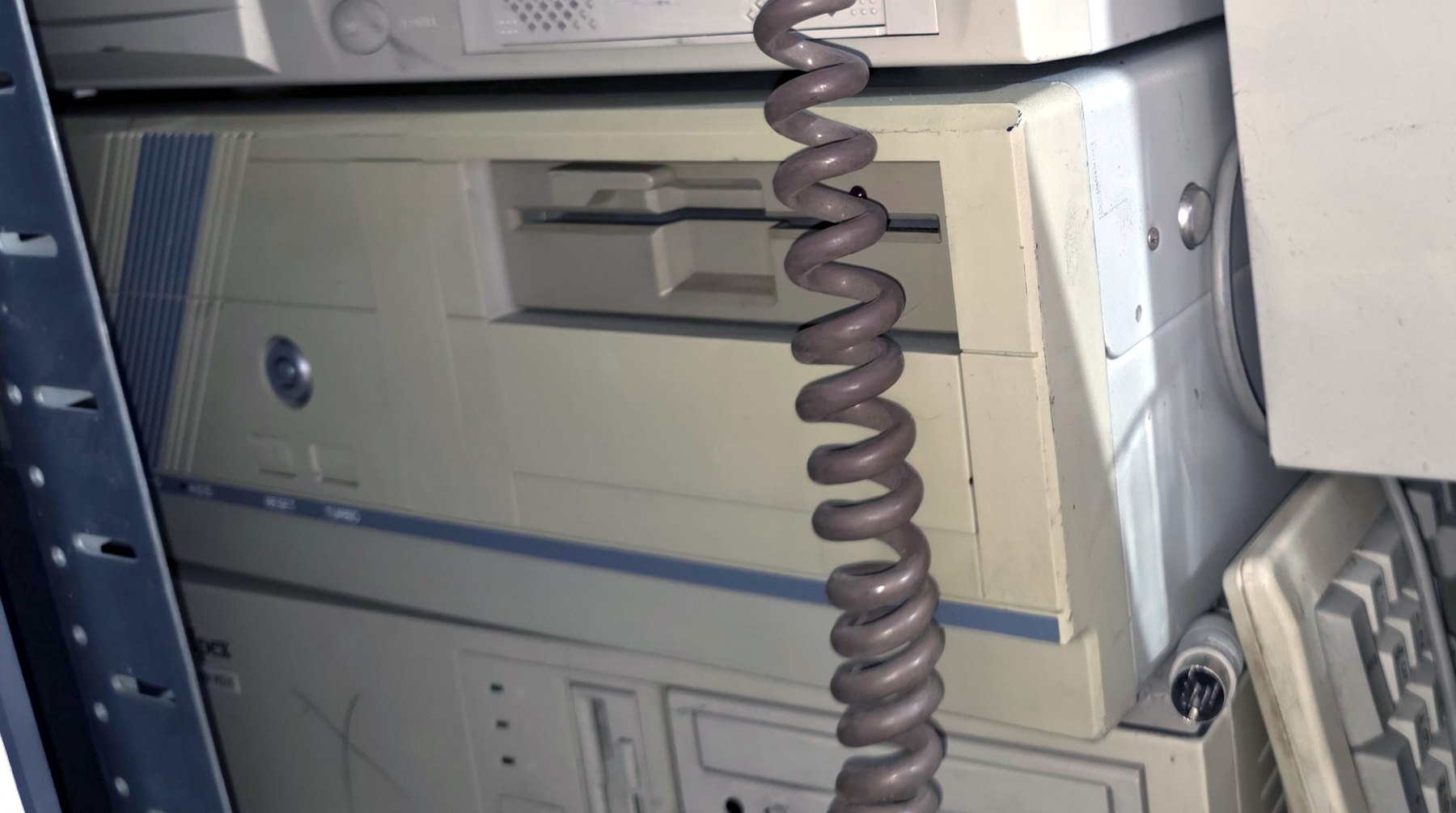
A rear view of stacked enclosures shows expansion openings, connectors and a ventilation grille. No model label is legible at this scale. This view is retained as an identification lead, not treated as evidence for a particular computer architecture.

Stacked keyboard systems — collection photograph

Computers

Stacked keyboard systems

Awaiting identification

Two pale keyboard-style enclosures sit beneath a monitor and loose cables. Their badges and keyboards are partly obscured. They may relate to other machines in the collection, but there is not enough evidence to merge them safely or assign a model.

Microbee video monitor — collection photograph

Displays

Microbee video monitor

Brand identified; model unconfirmed

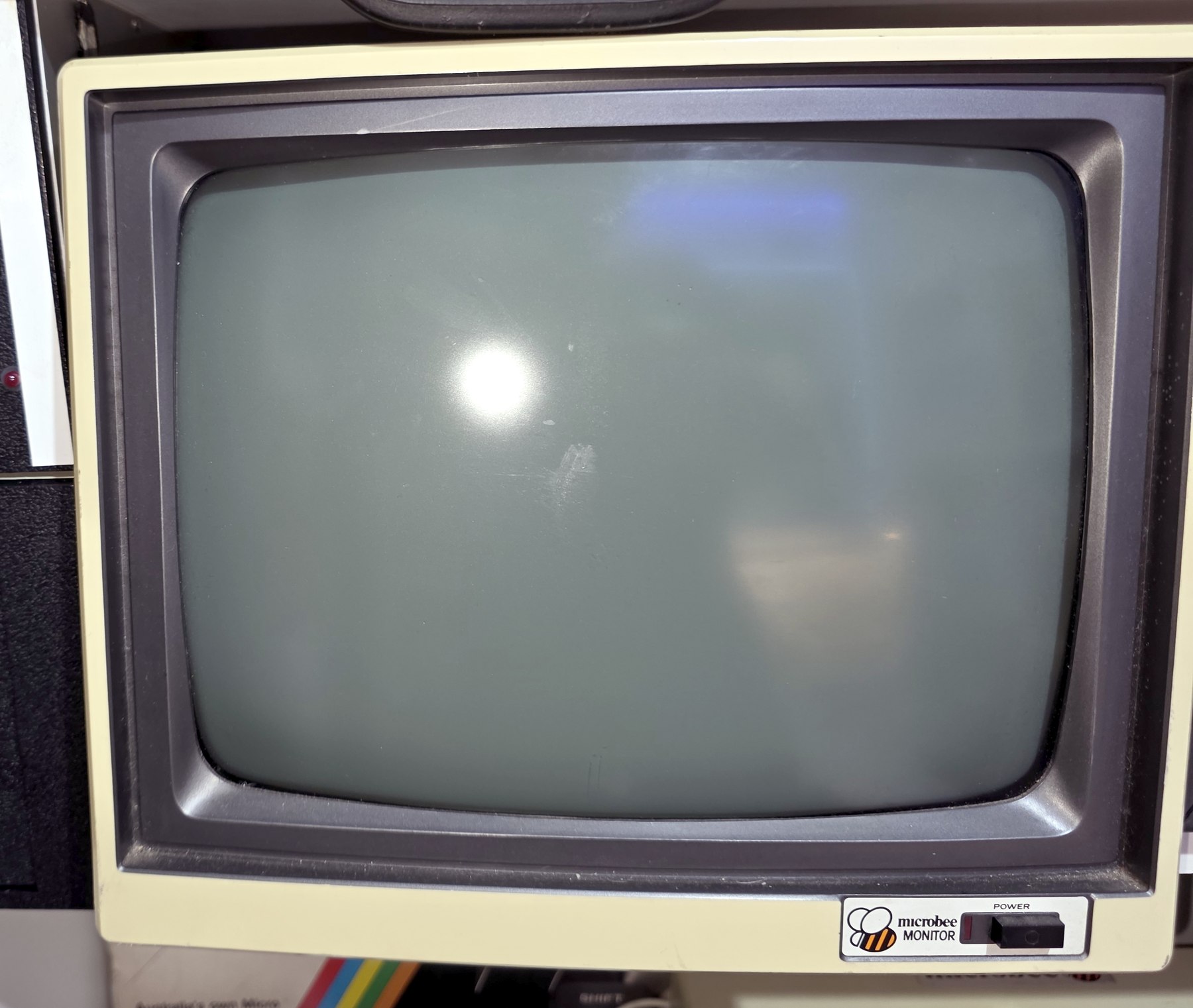
A cream CRT enclosure with a dark bezel and a Microbee video-monitor badge. The clearer front photograph is used in place of a second, similar view. The exact model and display specification need a rear label; matching branding alone does not establish which computer it originally accompanied.

Microbee-badged video monitor — collection photograph

Displays

Microbee-badged video monitor

Brand identified; model unconfirmed

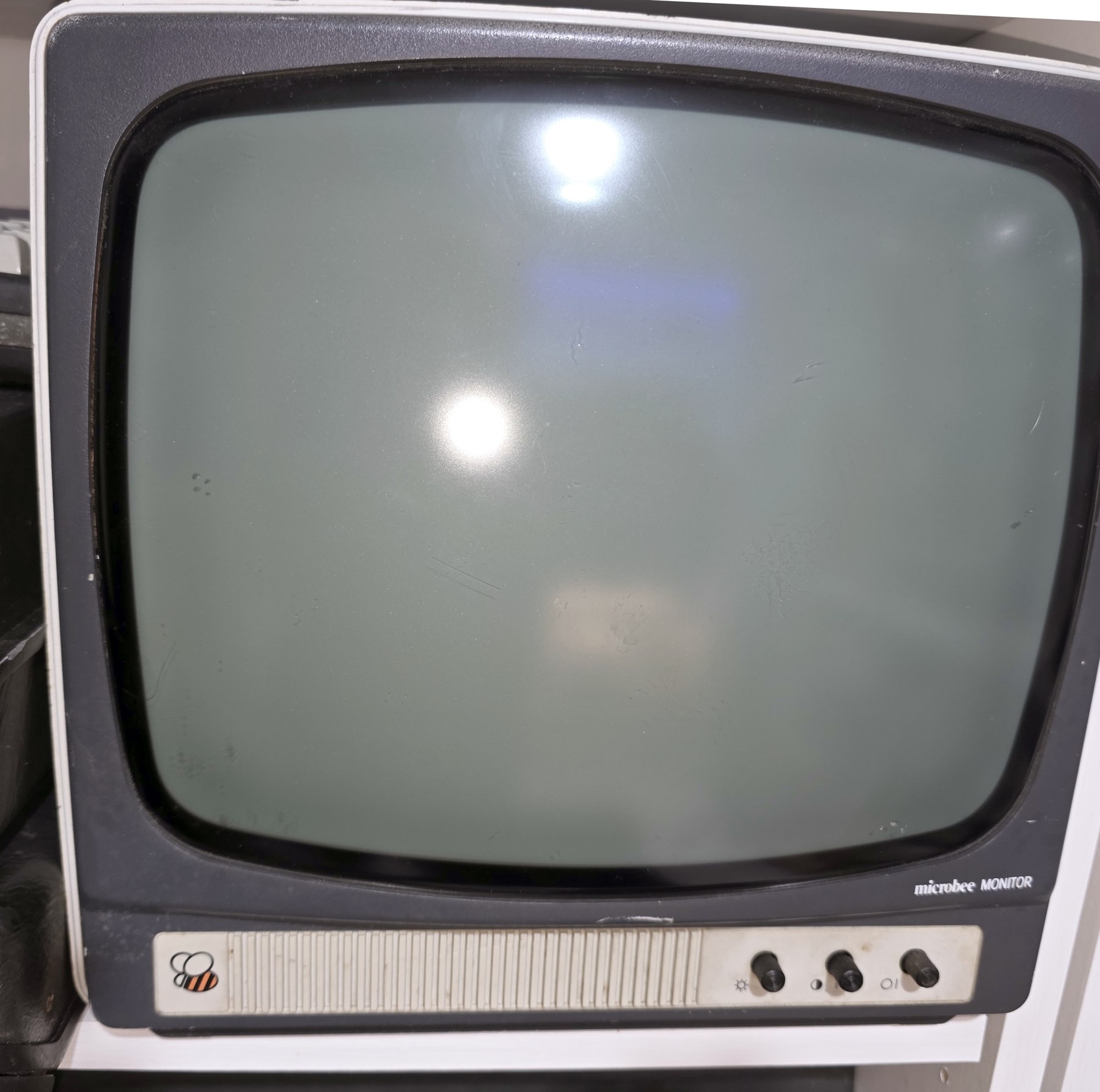
This grey CRT monitor carries a Microbee bee emblem at the lower left, a speaker-like grille and controls along the bottom. Its casing differs from the cream Microbee monitor, so it is retained as a separate item. A model number is not visible.

Microbee M-18 monitor packaging — collection photograph

Displays

Microbee M-18 monitor packaging

Packaging identified

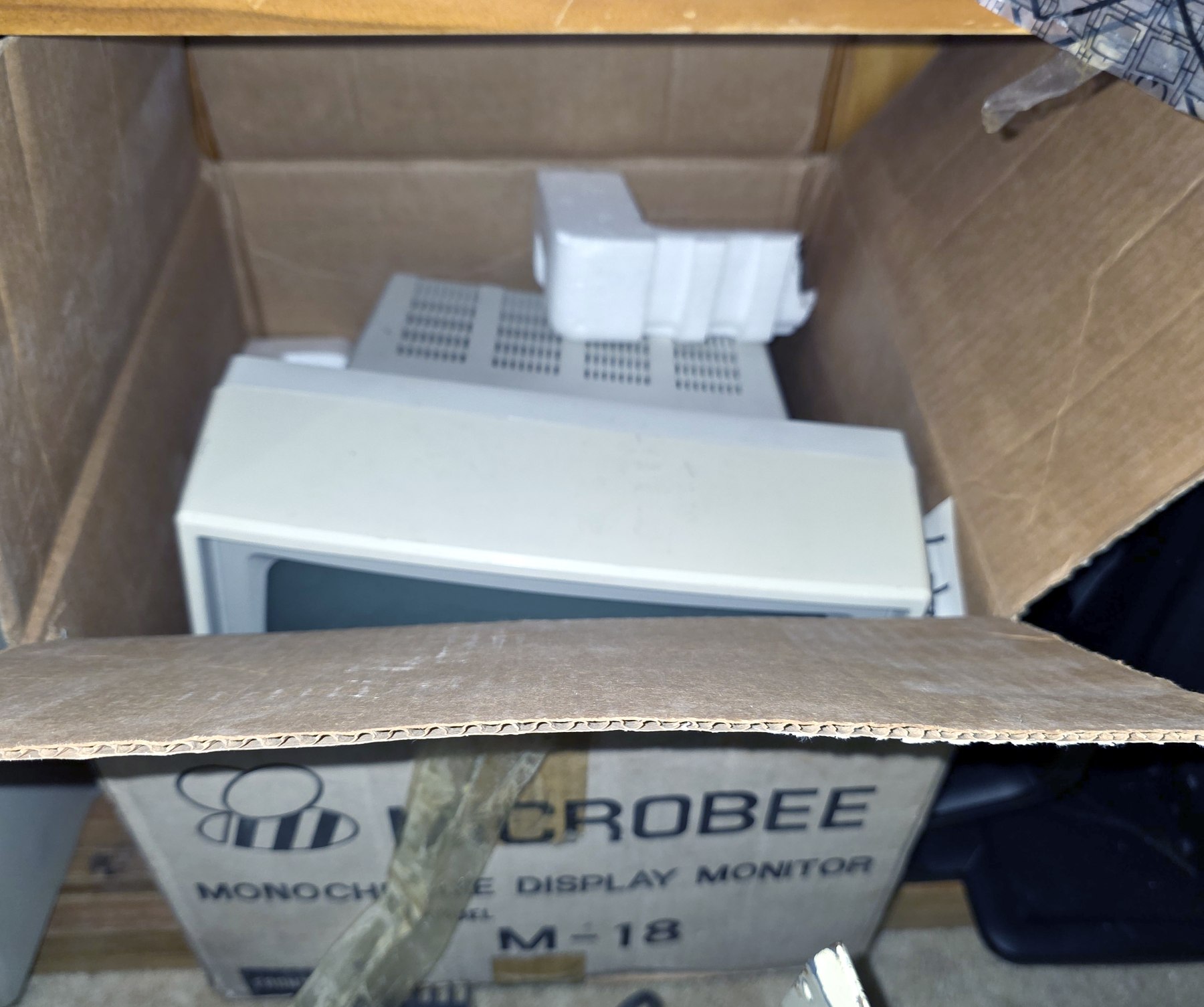
An open Microbee carton marked M-18 Monochrome Display Monitor contains a CRT monitor. M-18 is readable on the box; the monitor’s own identification plate is not shown, so the packaging-to-unit match remains to be checked.

Microbee-badged square CRT — collection photograph

Displays

Microbee-badged square CRT

Brand identified; model unconfirmed

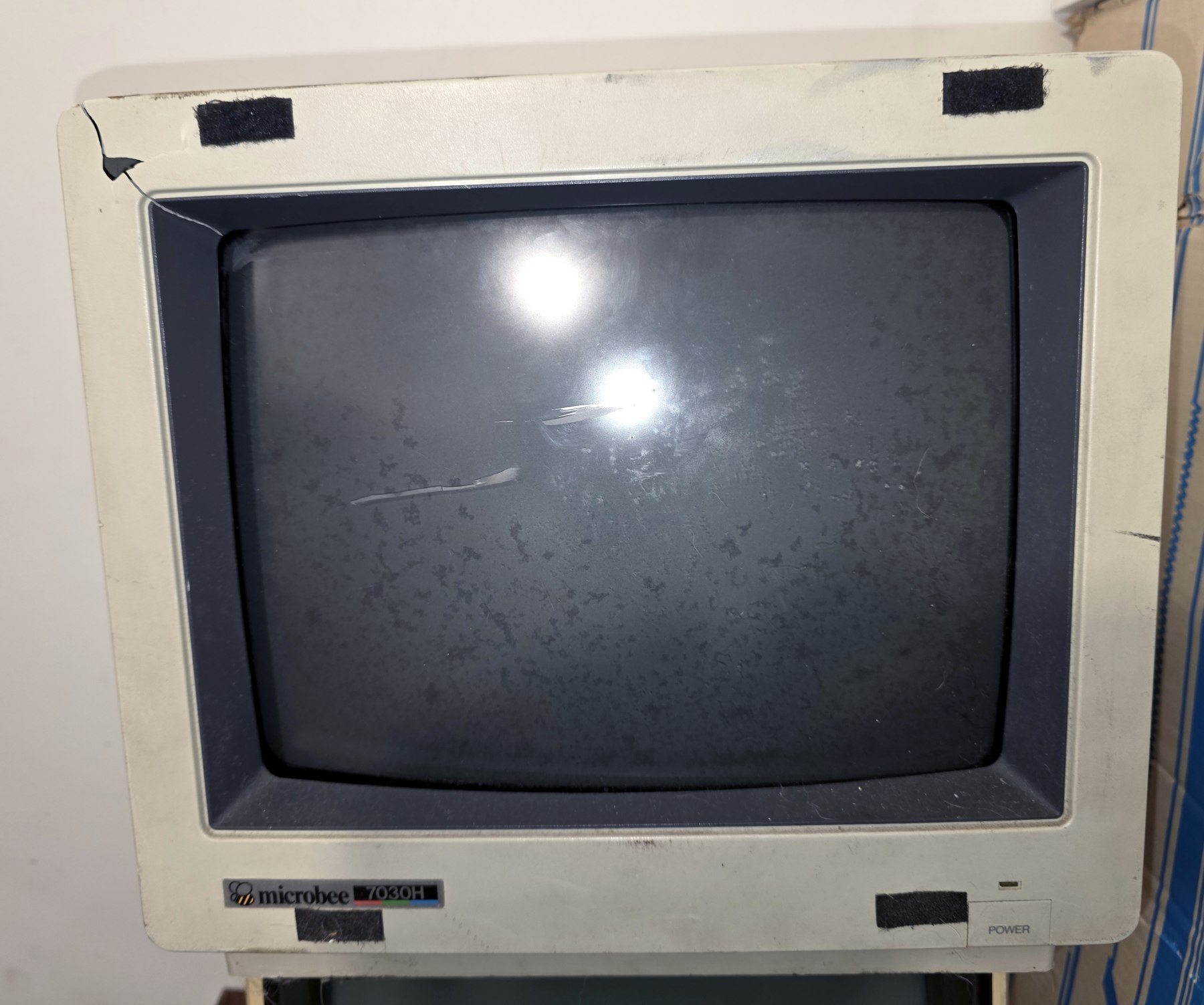
A light-coloured CRT with a Microbee badge and a comparatively square bezel. Several pieces of hook-and-loop fastening are attached to the case. The photograph supports the brand identification but not a precise model or date.

Micro Byte CRT monitor — collection photograph

Displays

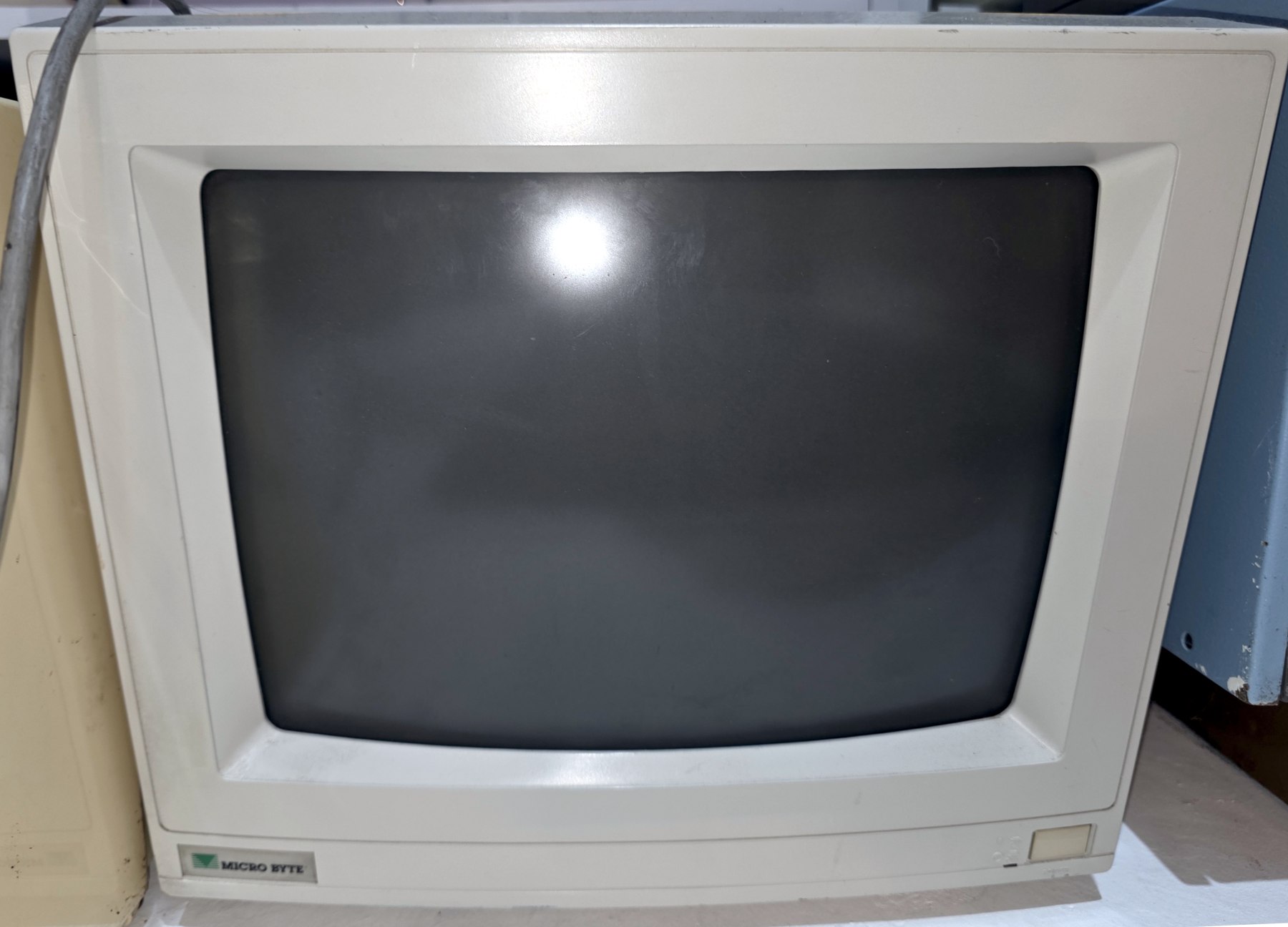
Micro Byte CRT monitor

Brand identified; model unconfirmed

A pale CRT monitor with a readable Micro Byte badge at the lower left. Its restrained front panel has a single prominent power button. The photograph does not establish its resolution, colour capability or original pairing.

DSE colour monitor — collection photograph

Displays

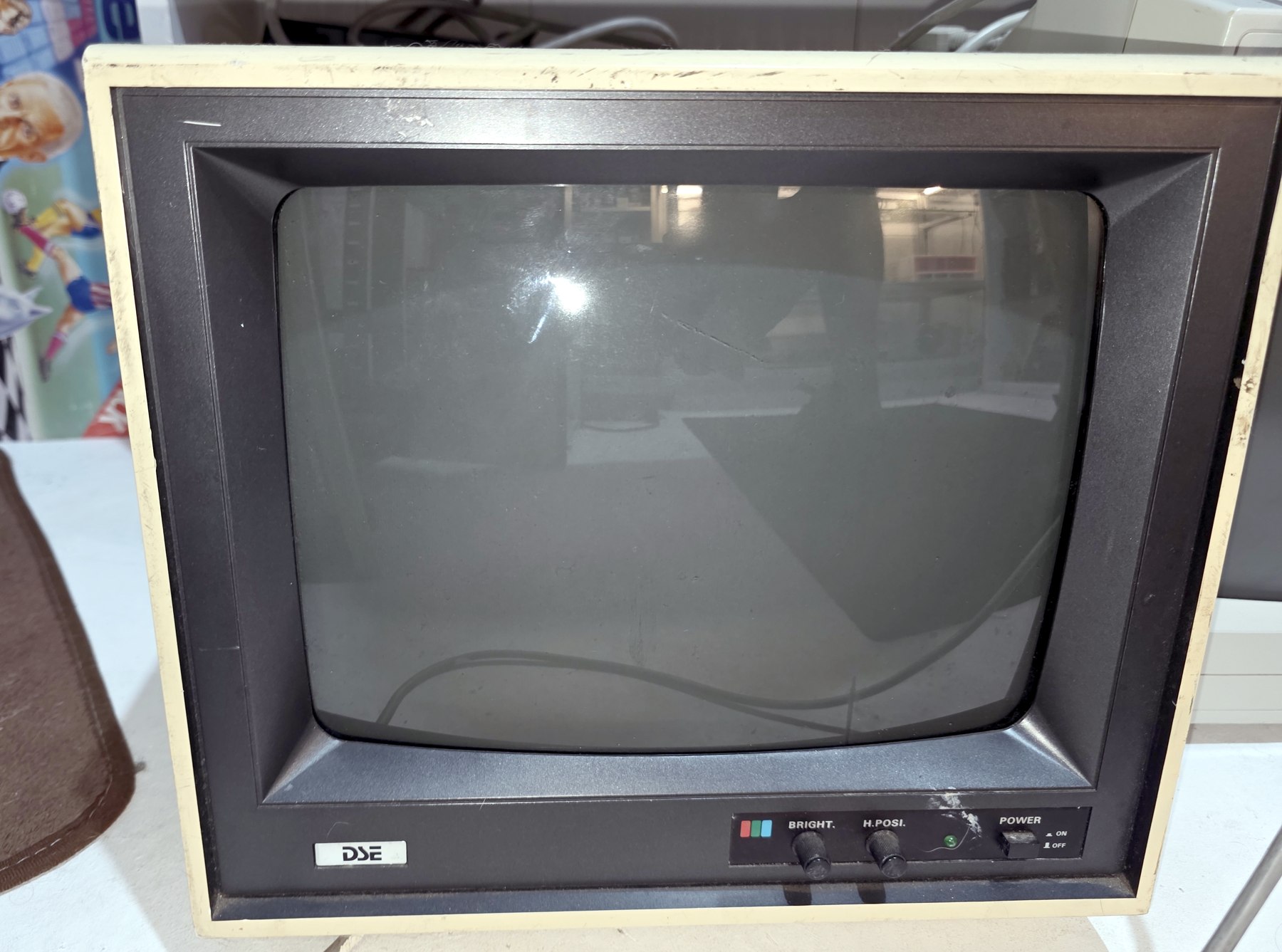
DSE colour monitor

Brand identified; model unconfirmed

The DSE logo and colour-monitor marking identify this display as a Dick Smith Electronics-branded CRT. The lower panel includes picture controls and power switching. A rear label would be needed for a model number and technical specifications.

Sanyo CRT television — collection photograph

Displays

Sanyo CRT television

Brand identified; model unconfirmed

A Sanyo-branded television with an aerial and front controls, photographed among the computer displays. Televisions were also used as screens for home computers. Its presence here is recorded as supporting equipment; no Australian manufacture is implied.

Unidentified video monitor — collection photograph

Displays

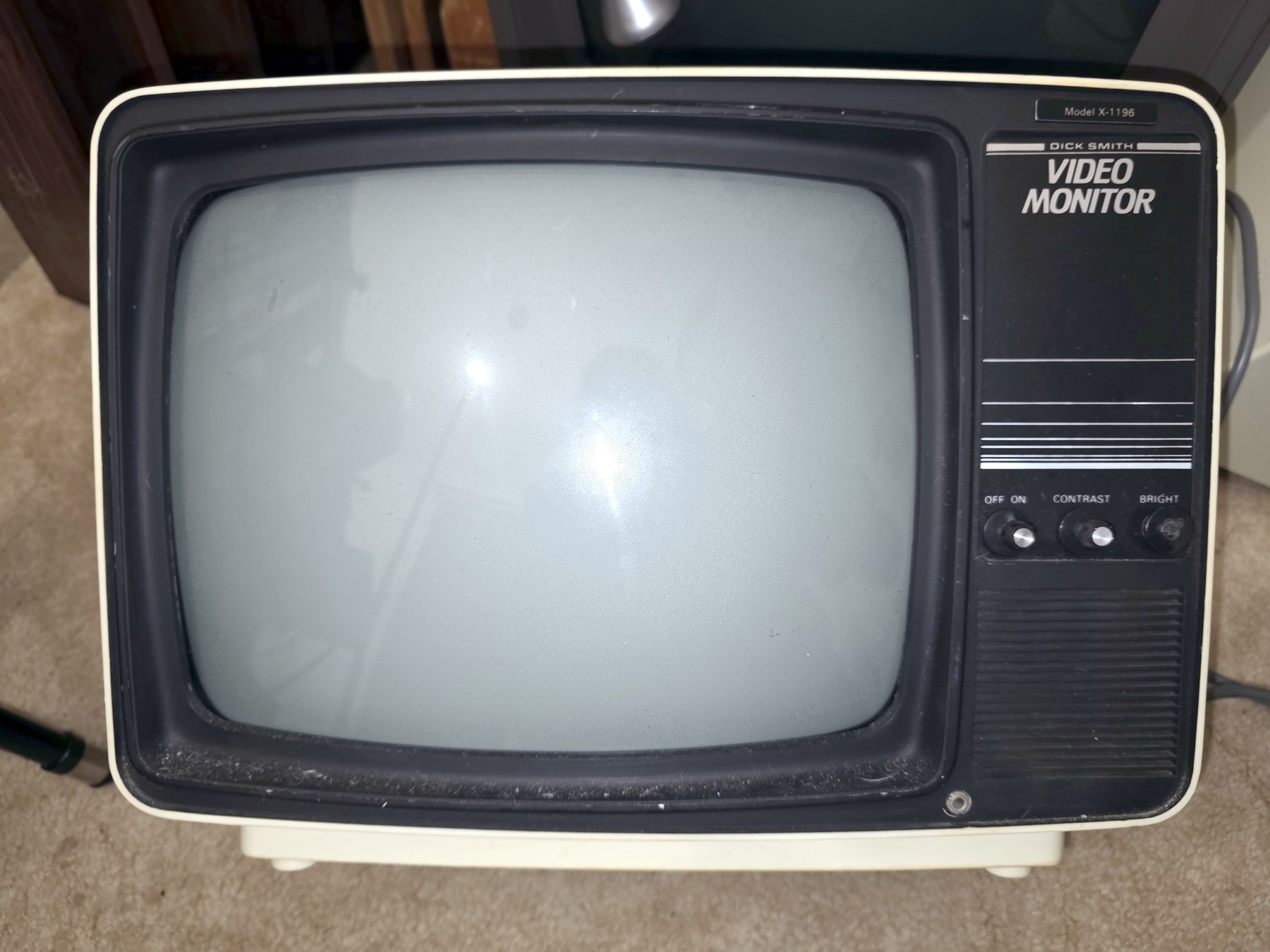
Unidentified video monitor

Awaiting identification

A dark-cased CRT marked Video Monitor, with its controls arranged vertically on the right. The maker and model are not readable. It is retained separately from the branded monitors until a rear label provides a reliable match.

Unidentified dark CRT monitor — collection photograph

Displays

Unidentified dark CRT monitor

Awaiting identification

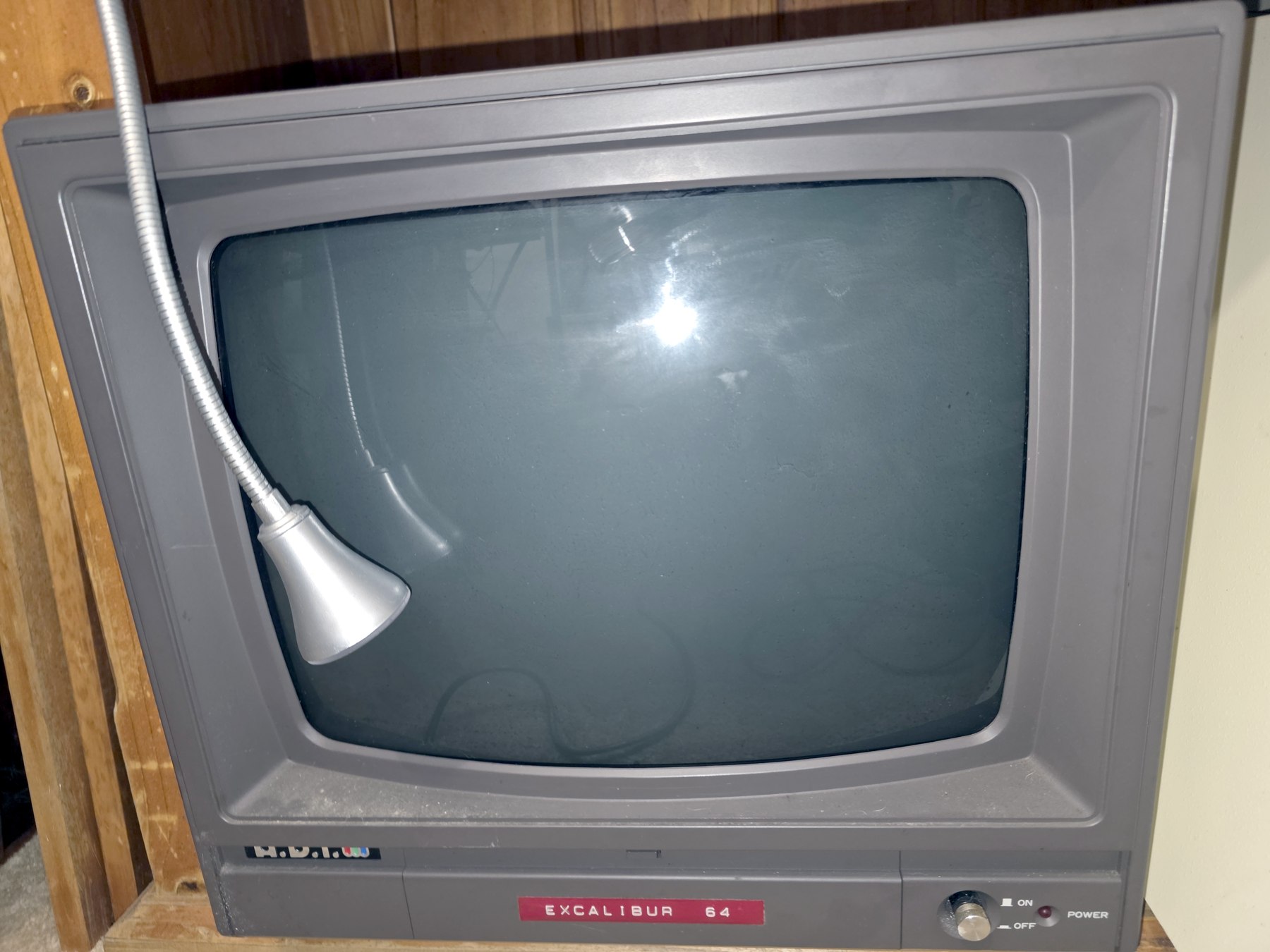
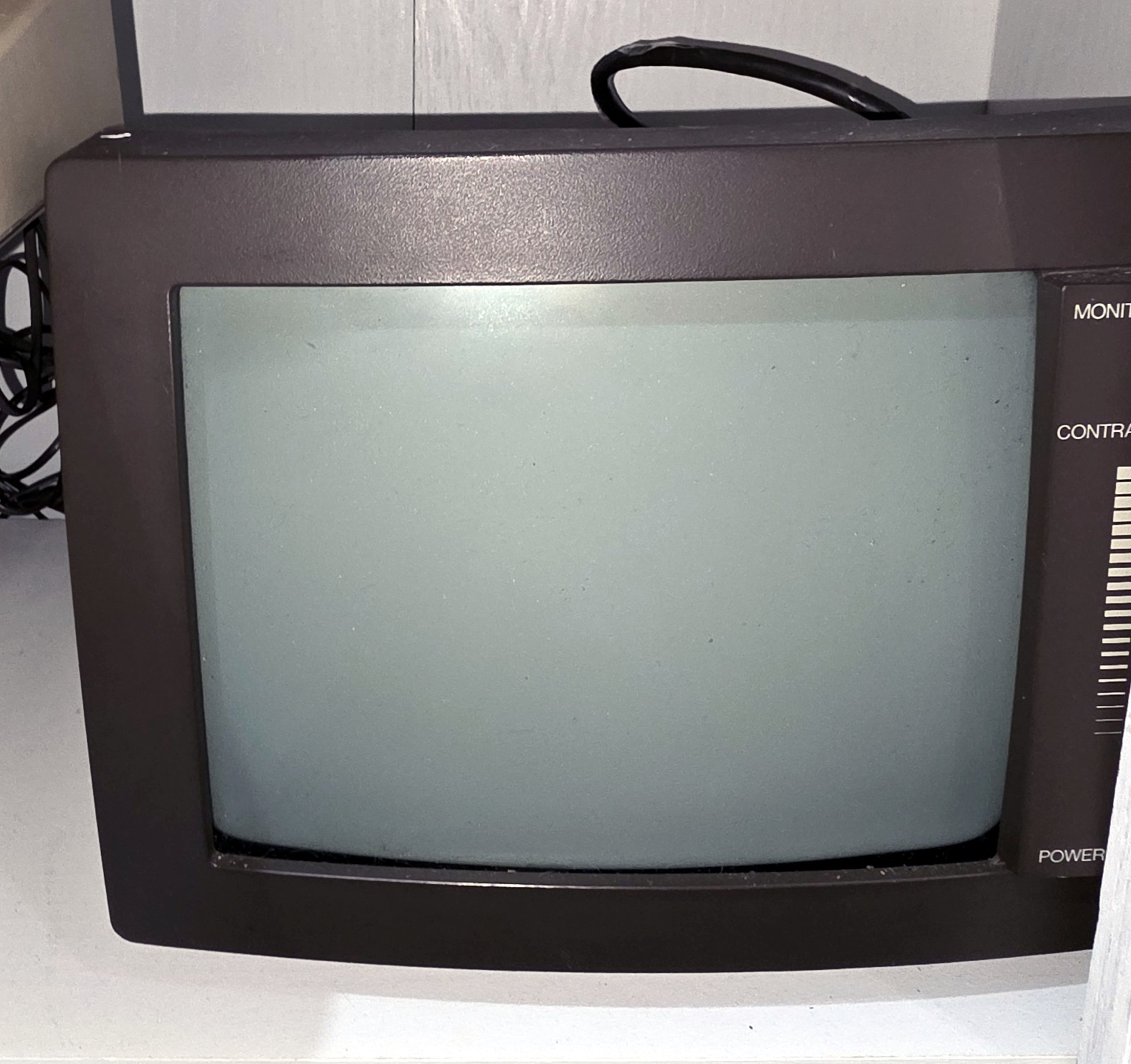
A wide dark bezel surrounds this CRT, with controls on the right-hand side. The photograph contains no clearly readable maker or model. Its original computer pairing and display type remain open.

Beemodem 300-baud modem — collection photograph

Peripherals

Beemodem 300-baud modem

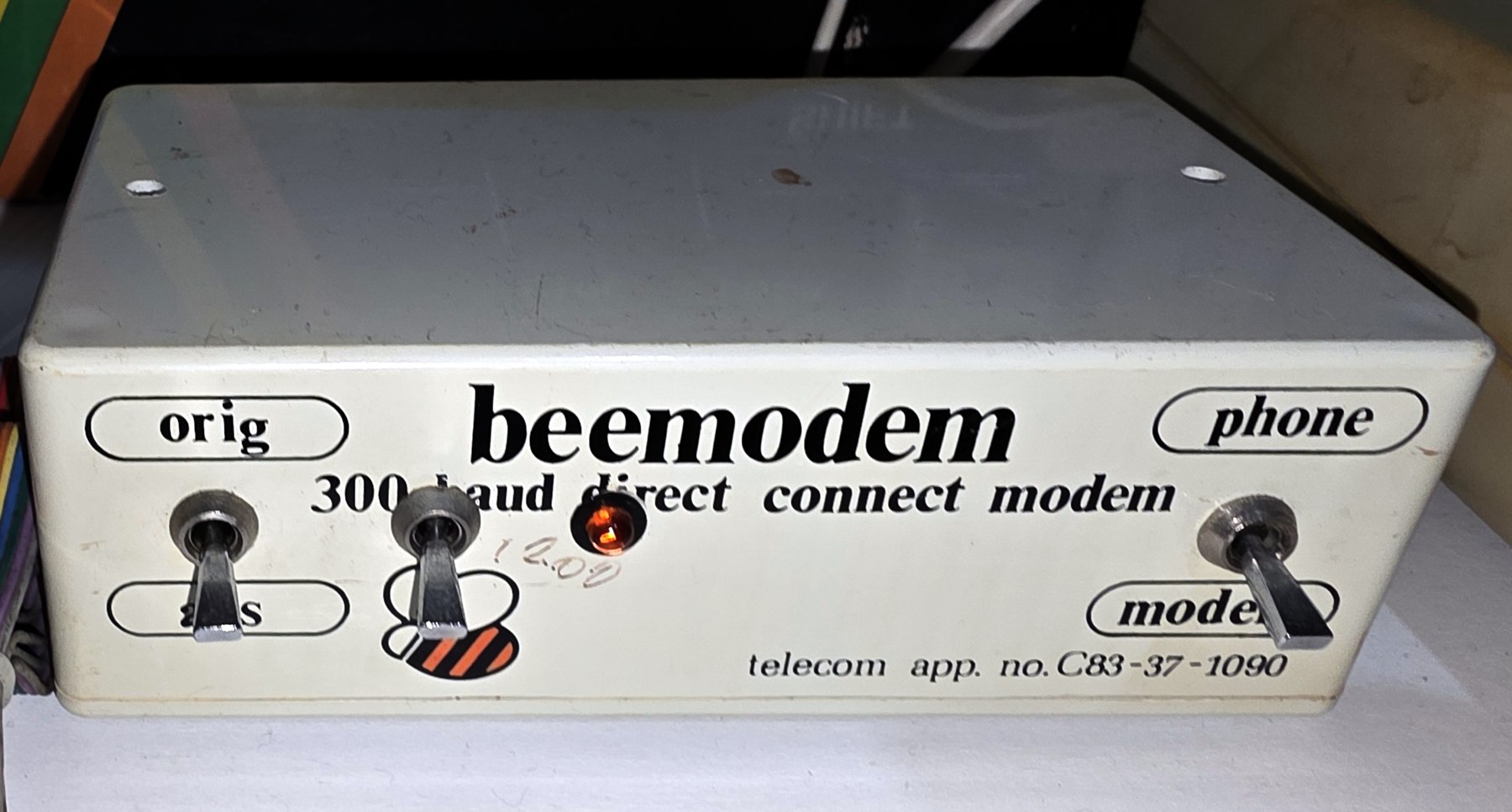
Label identified

The front panel identifies a Beemodem 300-baud direct-connect modem. Its switches select originate/answer and phone/modem operation. This accessory represents the low-speed telephone connections used to exchange data before widespread internet access.

Altronics K9668 Micro Bee EPROM programmer — collection photograph

Peripherals

Altronics K9668 Micro Bee EPROM programmer

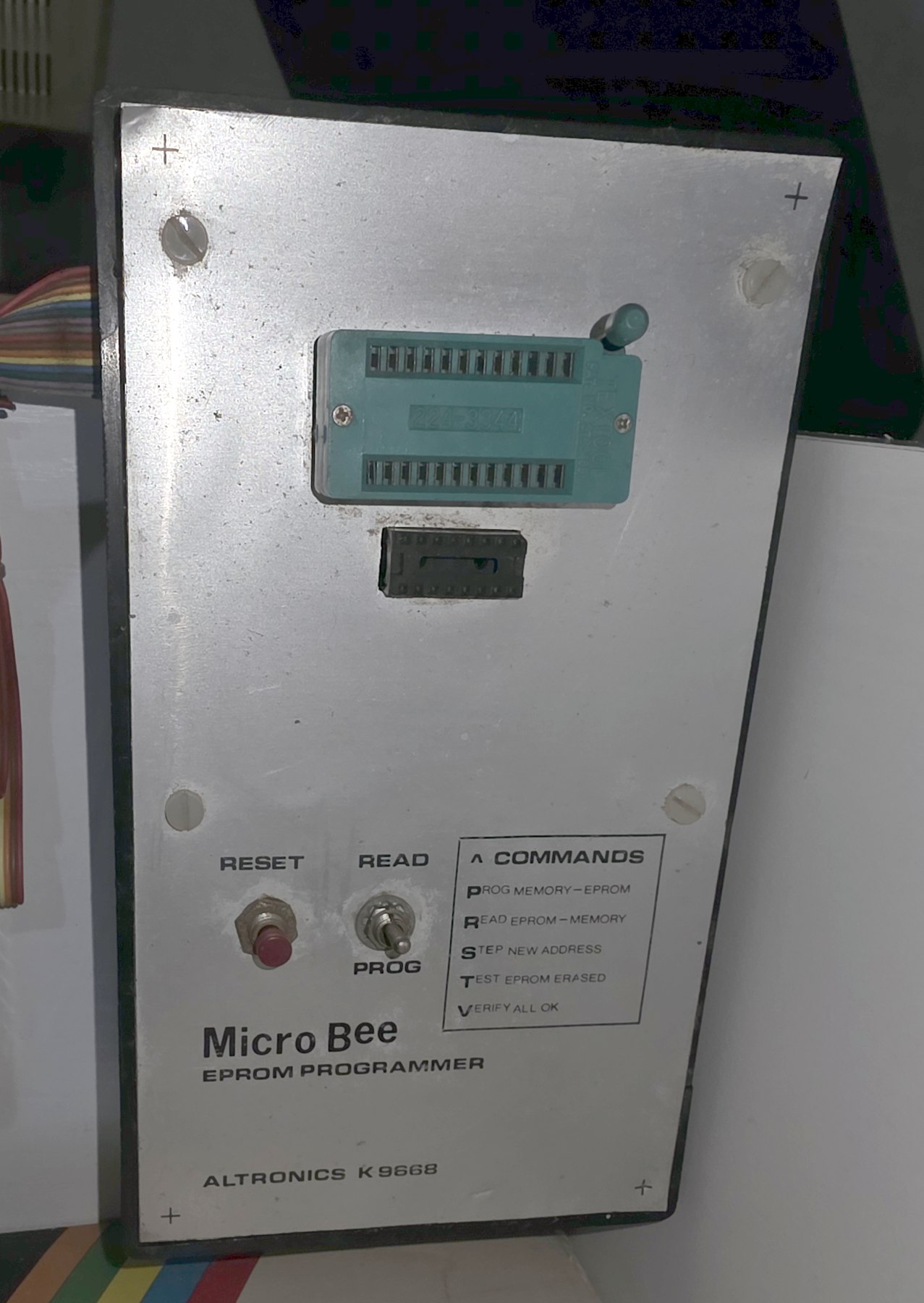
Label identified

The faceplate identifies an Altronics K9668 Micro Bee EPROM Programmer. A lever-operated chip socket holds the EPROM, while READ/PROG and RESET controls support reading, programming and verification. It is a programming accessory, rather than a standalone computer.

NetComm & Maestro modems — collection photograph

Peripherals

NetComm & Maestro modems

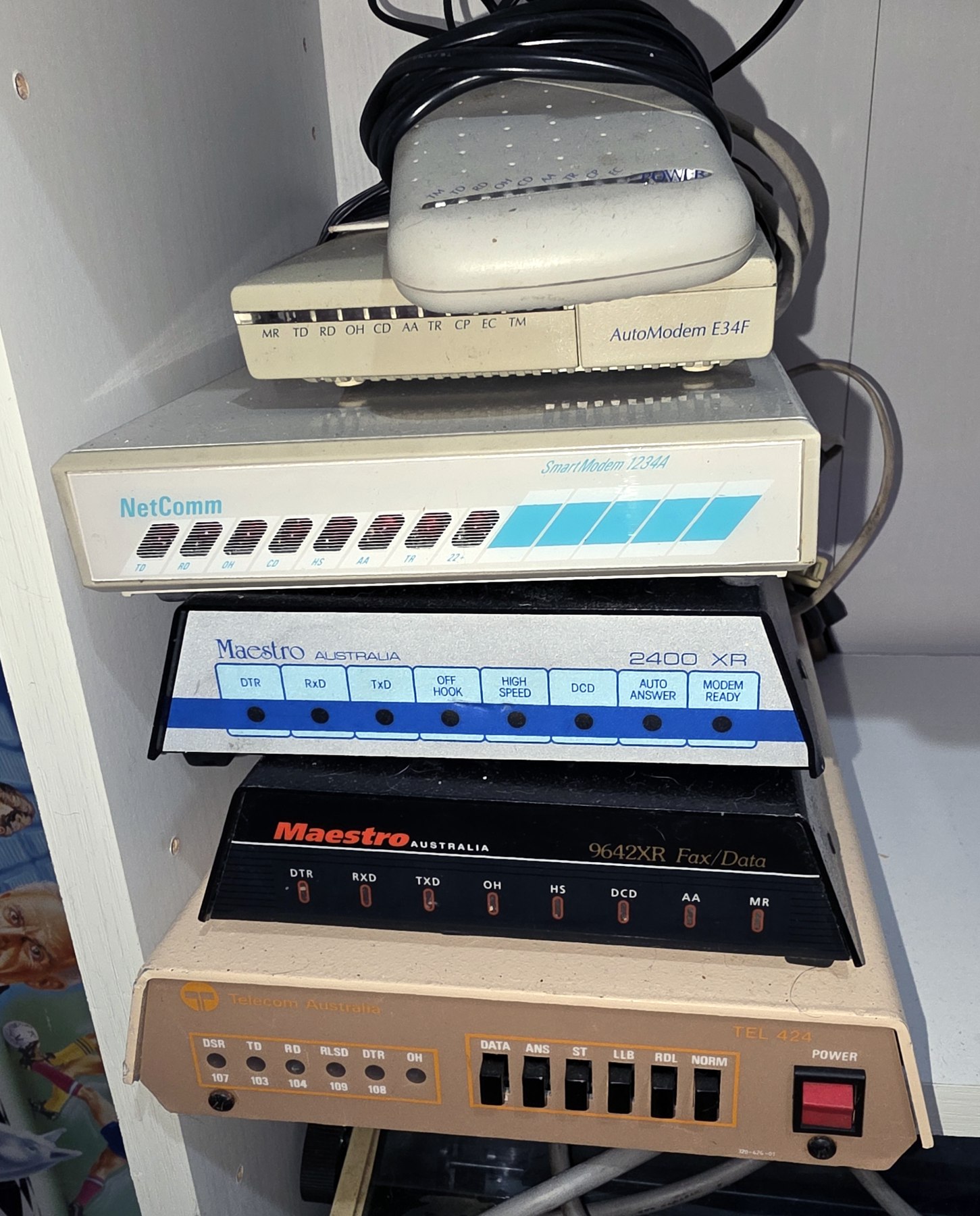
Label identified

Several external communications units are stacked together. NetComm and Maestro branding is visible, including a Maestro 2400 XR. They are grouped in one entry because this photograph shows a collection of devices, not a single machine. Model details for the other units await closer label photographs.

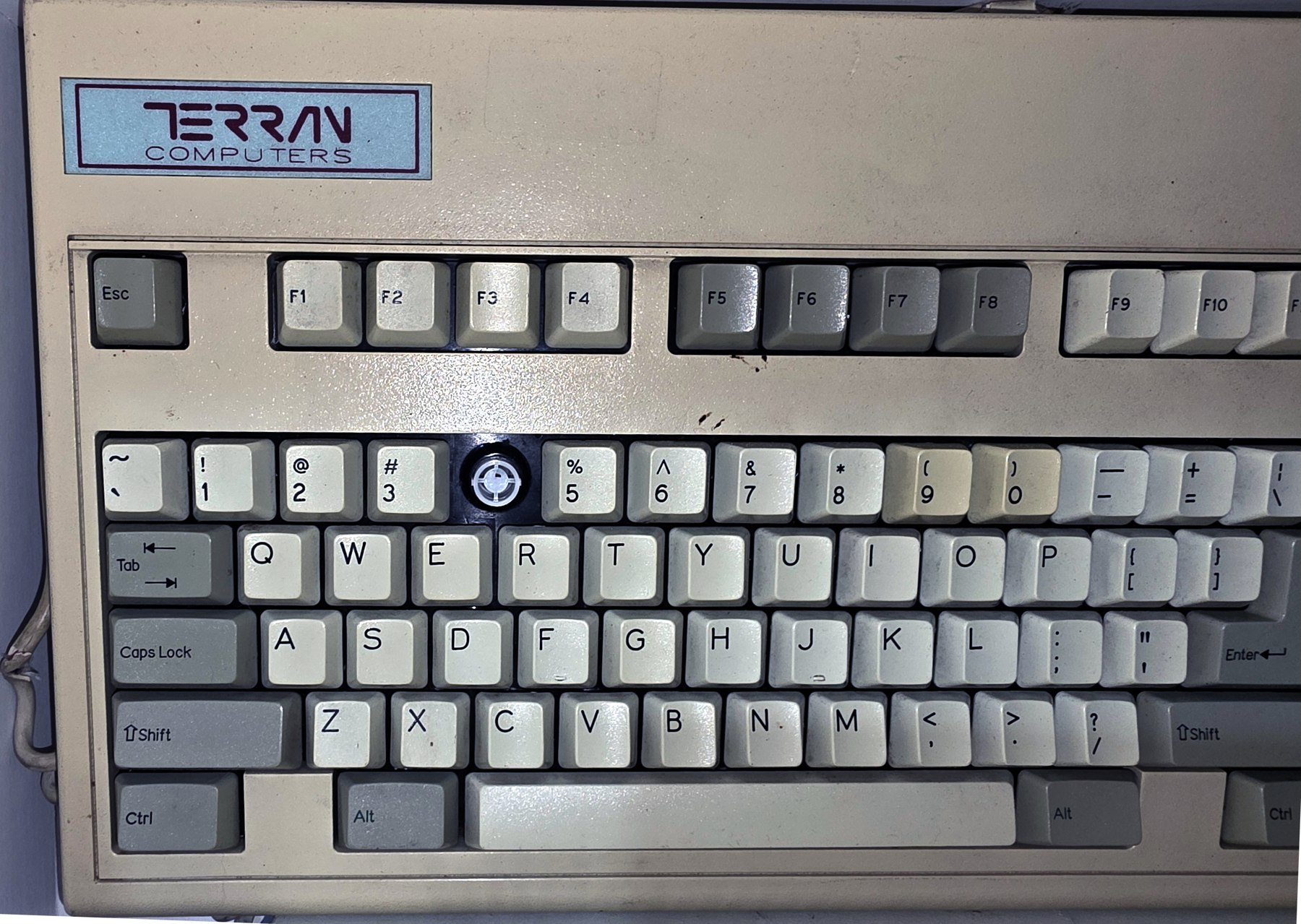
Terran Computers keyboard — collection photograph

Peripherals

Terran Computers keyboard

Brand identified; model unconfirmed

A keyboard carrying a clear Terran Computers badge. Contemporary Electronics Australia reporting identifies Terran as an Australian computer designer and manufacturer. This photograph records the keyboard only; it does not establish which Terran PC model it belongs to.

Historical reference ↗
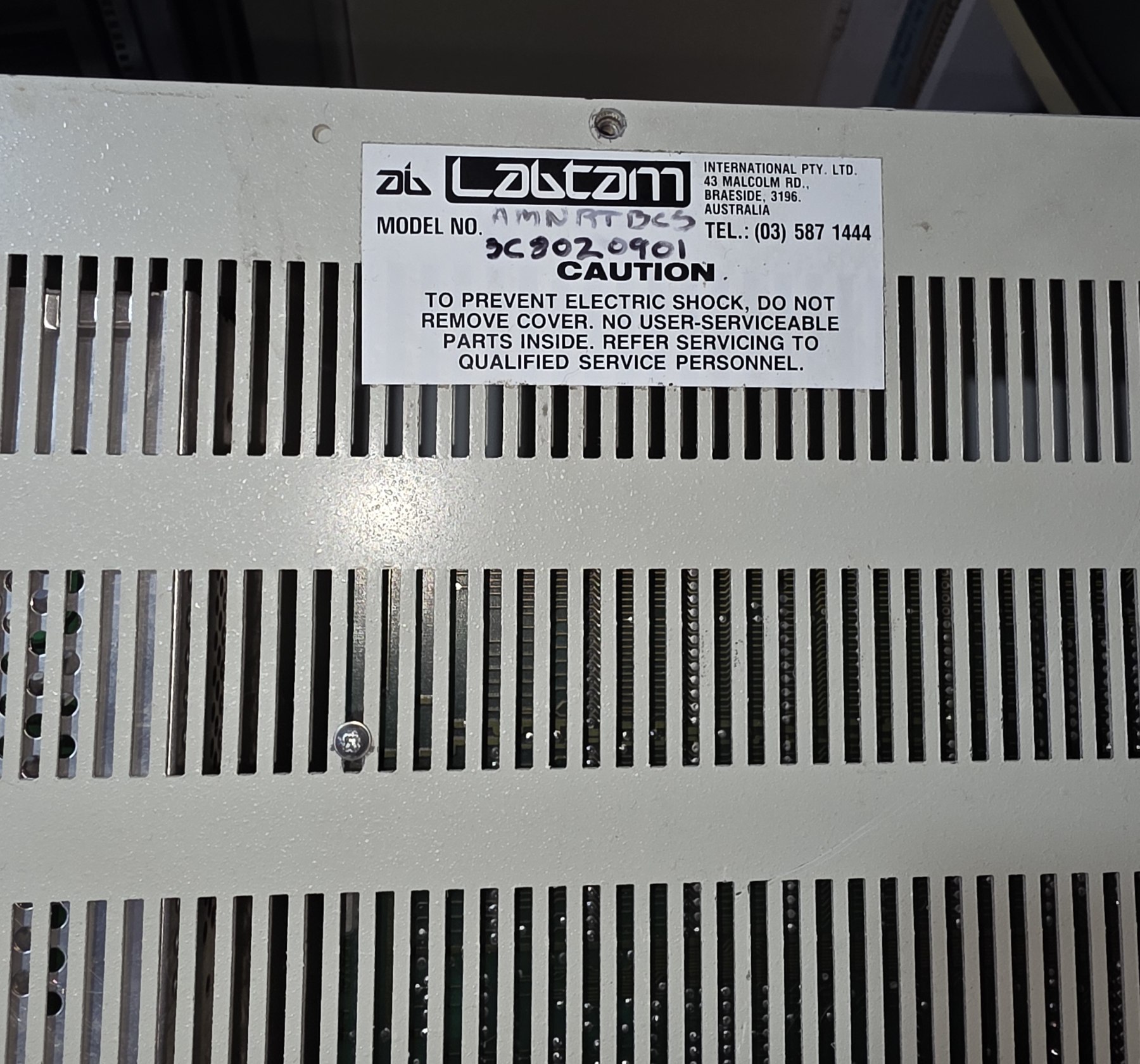
Latam-labelled equipment — underside — collection photograph

Peripherals

Latam-labelled equipment — underside

Maker identified; model unconfirmed

The underside label identifies Latam International Pty. Ltd. and an Australian address. The handwritten model field is not clear enough for confident transcription. With only the underside visible, the equipment type and matching front view remain unconfirmed.

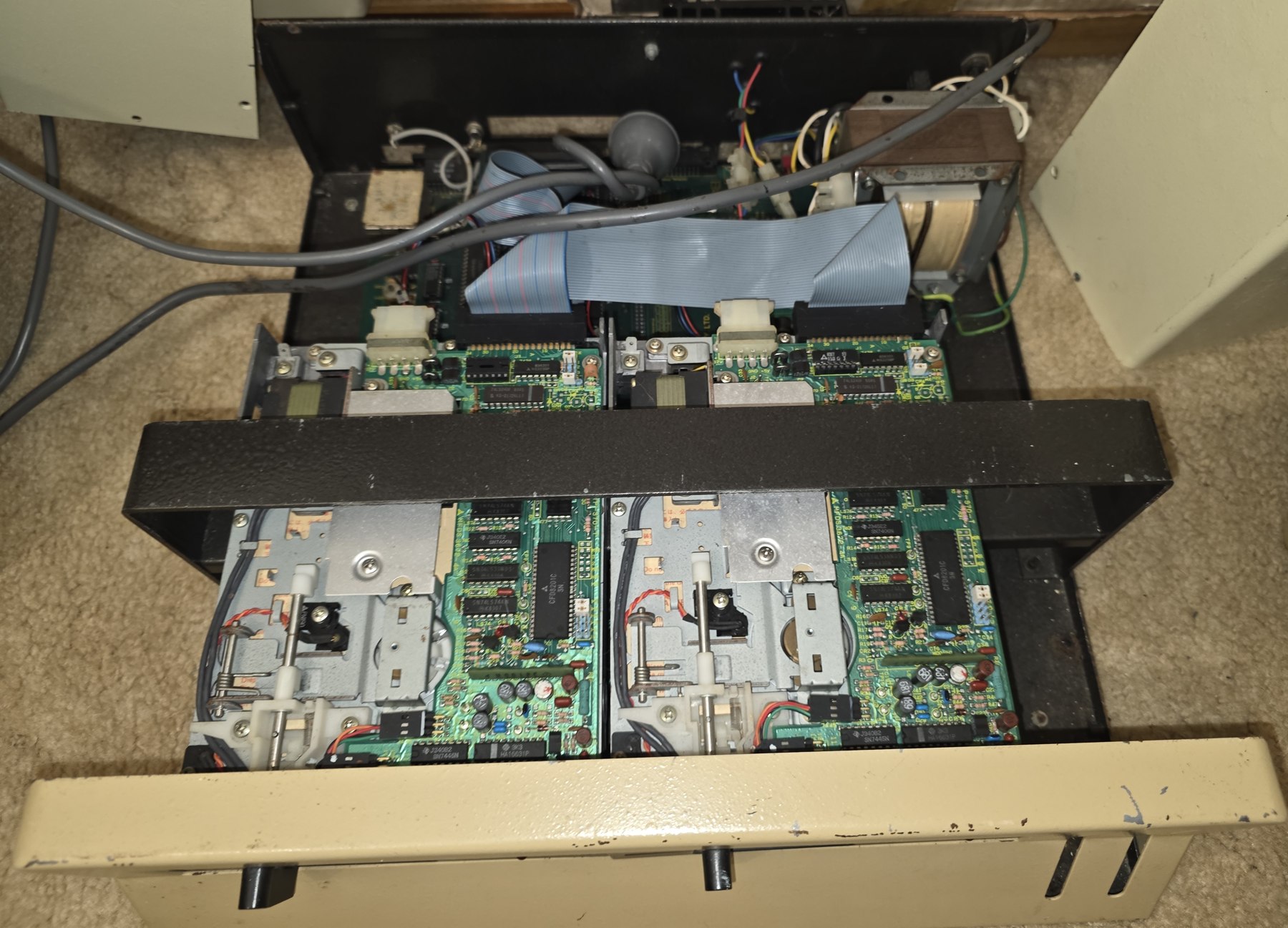
Twin floppy-drive assembly — collection photograph

Peripherals

Twin floppy-drive assembly

Awaiting identification

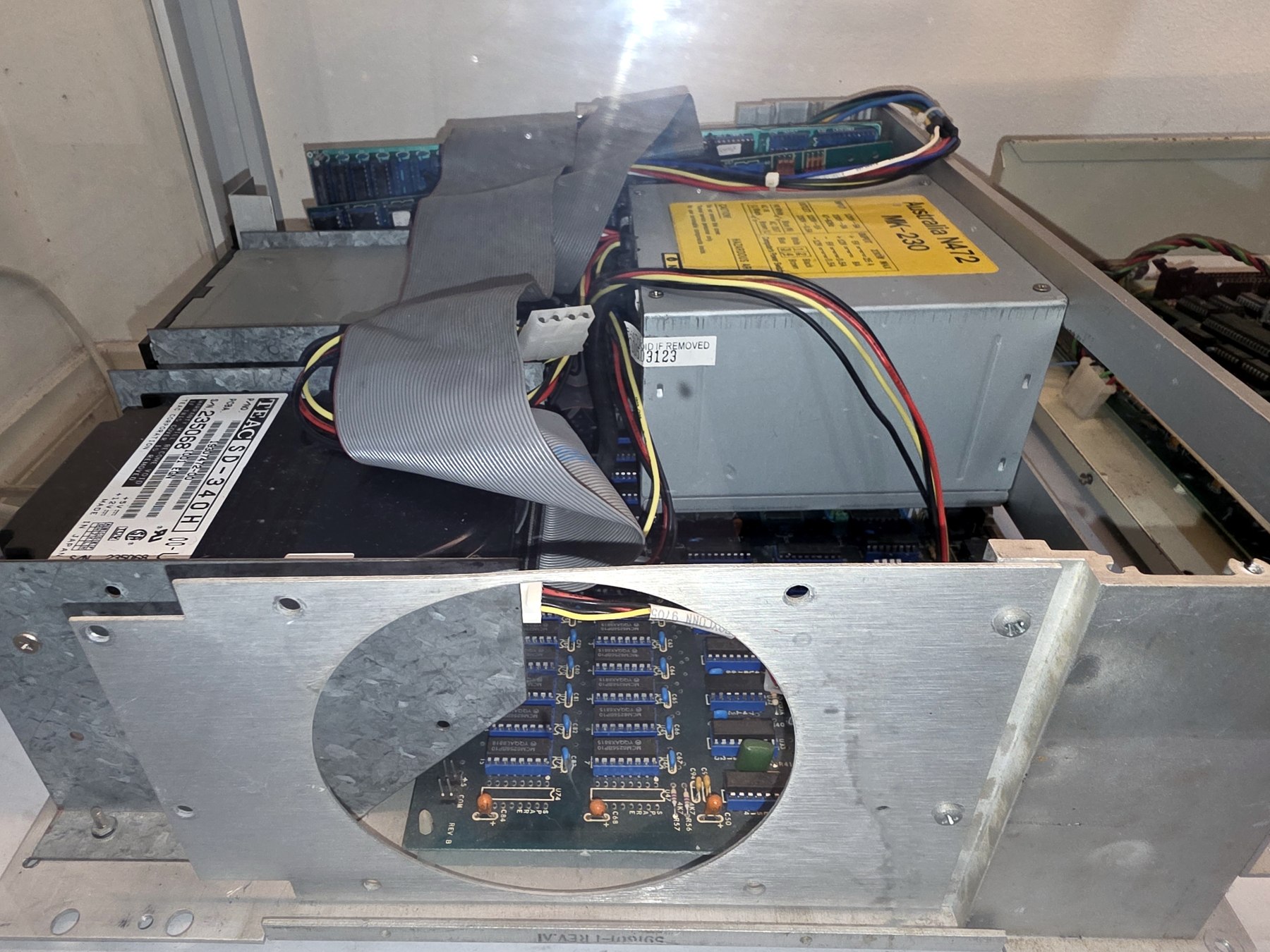
An open enclosure reveals two floppy-drive mechanisms, circuit boards and ribbon cables. This is useful evidence of the hardware inside the unit, but no readable label links it to a specific computer. It remains a separate identification lead.

Keyboard beneath a smoked cover — collection photograph

Peripherals

Keyboard beneath a smoked cover

Awaiting identification

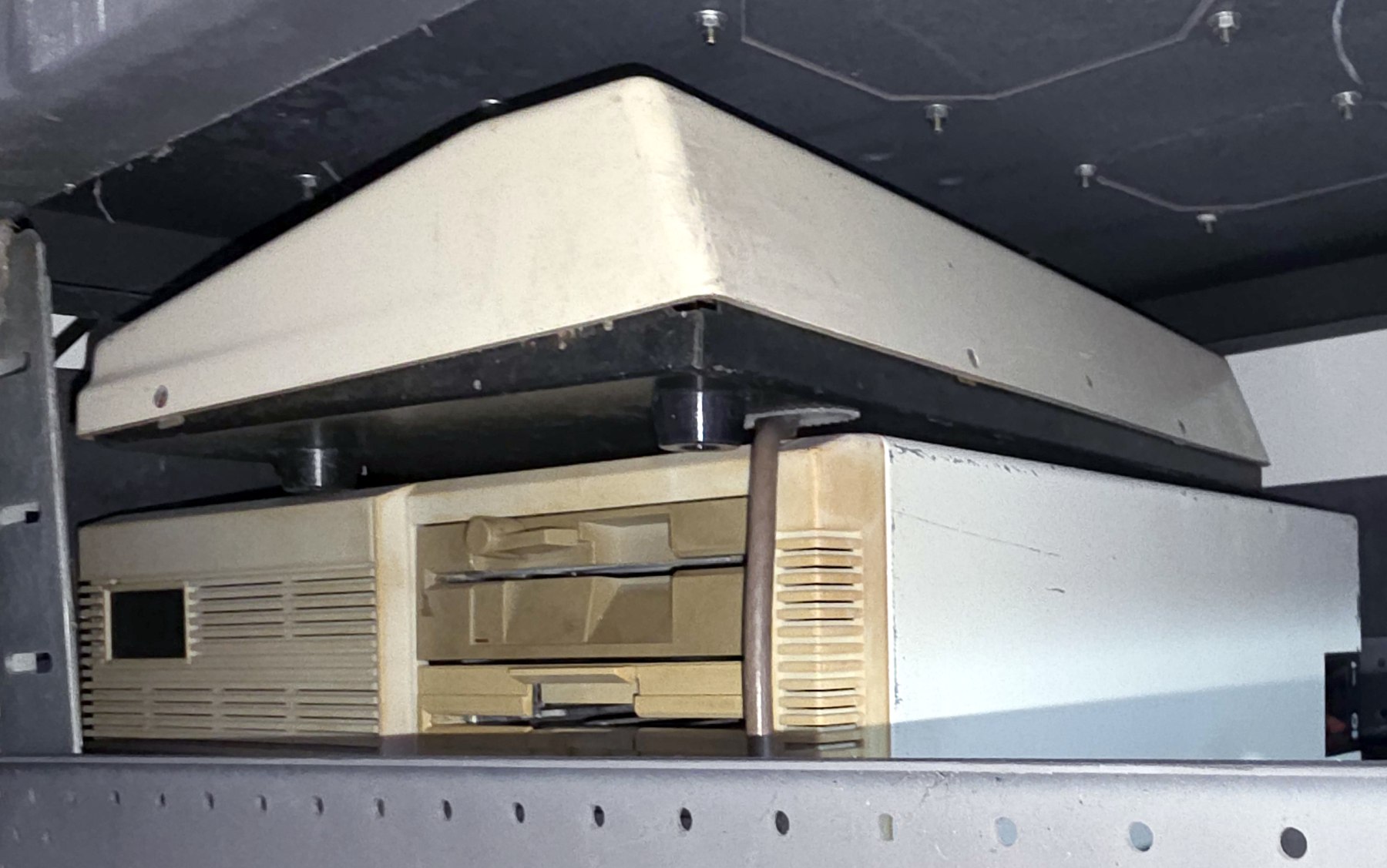
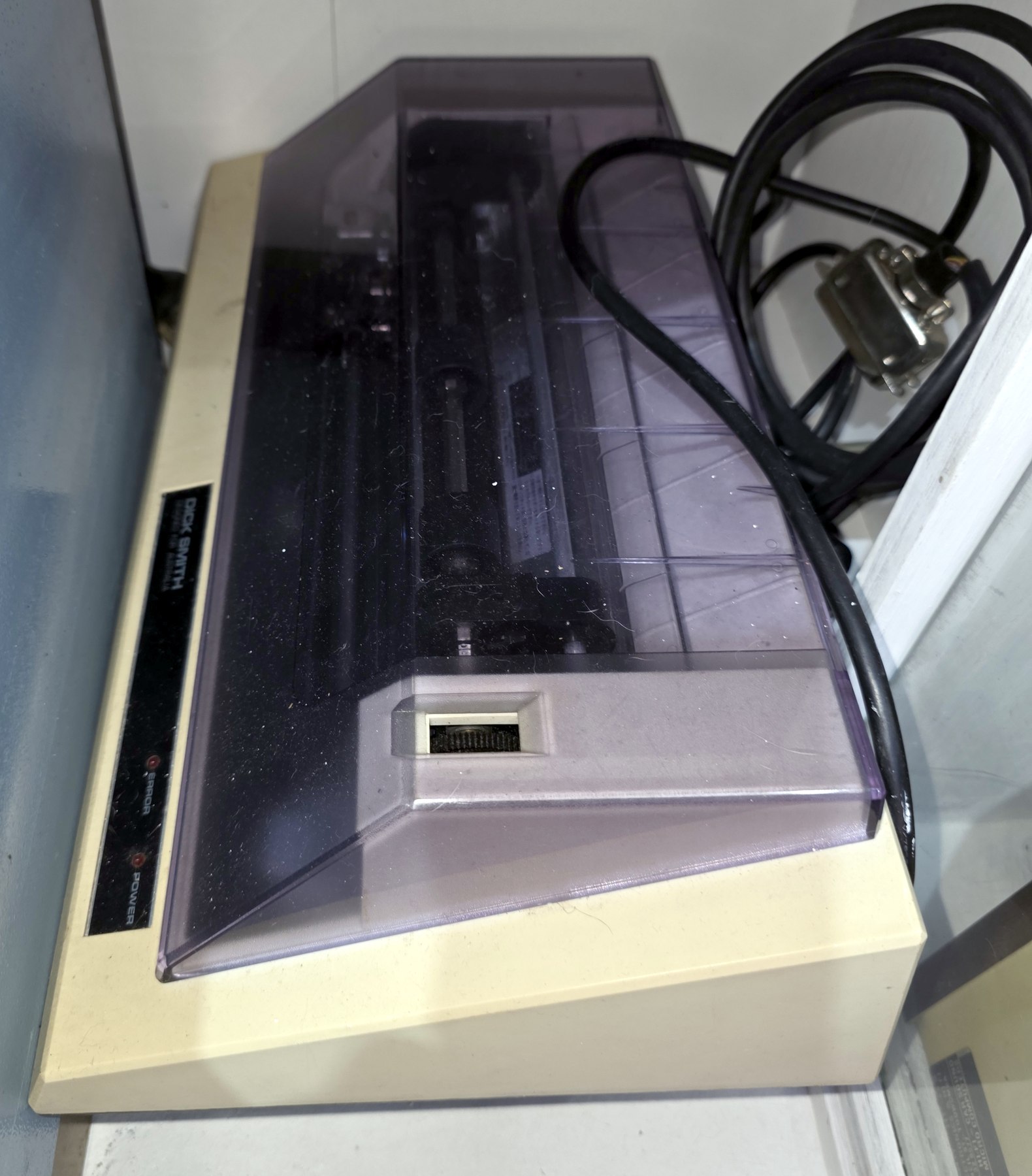
A keyboard or keyboard-computer unit sits under a smoked plastic cover with its cable on top. The oblique view obscures the identifying details. It is not assumed to be a second Challenger or any other named machine without a clearer view.

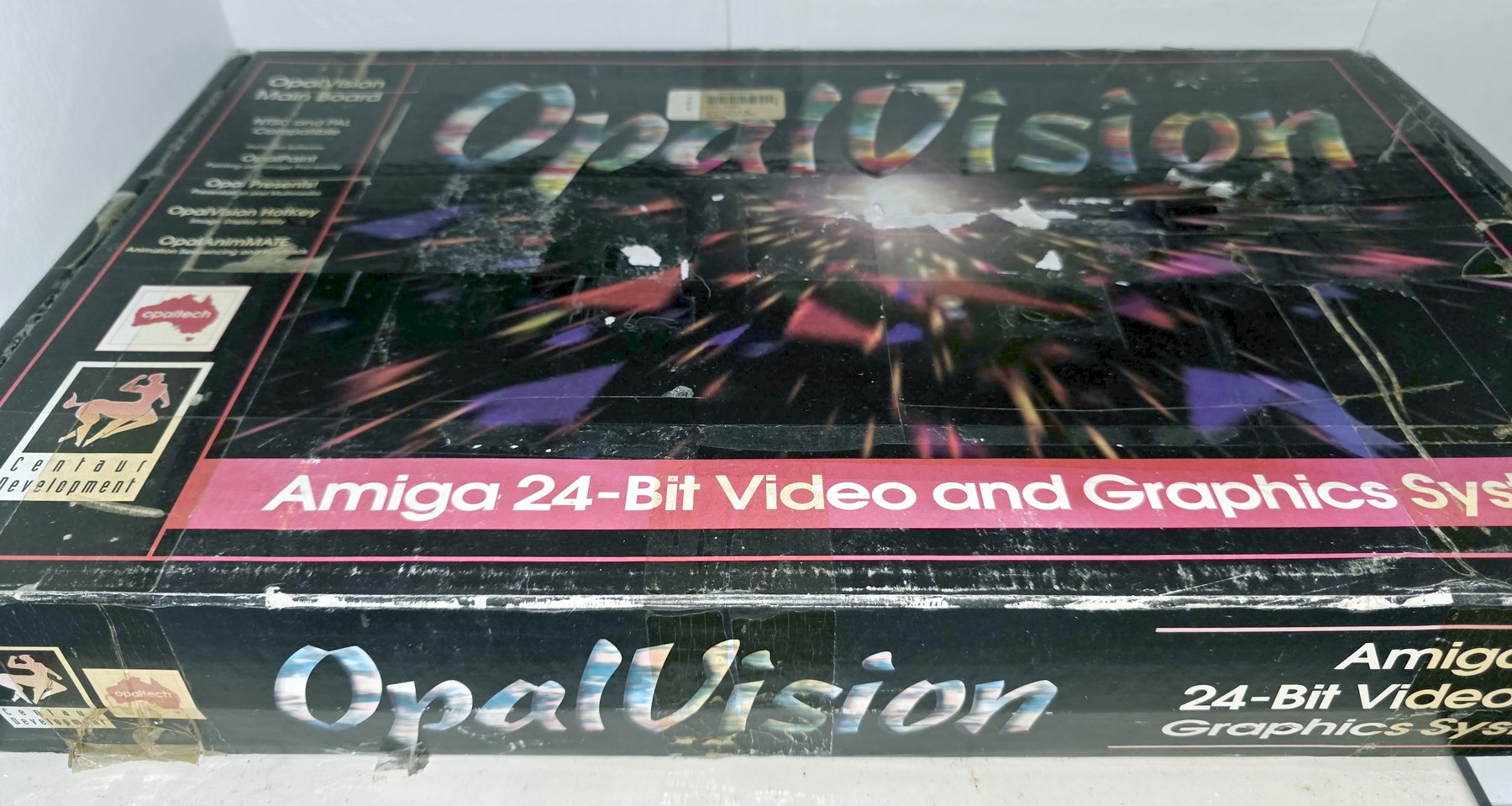
OpalVision Amiga graphics package — collection photograph

Peripherals

OpalVision Amiga graphics package

Packaging identified

The box identifies OpalVision as an Amiga 24-bit video and graphics system. This photograph records the packaging, not an exposed expansion board, so its contents and hardware revision are not verified. It adds a graphics-and-video item to the collection alongside the complete computers.

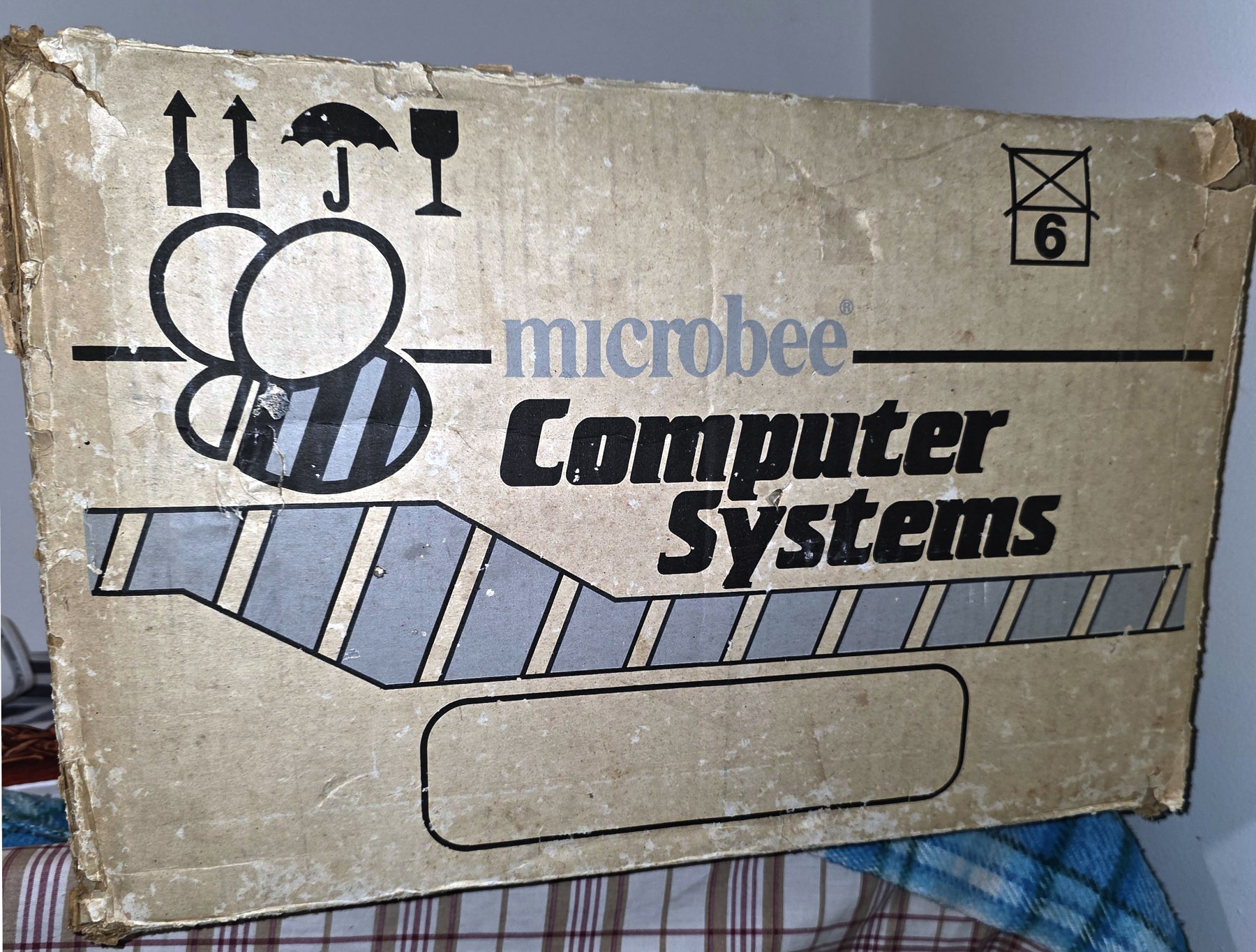
Microbee Computer Systems carton — collection photograph

Archive

Microbee Computer Systems carton

Packaging identified

An original-looking Microbee Computer Systems carton with the bee logo and handling symbols. No model is visible on this face of the box. Packaging is catalogued as an artefact in its own right, rather than counted as another computer.

Disk storage & archive boxes — collection photograph

Archive

Disk storage & archive boxes

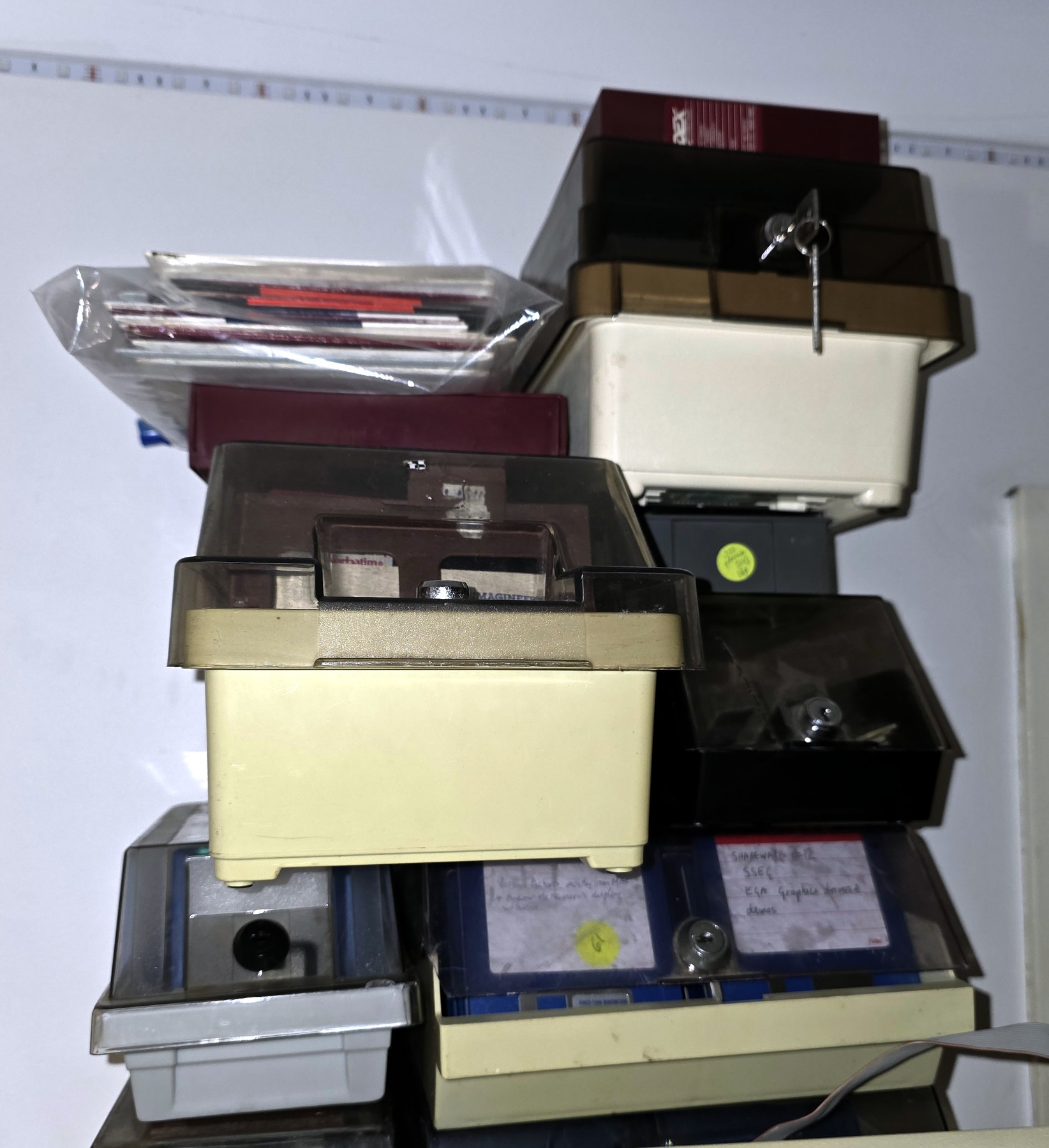
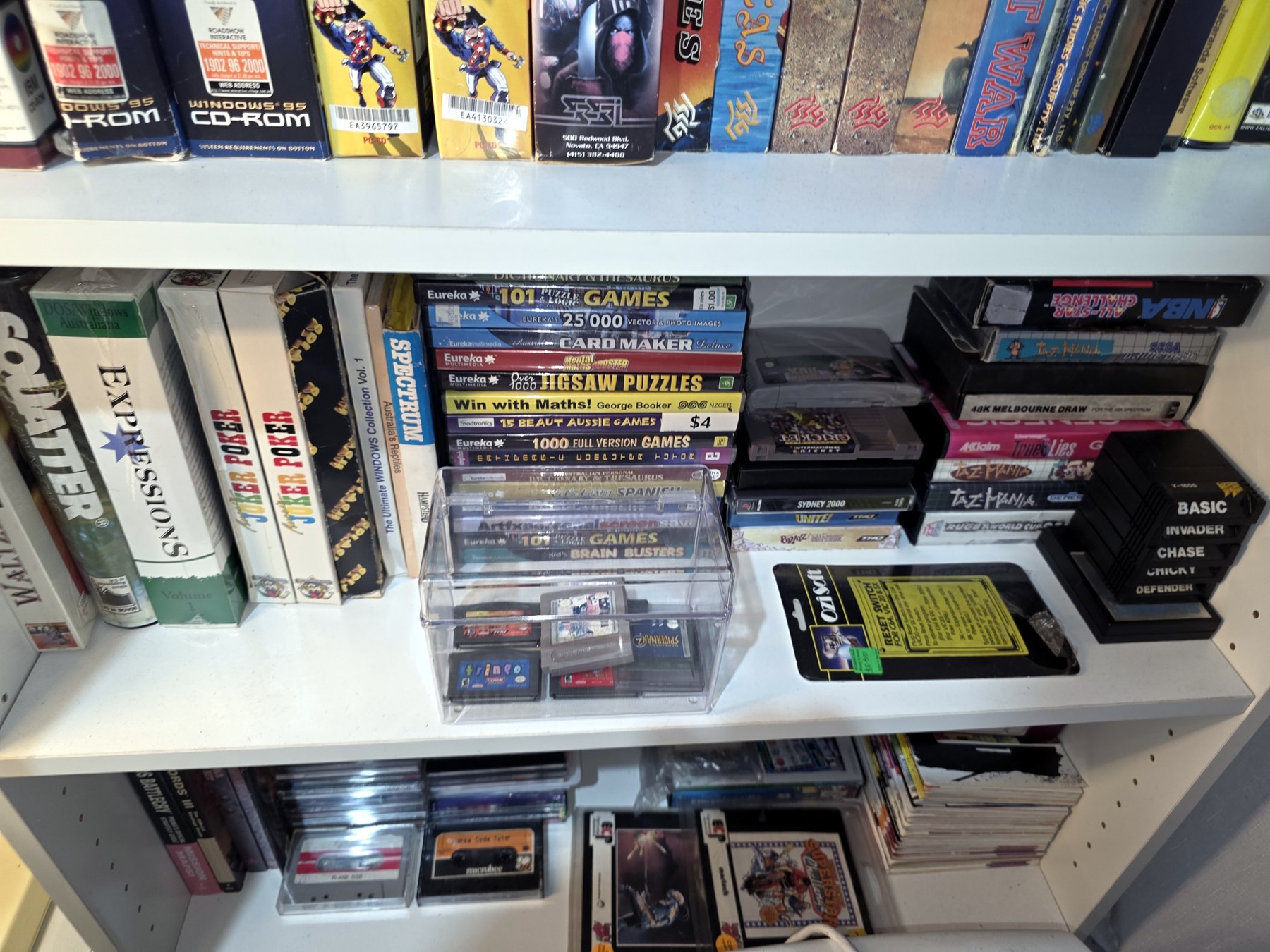
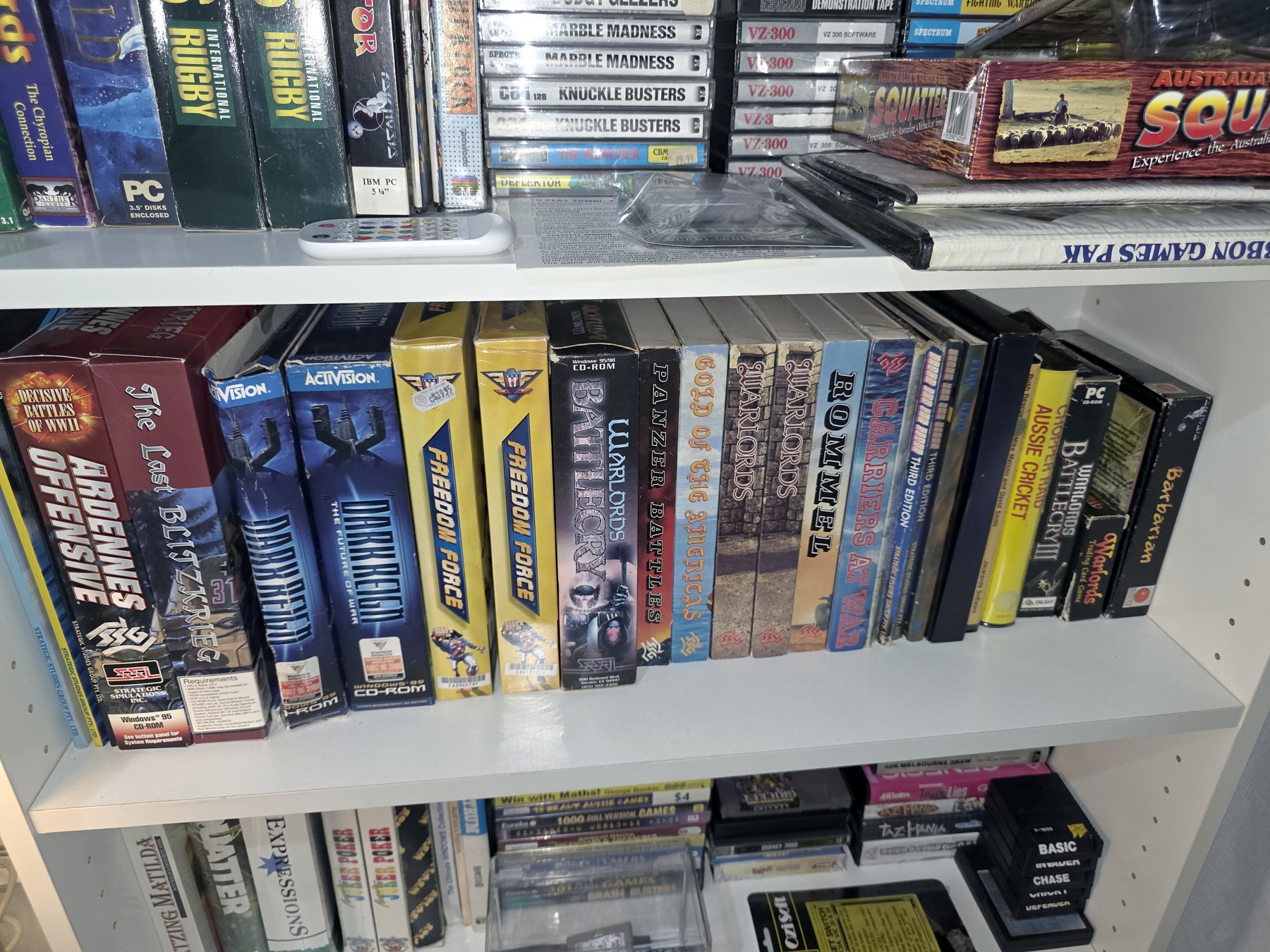
Collection view

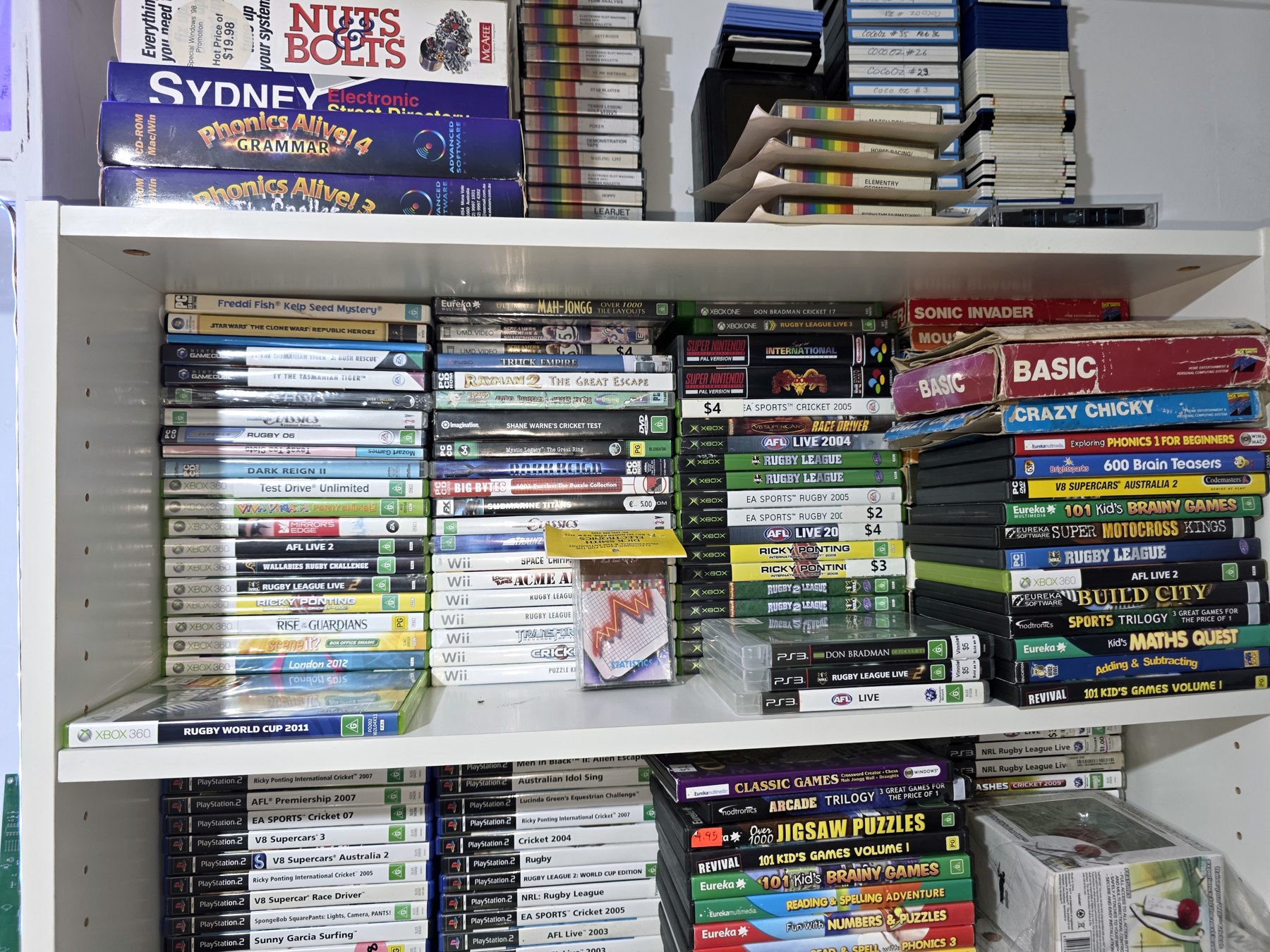
Storage cases, boxed media and shelving show the supporting archive around the machines. These two views are grouped as a collection record; the contents of closed containers and the software titles on individual disks have not been inventoried.

Additional view of Disk storage & archive boxesView additional photograph ↗
Cassettes & boxed materials — collection photograph

Archive

Cassettes & boxed materials

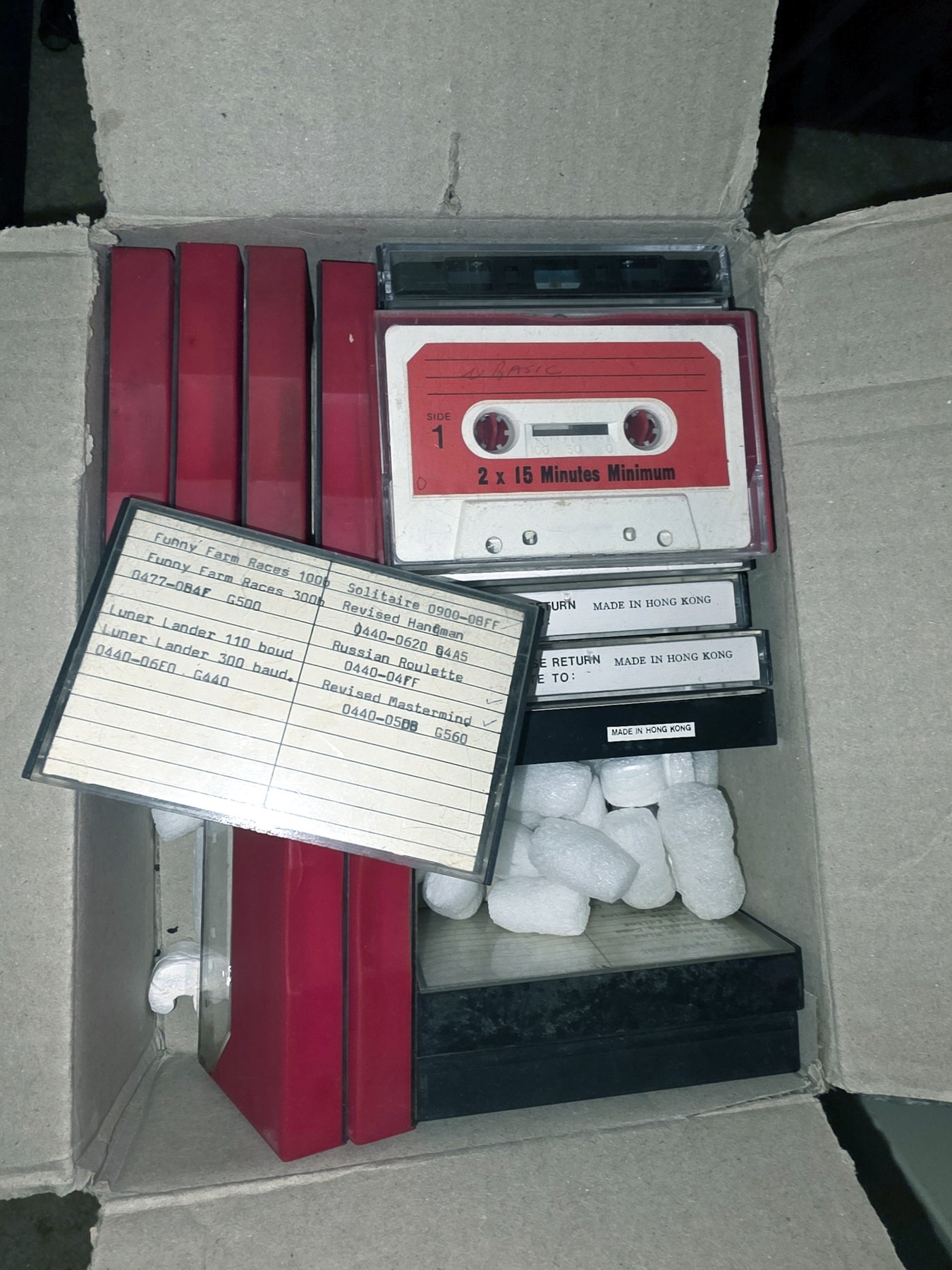
Collection view

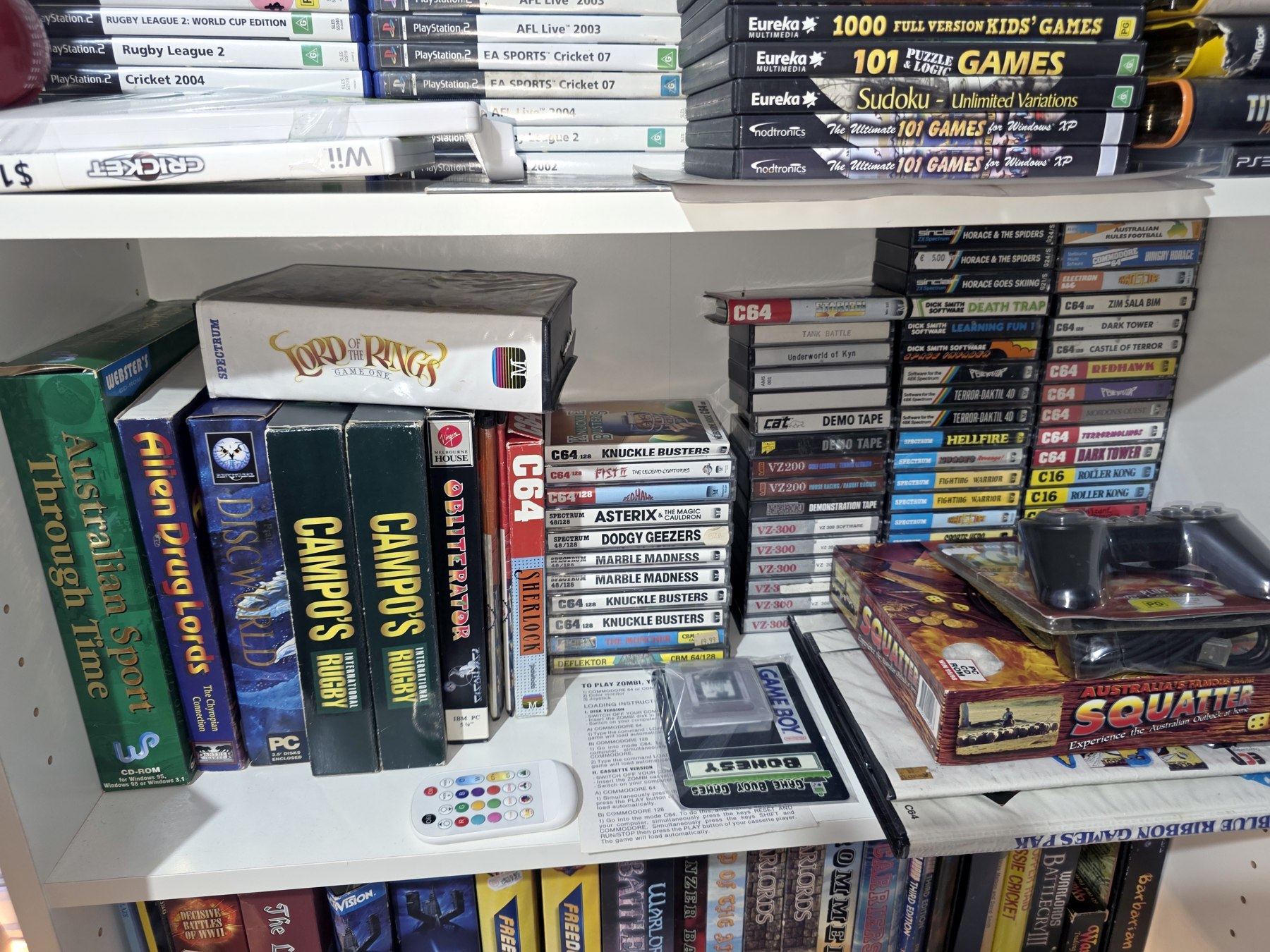
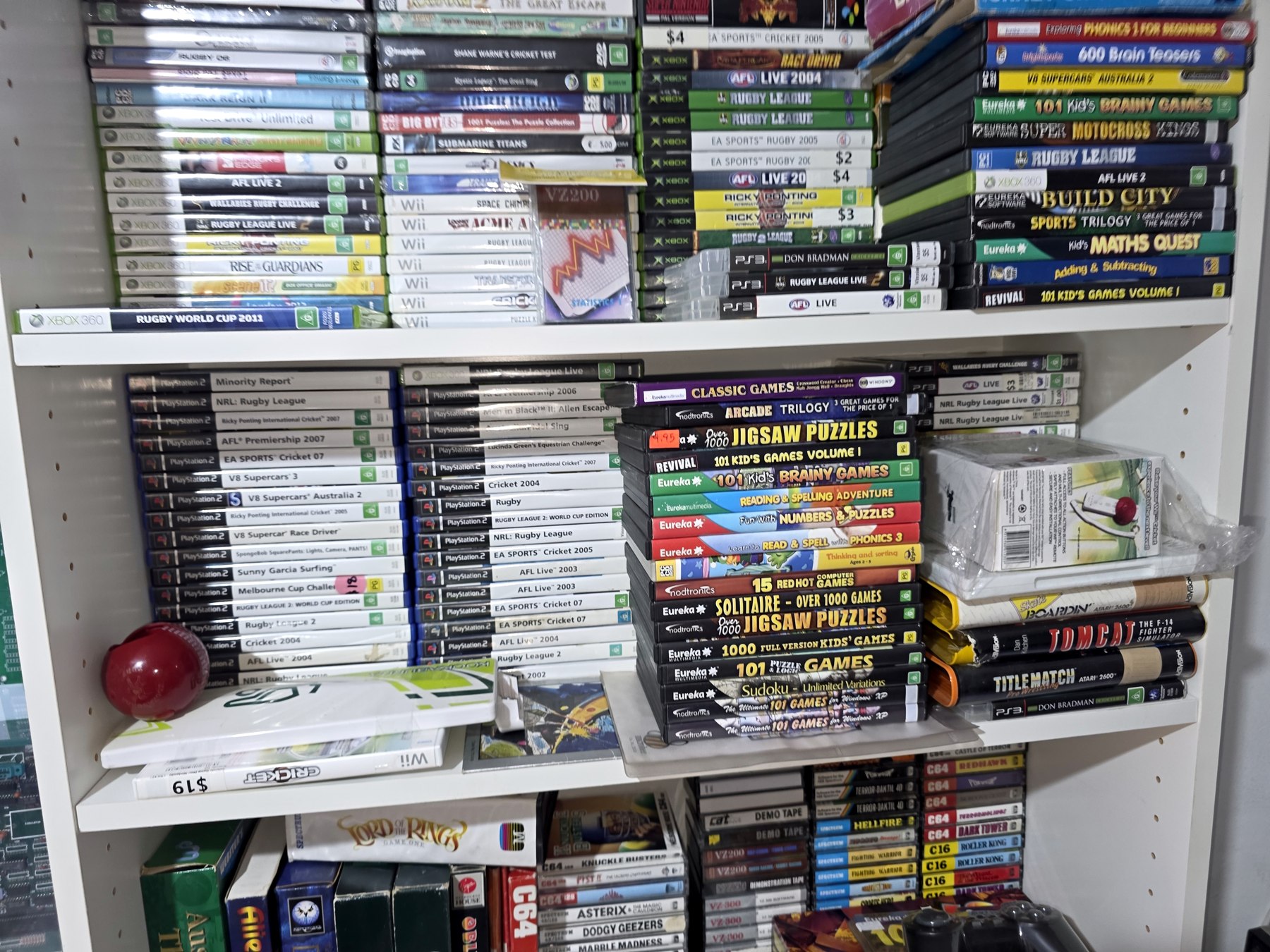
A shelf of cassette-sized cases, binders and other boxed materials. The image records part of the software and documentation collection, but the labels are too small to produce a dependable title-by-title inventory.

Circuit boards & adapters — collection photograph

Archive

Circuit boards & adapters

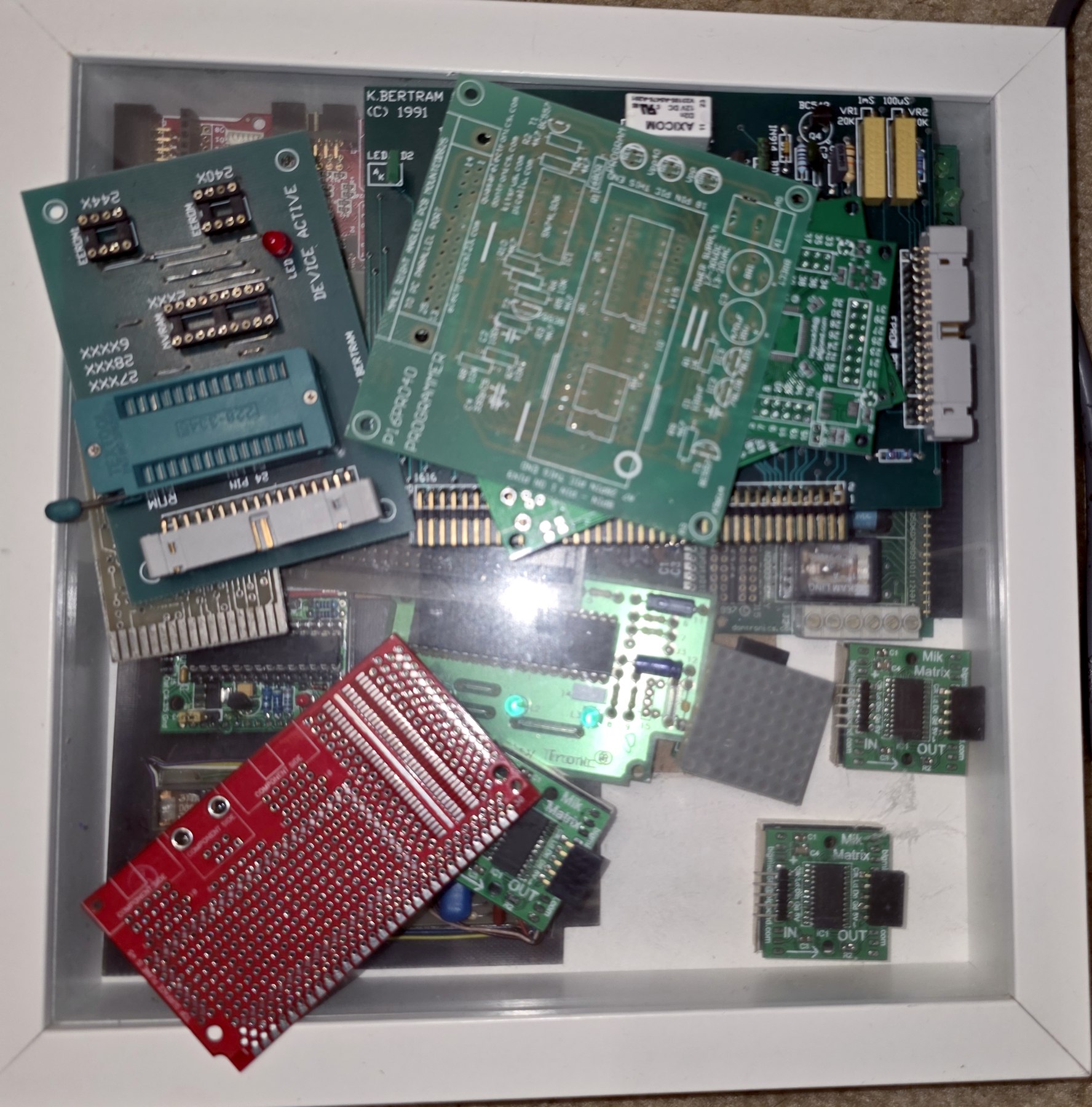
Awaiting identification

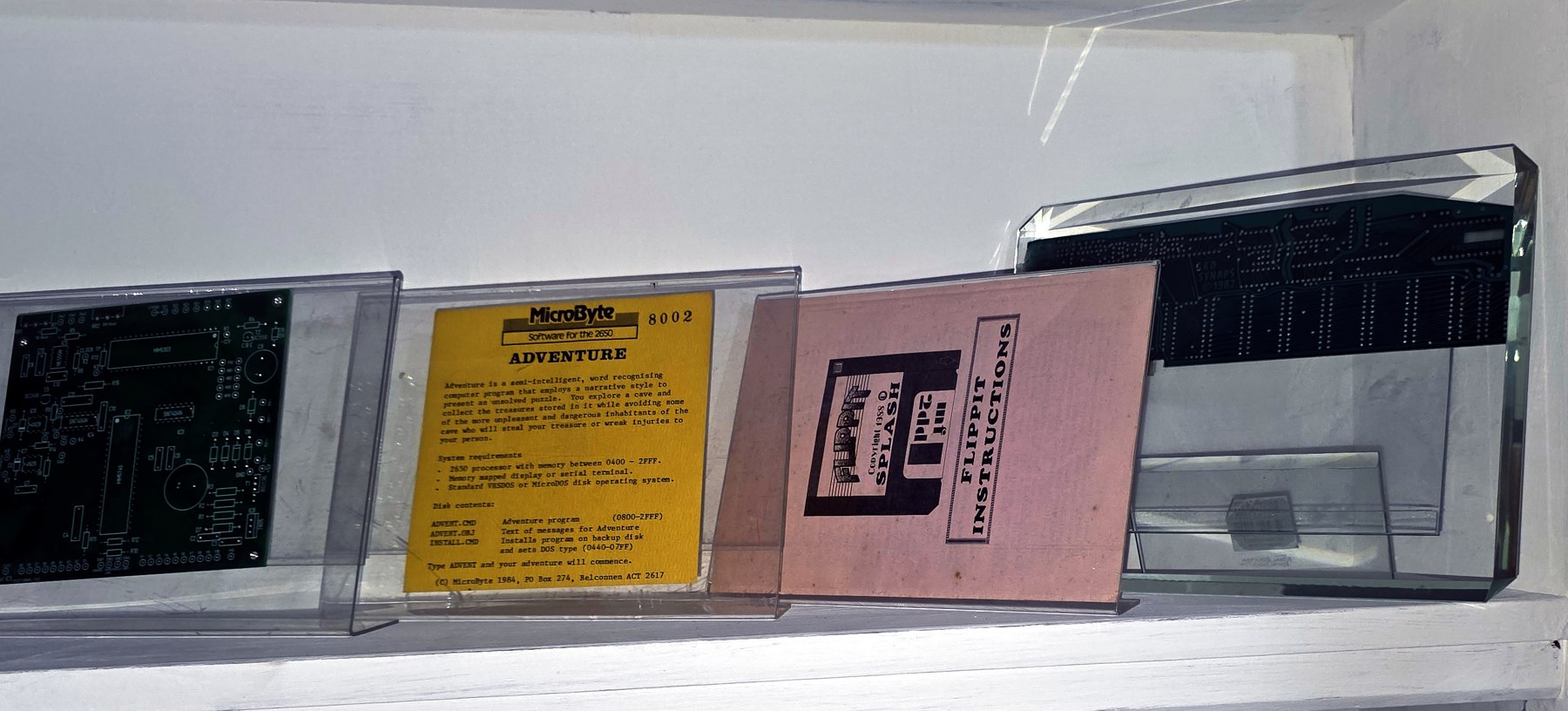
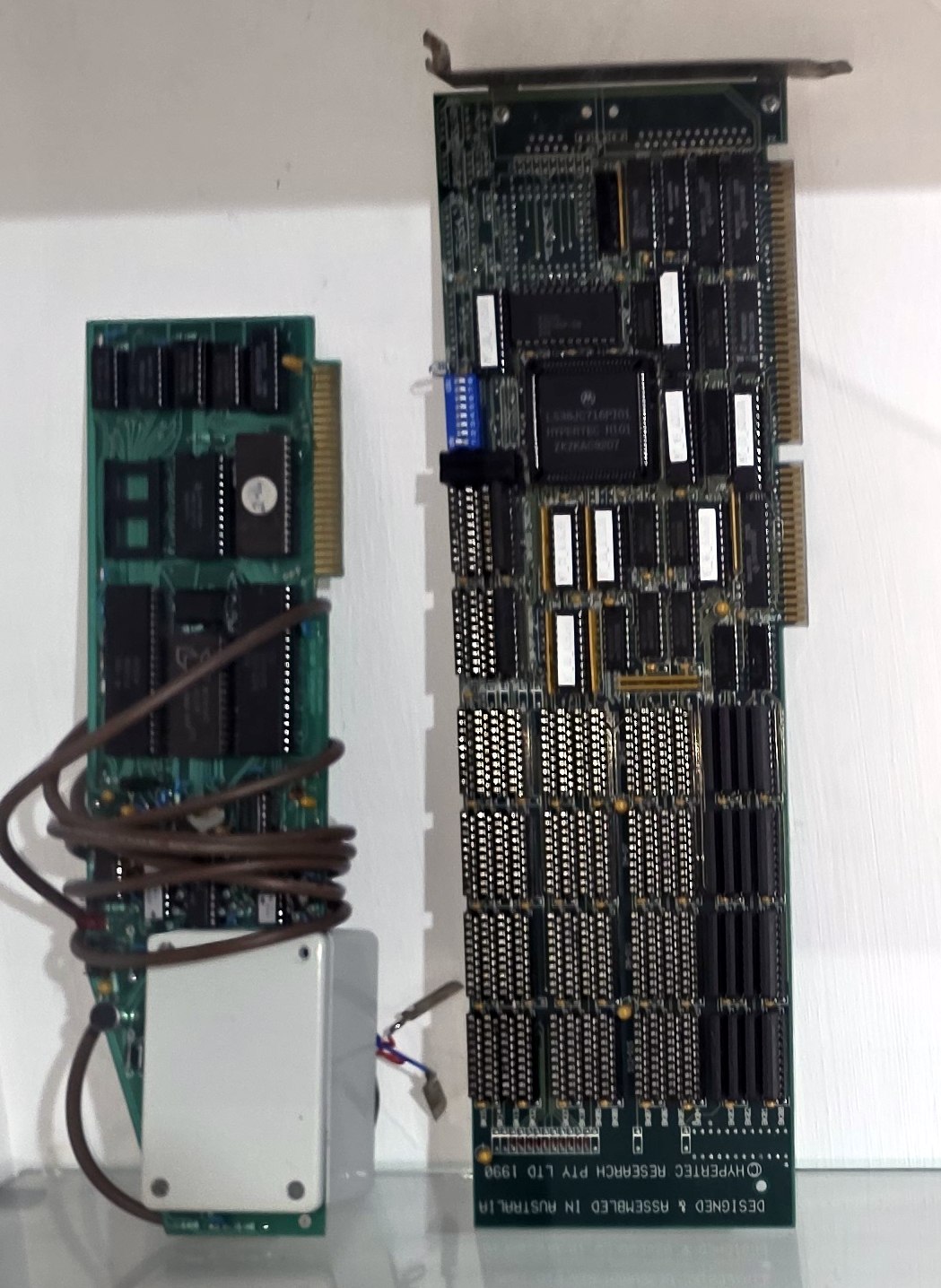
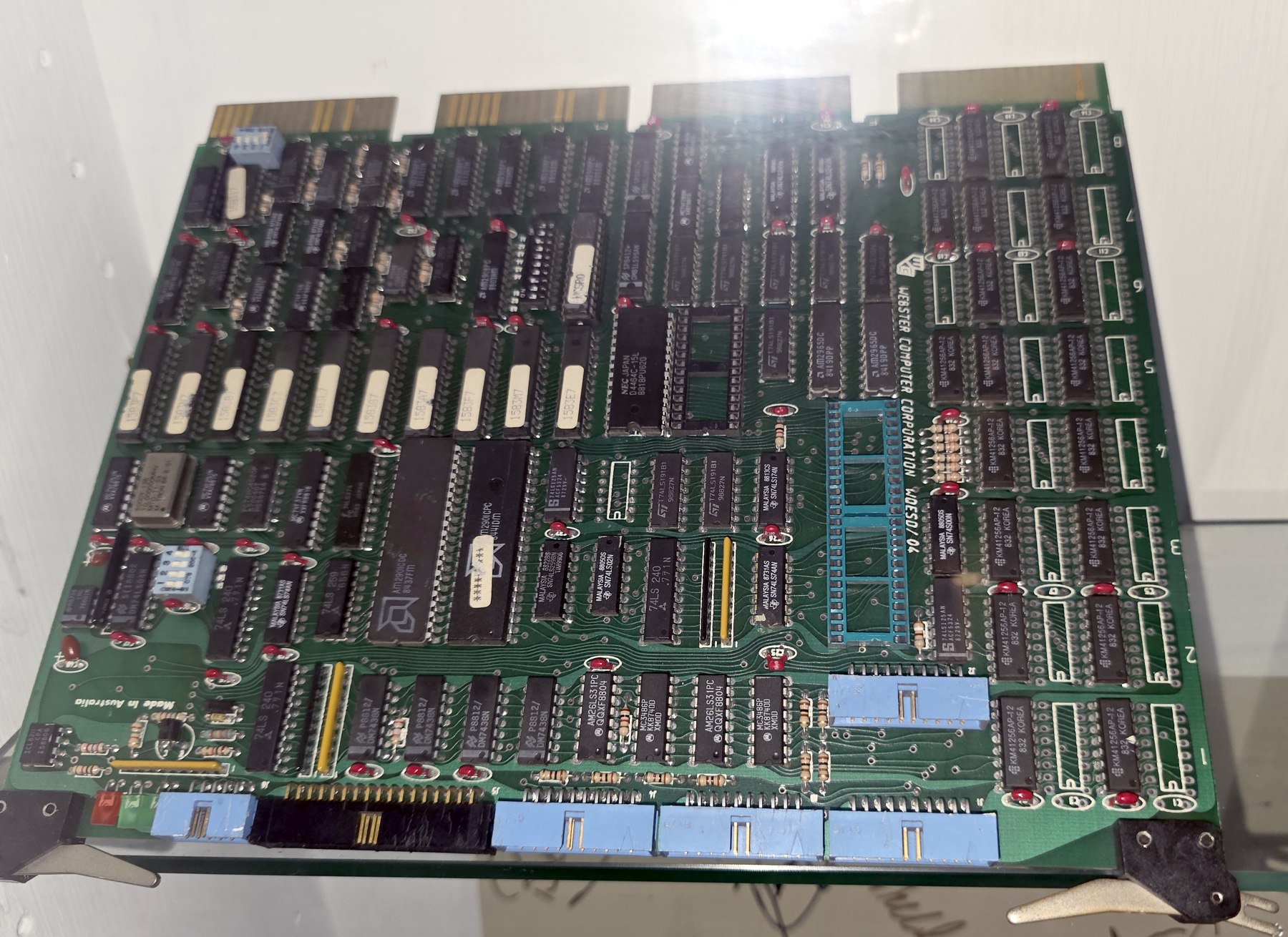
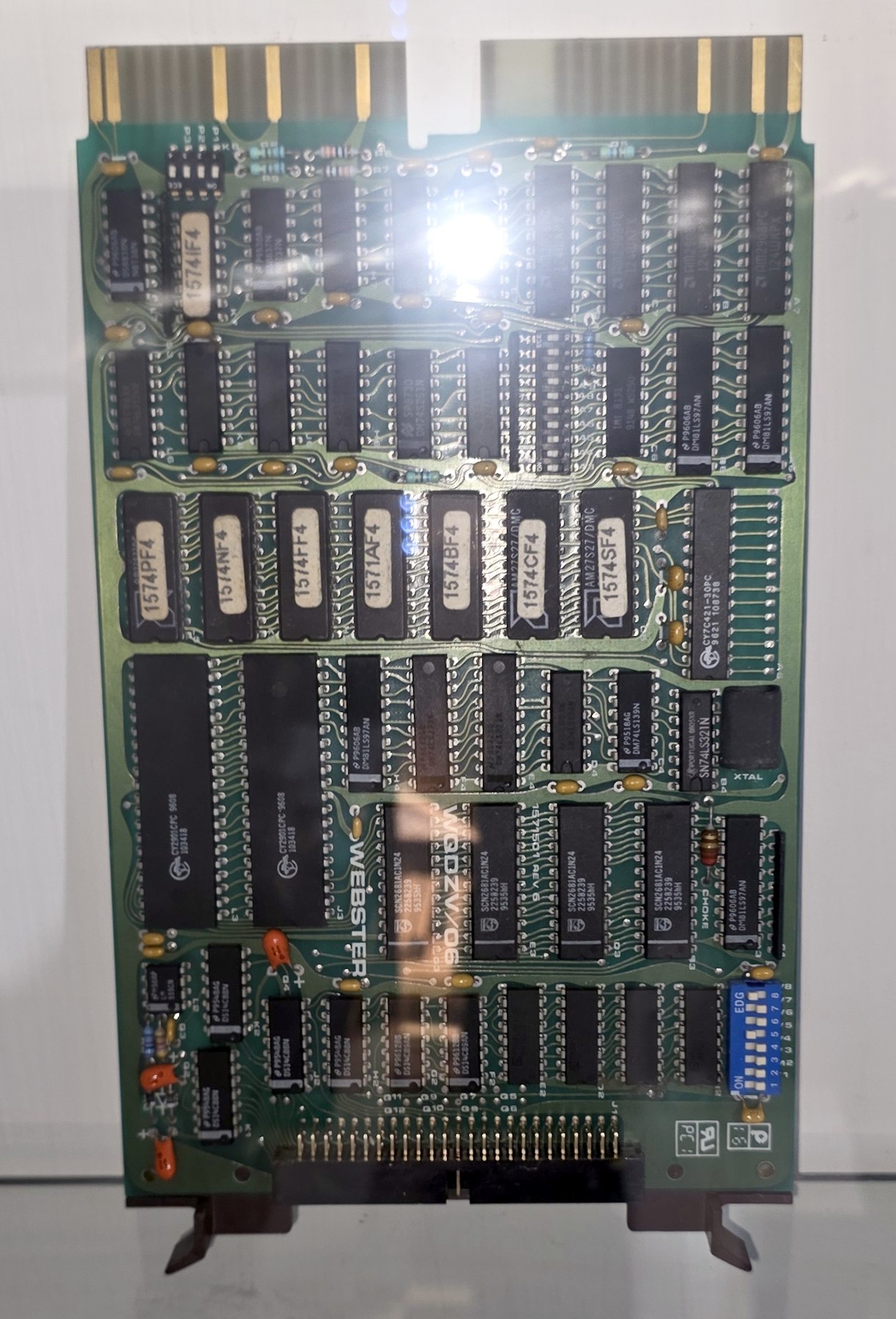
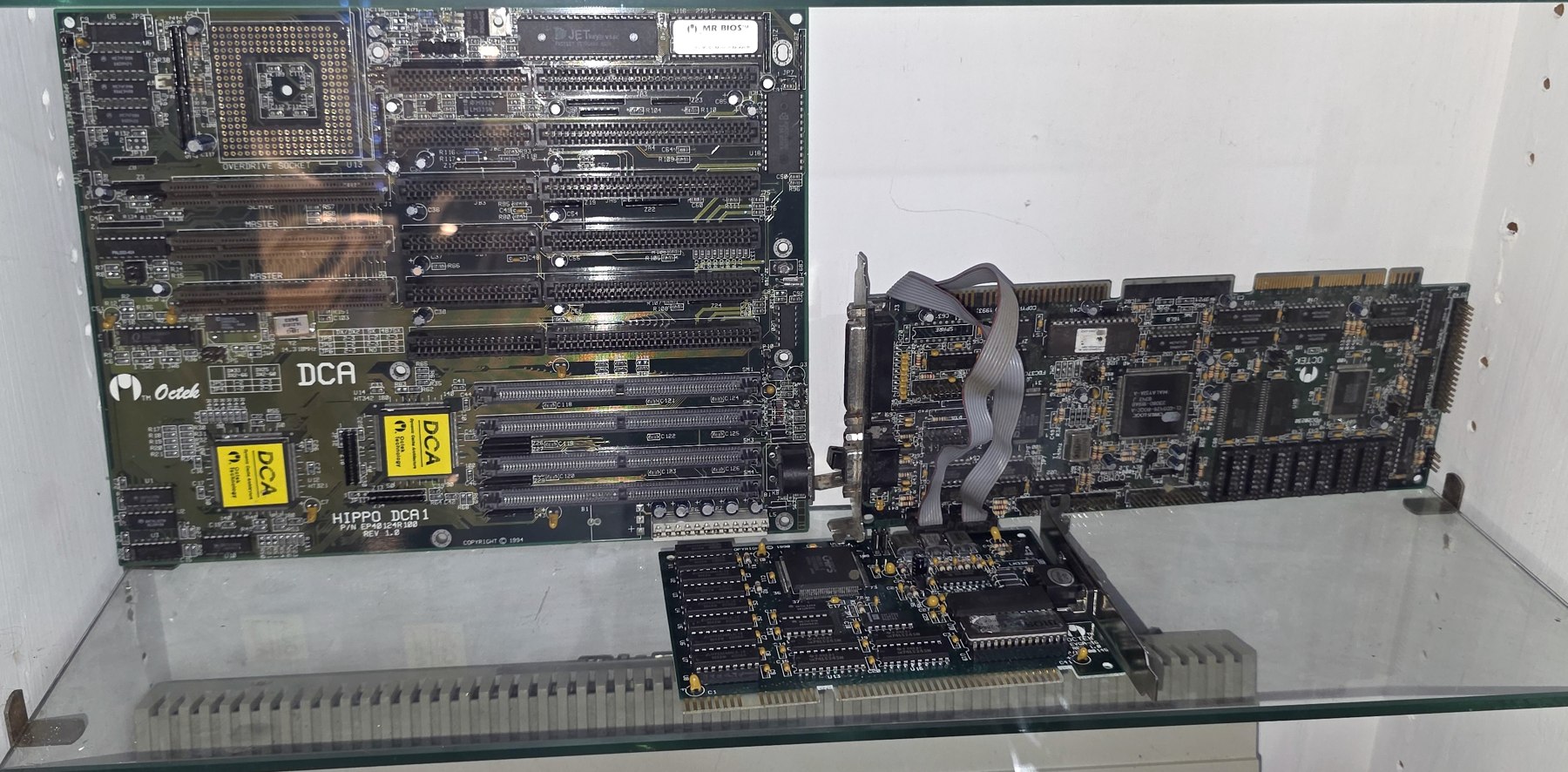
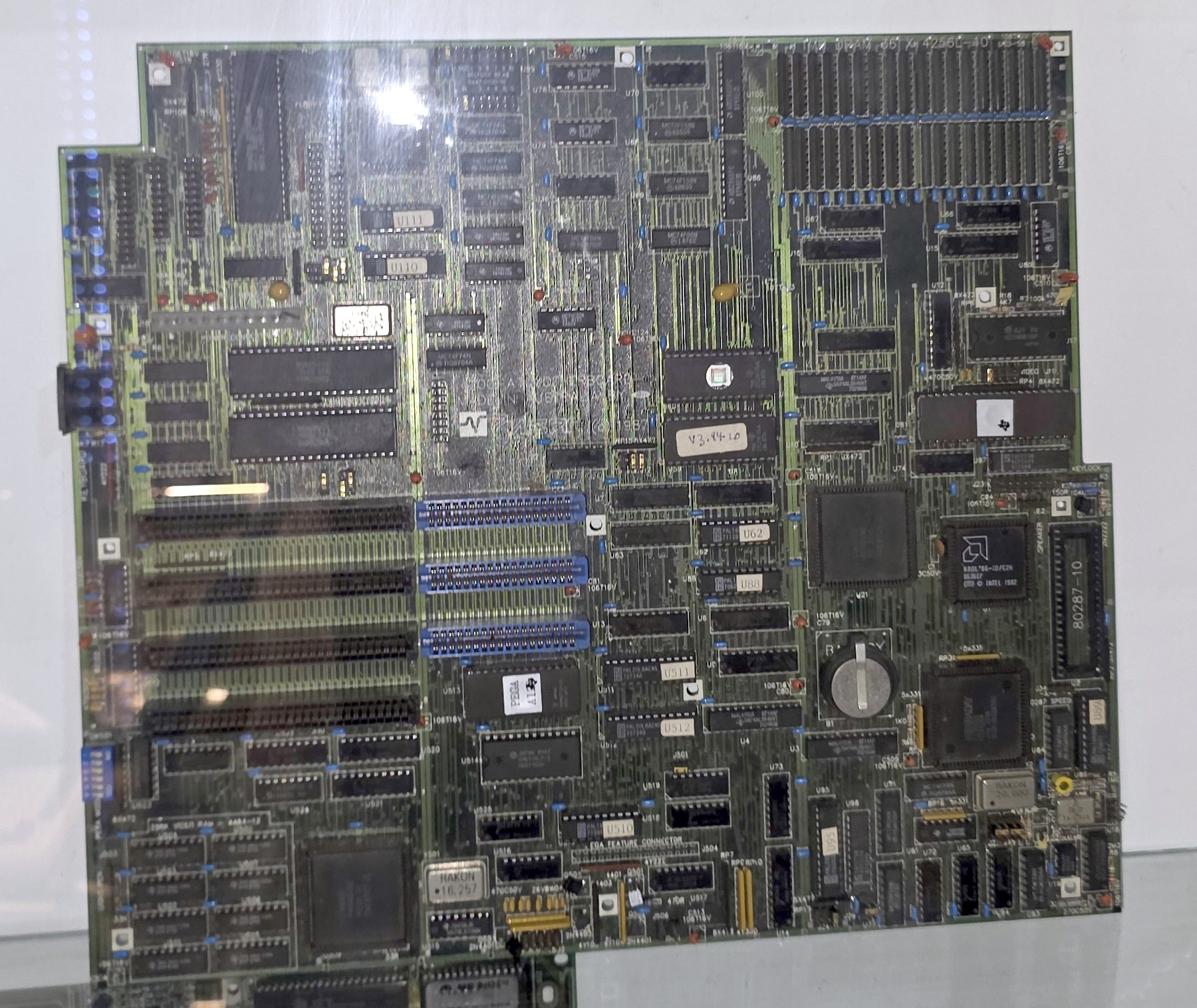
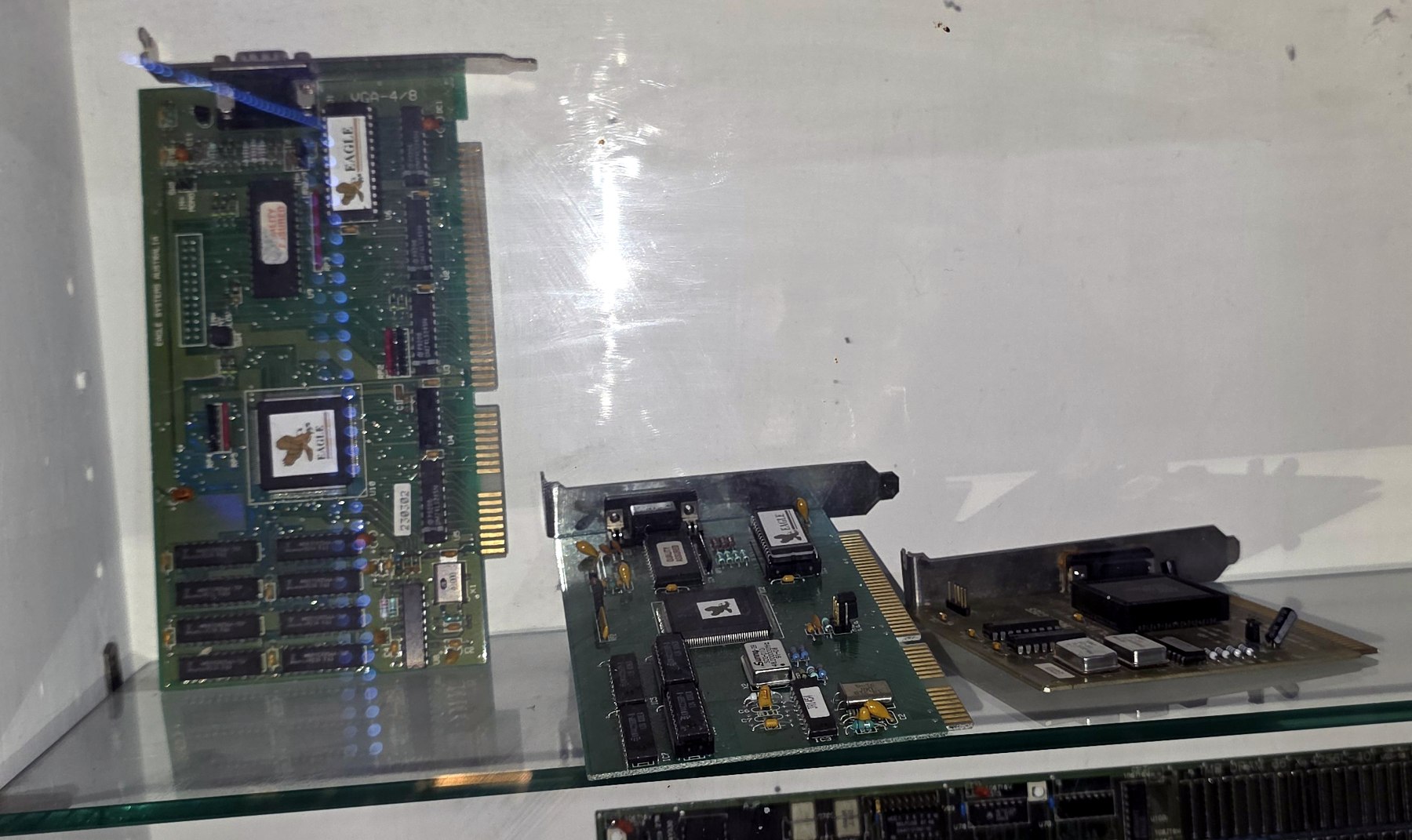
A display of mixed circuit boards, adapters and socketed devices. Visible markings include a 1991 copyright and programmer-style sockets. These are multiple objects, not one computer; individual board identities remain to be catalogued.

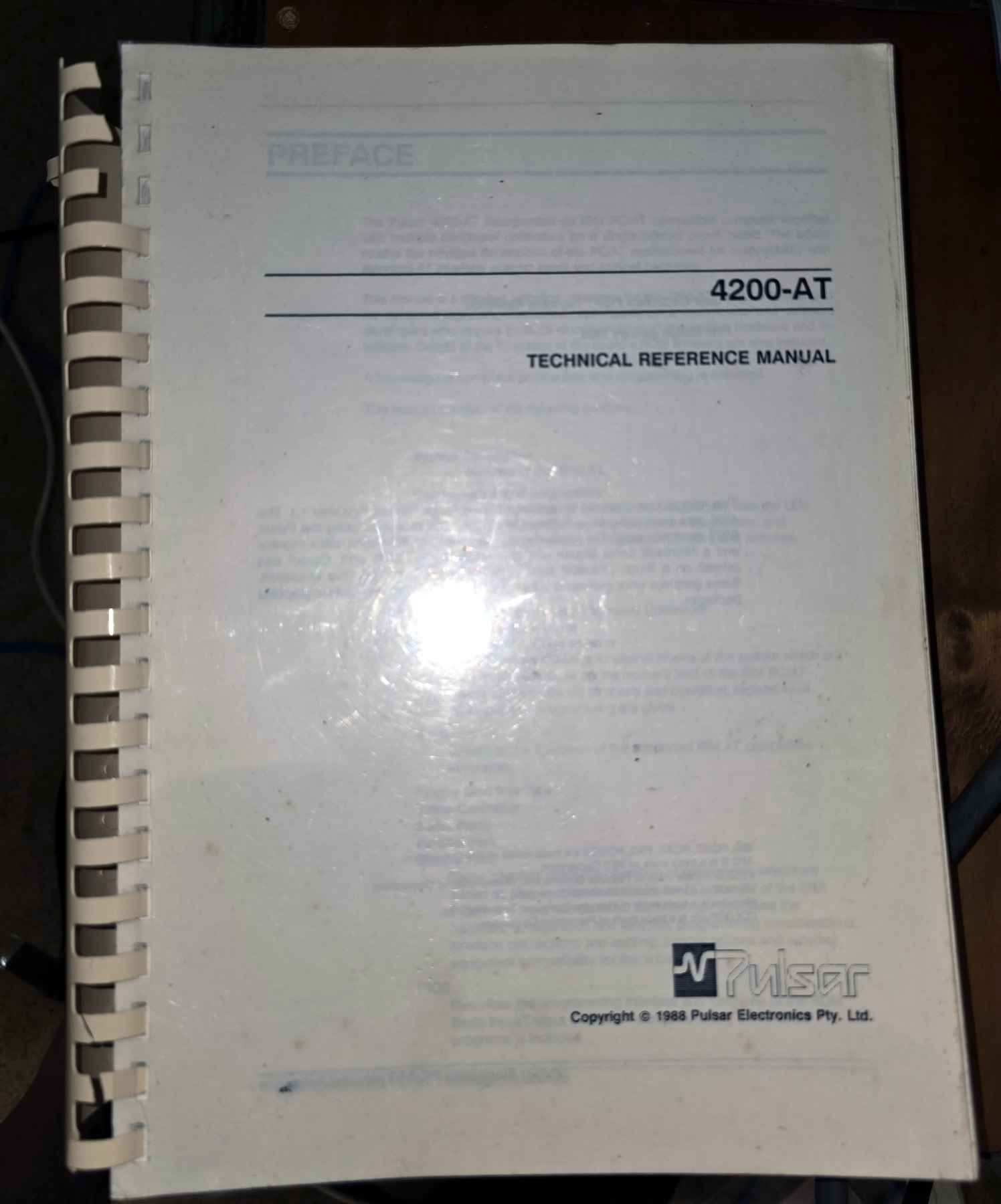
4200-AT technical reference manual — collection photograph

Archive

4200-AT technical reference manual

Title identified

The cover identifies a 4200-AT Technical Reference Manual. It is supporting documentation rather than proof that a matching machine is present. A second manual photograph was left out of the display because a handwritten note obscures much of its cover.

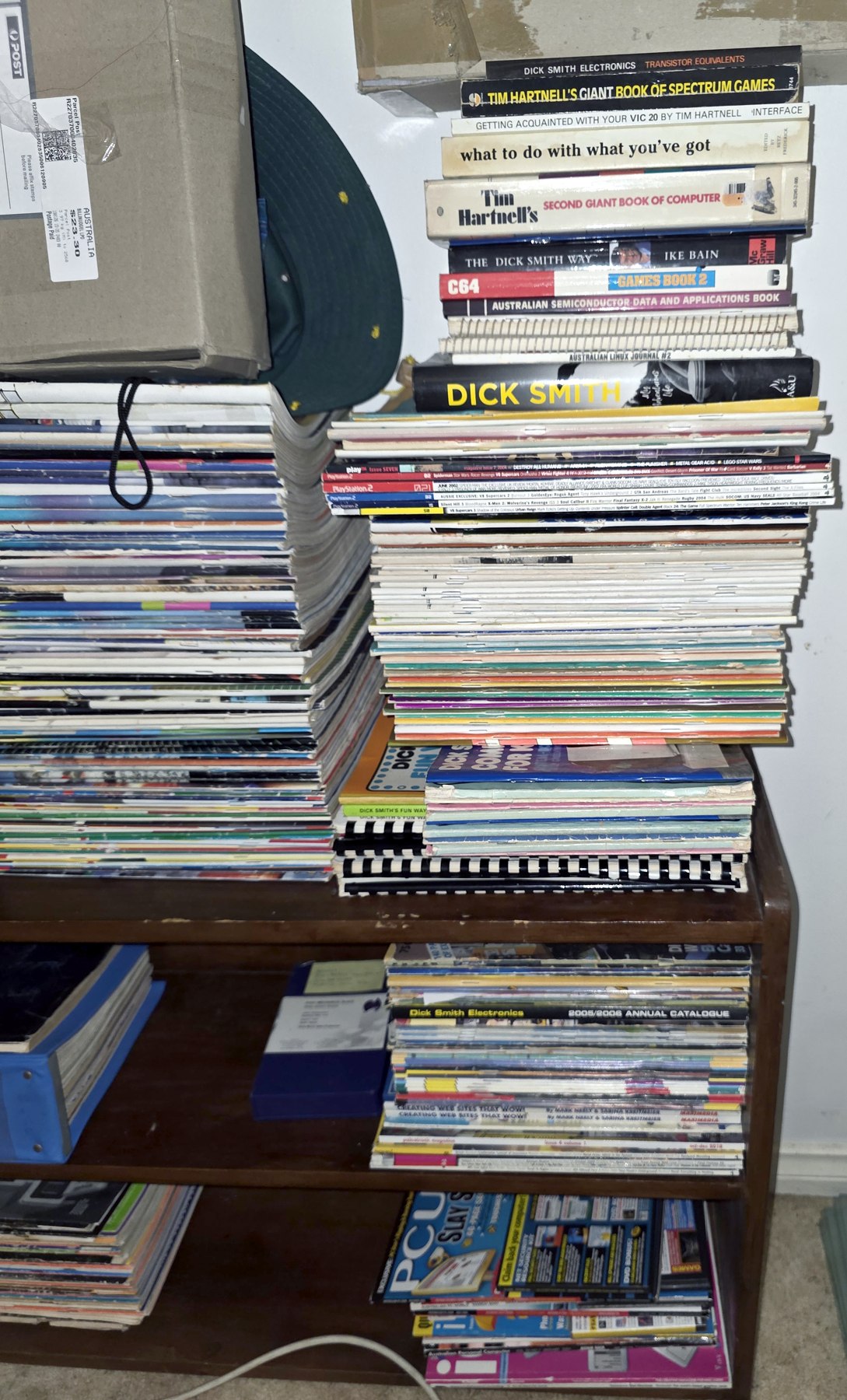
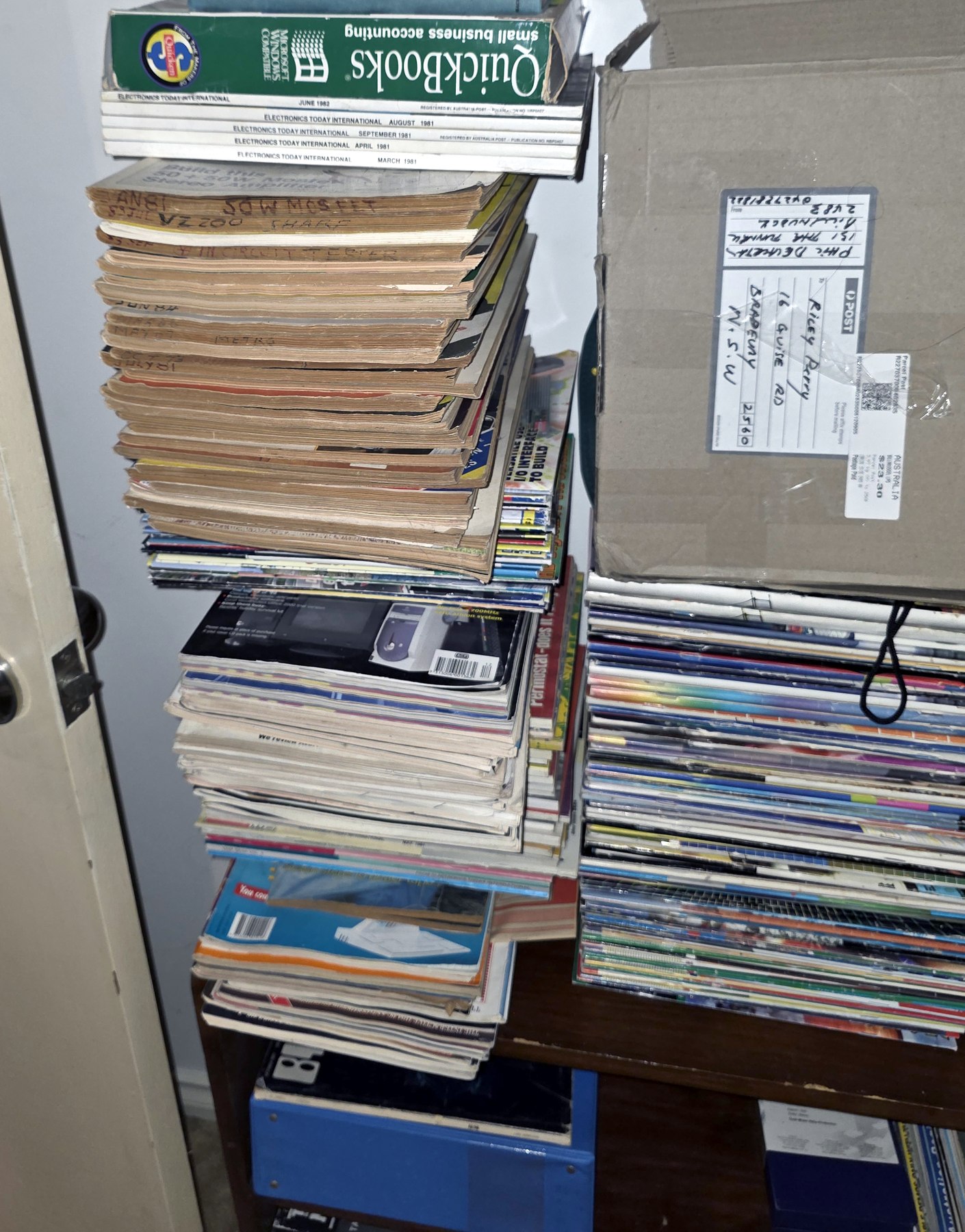
Computer magazines & reference books — collection photograph

Archive

Computer magazines & reference books

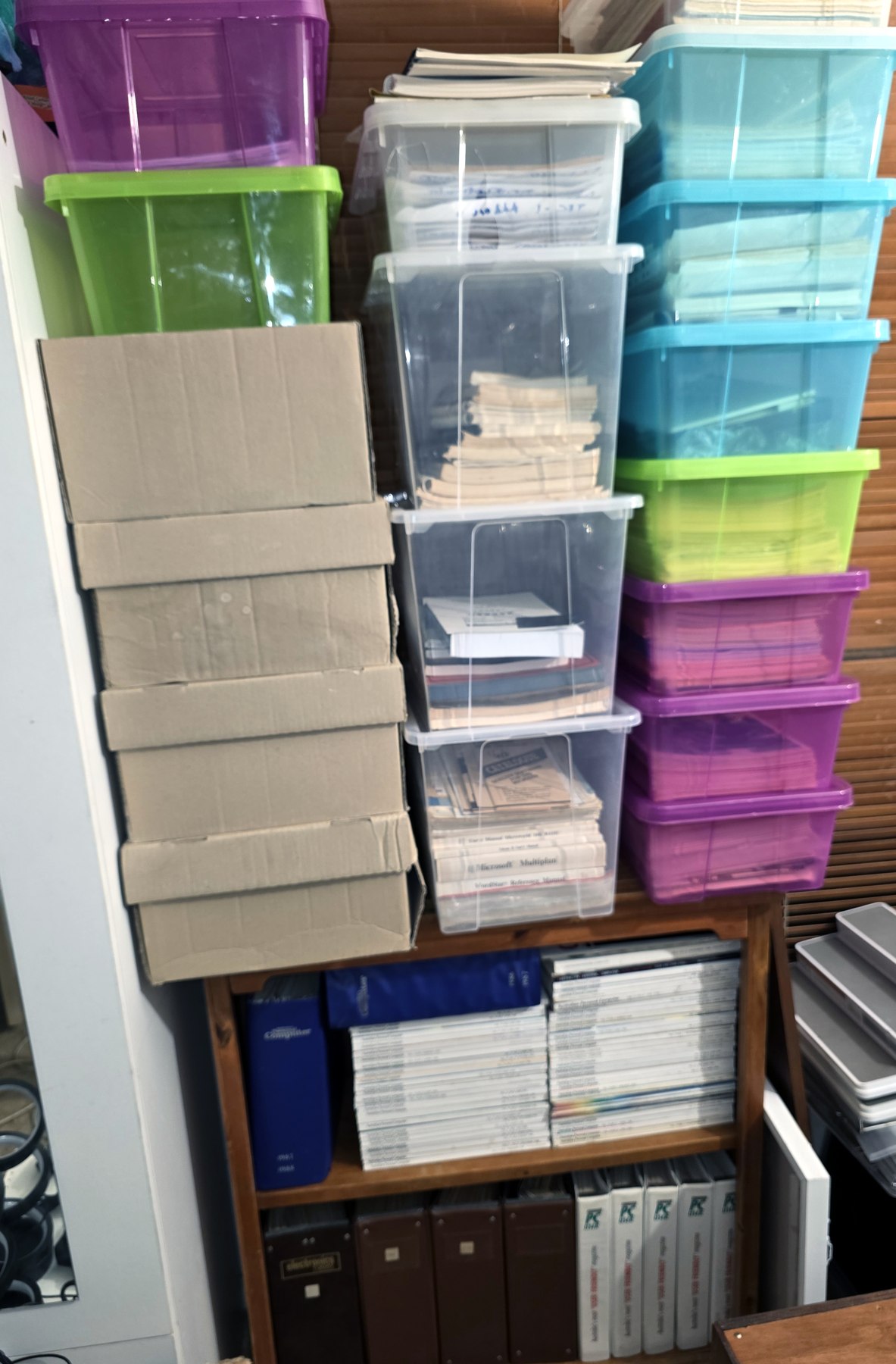
Collection view

Two selected views show the magazine and reference-book collection. Overlapping overview photographs have been omitted to avoid repetition. The printed material helps preserve the context around the machines, but individual issues are not yet catalogued.

Additional view of Computer magazines & reference booksView additional photograph ↗
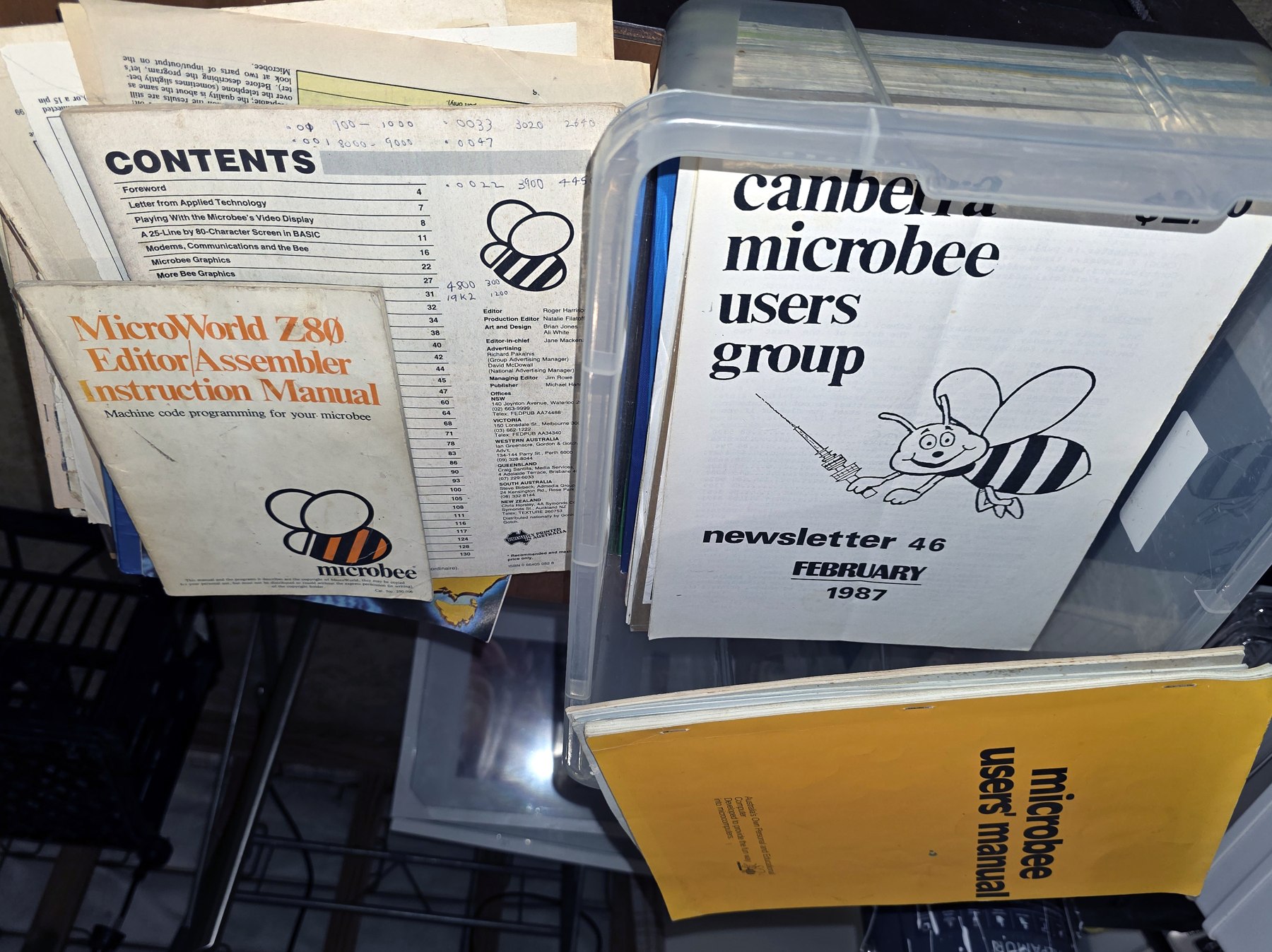
Microbee newsletters & manuals — collection photograph

Archive

Microbee newsletters & manuals

Collection view

Microbee user-group newsletters and technical reading are visible together, including a Microbee user’s manual and a newsletter headed February 1987. These documents record the community and practical knowledge surrounding the hardware.

Commodore 64 packaging — collection photograph

Archive

Commodore 64 packaging

Packaging identified

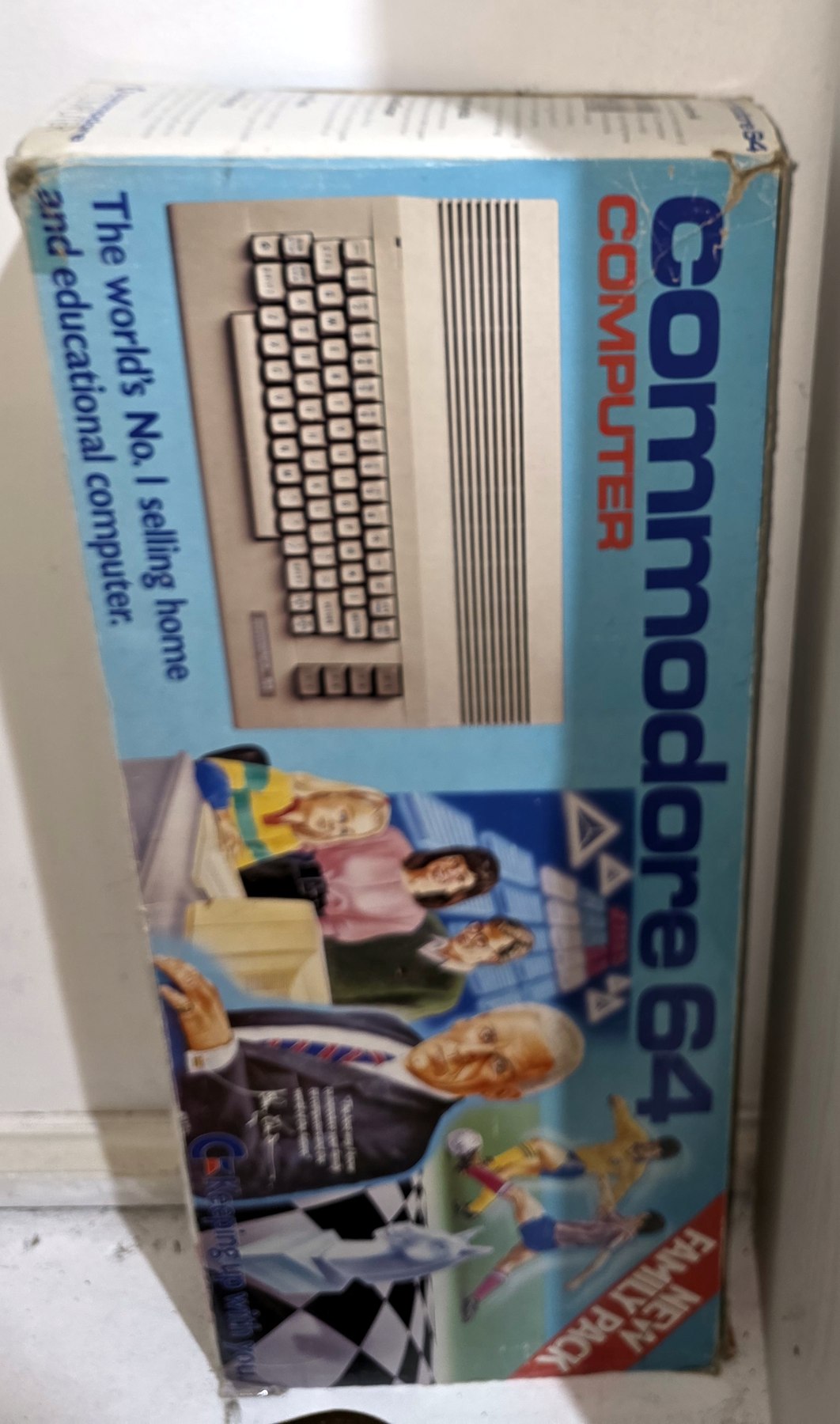
A box clearly labelled Commodore 64 Computer. This photograph documents packaging rather than confirming a computer inside. It is an international-brand item present in the collection, and is not labelled as an Australian-designed machine.

Framed keyboard & circuit boards — collection photograph

Archive

Framed keyboard & circuit boards

Awaiting identification

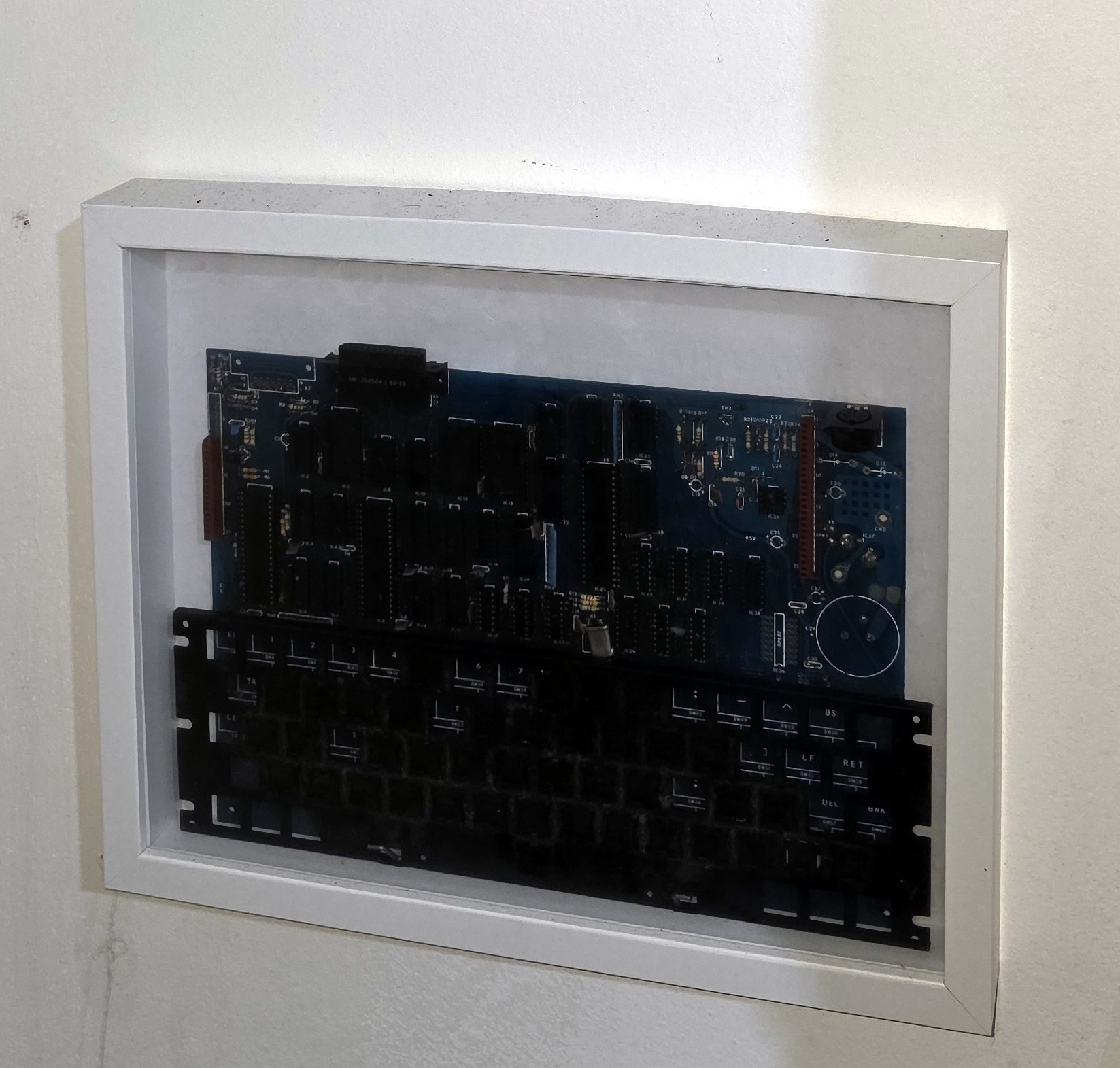
A framed display combines a keyboard assembly and circuit boards. Its layout suggests a keyboard-computer construction, but the maker and board revision are not legible. It is left unnamed rather than assigned to a specific kit or Microbee model.

Microbee educational poster — collection photograph

Archive

Microbee educational poster

Title and brand identified

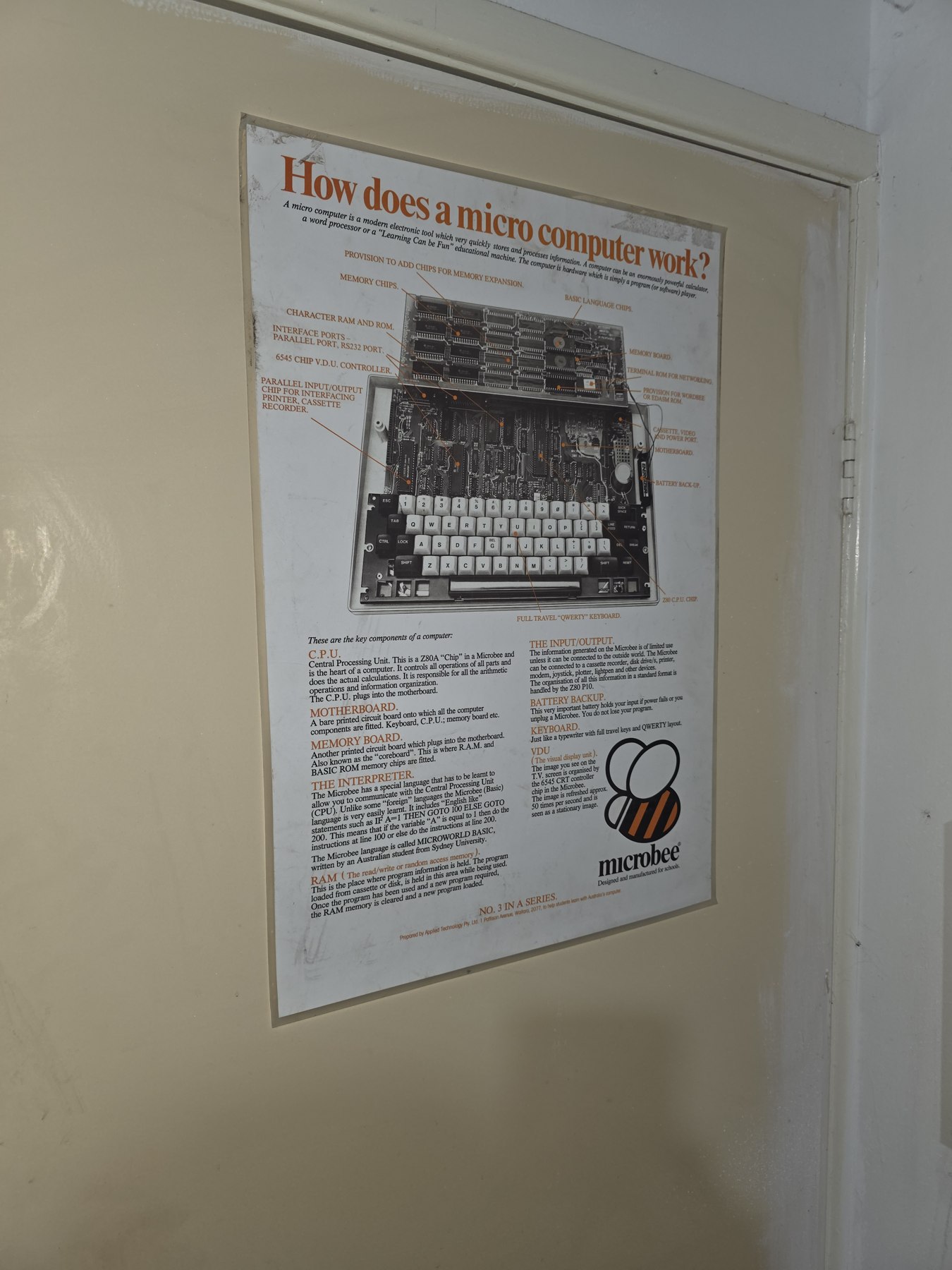
A framed poster headed “How does a micro computer work?” carries the Microbee logo and an illustration of a keyboard computer’s internals. It presents the computer as something to understand as well as use.

Dick Smith System 80 MK II — collection photograph

Computers

Dick Smith System 80 MK II

Label identified

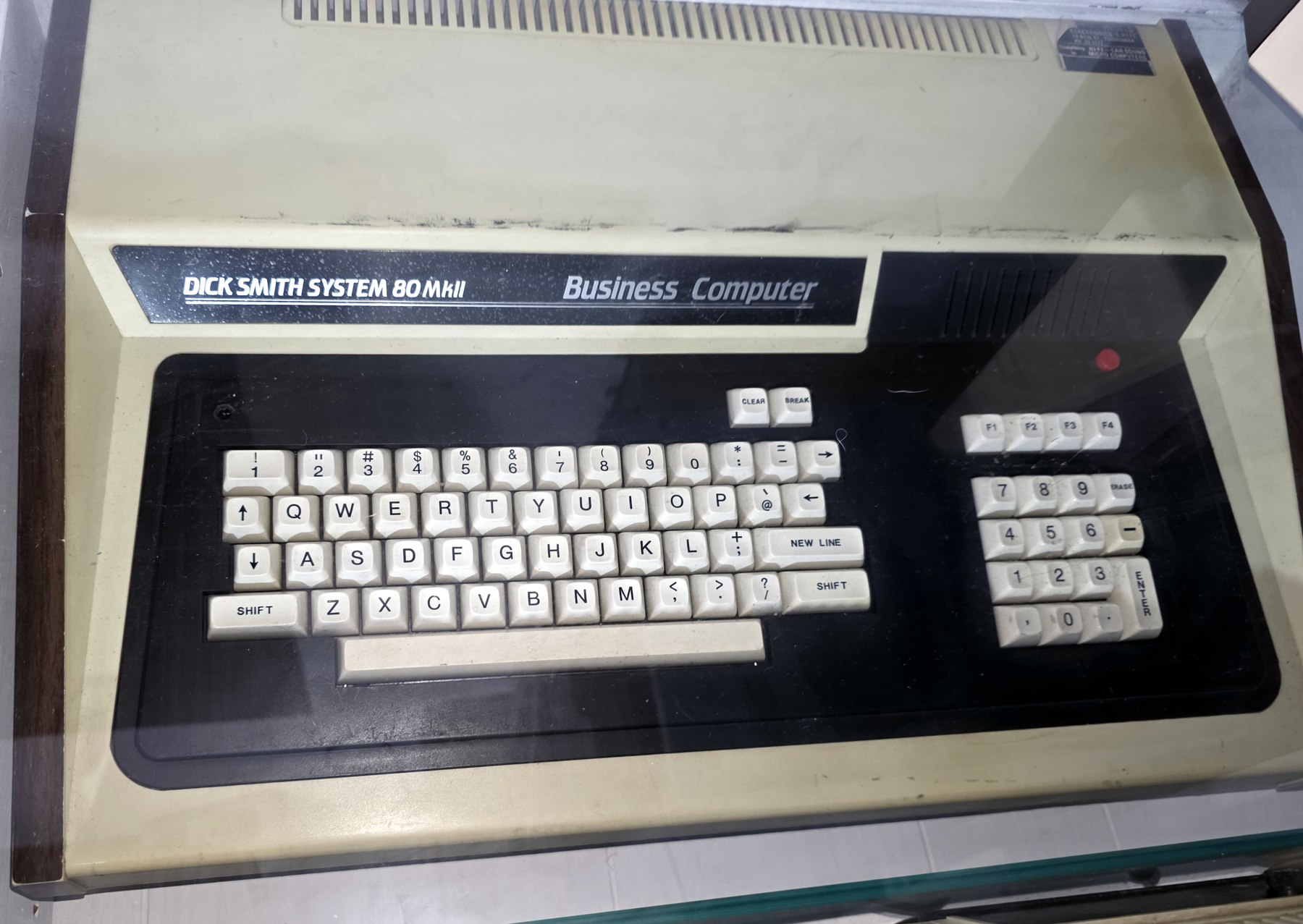
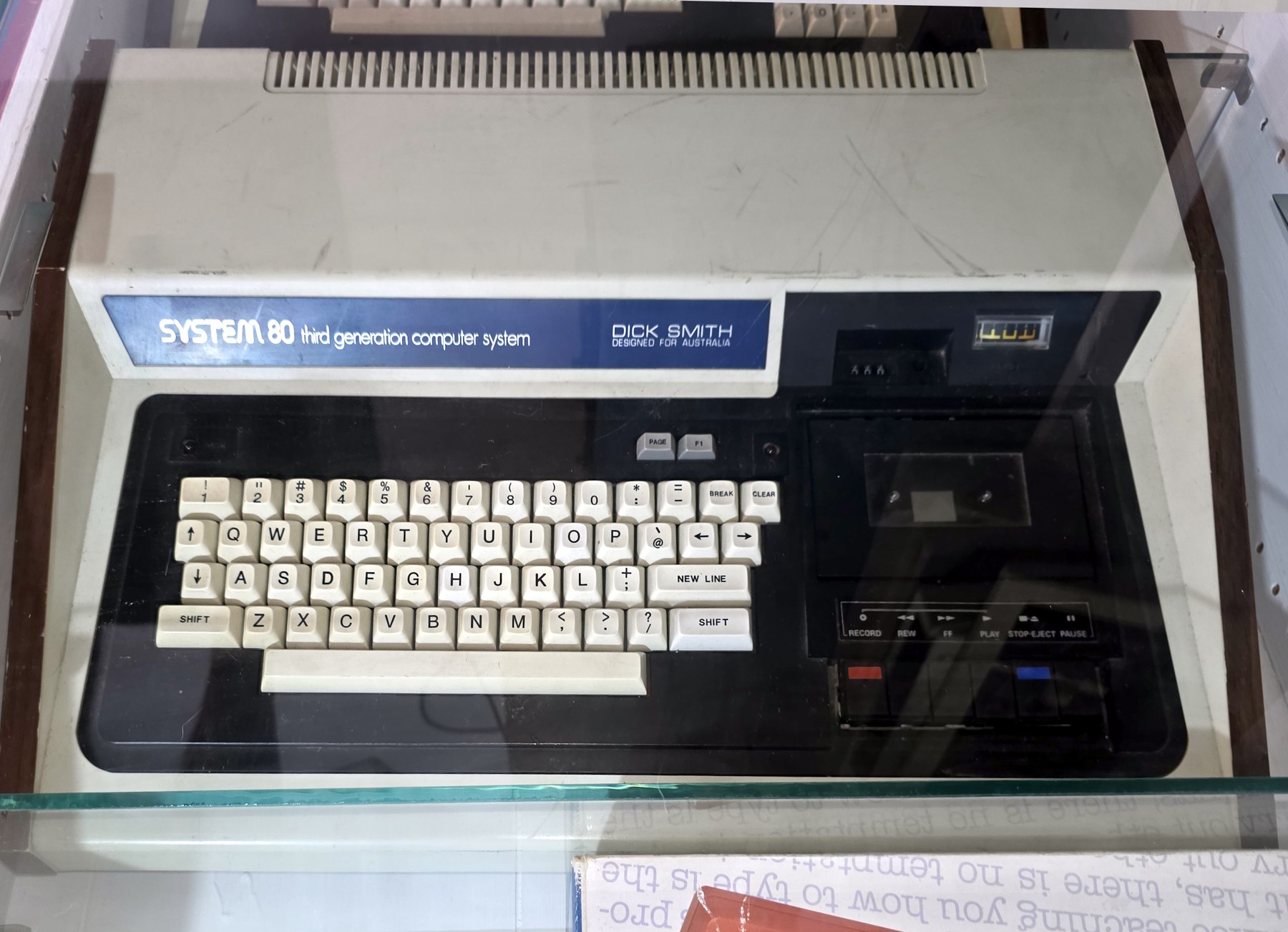
The fascia identifies the System 80 MK II Business Computer. Its larger keyboard and numeric keypad distinguish it from the first-generation example shown elsewhere in this catalogue.

Dick Smith System 80 — collection photograph

Computers

Dick Smith System 80

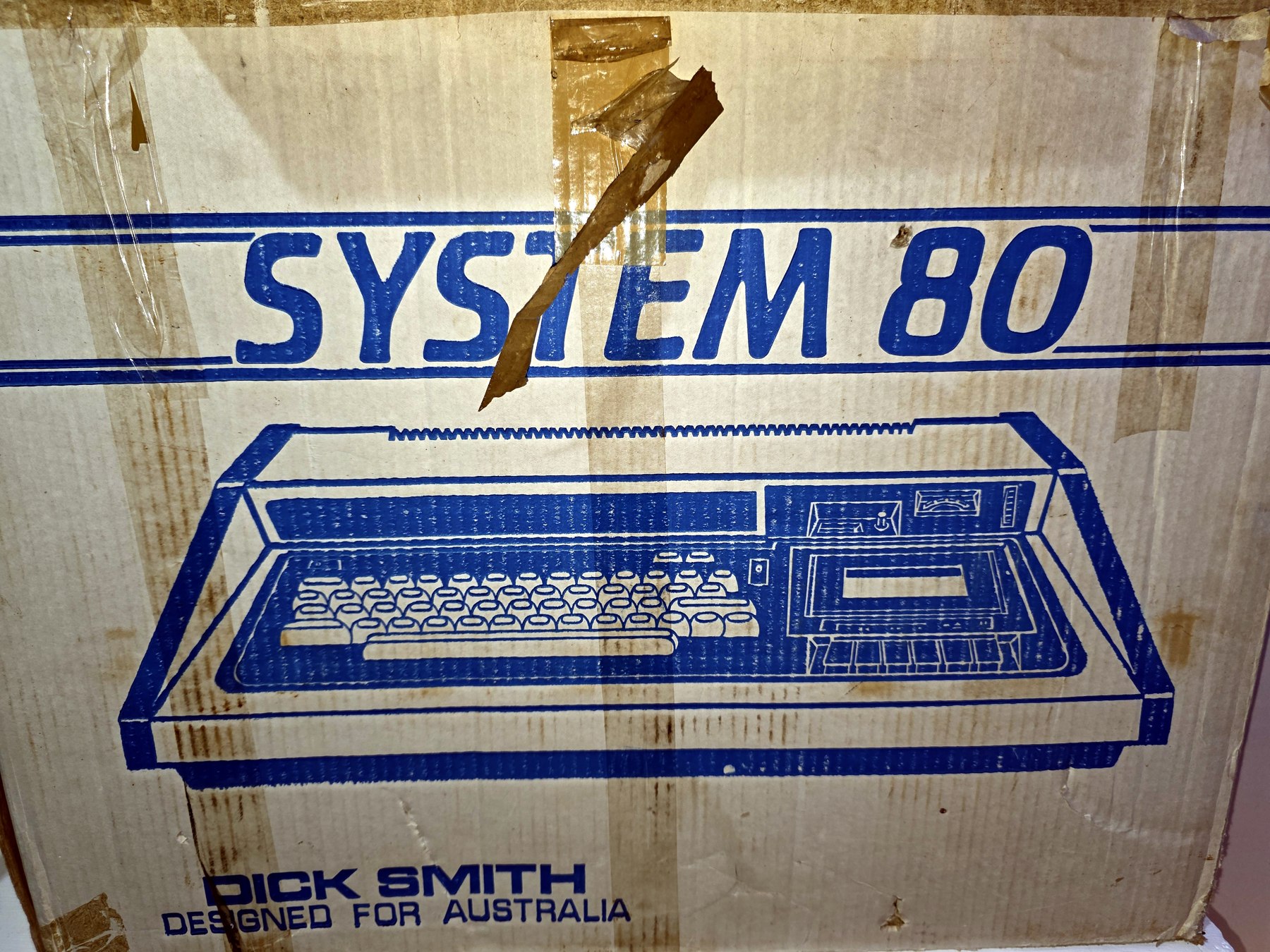
Label identified

The label reads System 80 first generation computer system. A built-in cassette mechanism sits beside the keyboard; the companion carton carries Dick Smith branding and the words Designed for Australia.

Additional view of Dick Smith System 80View additional photograph ↗
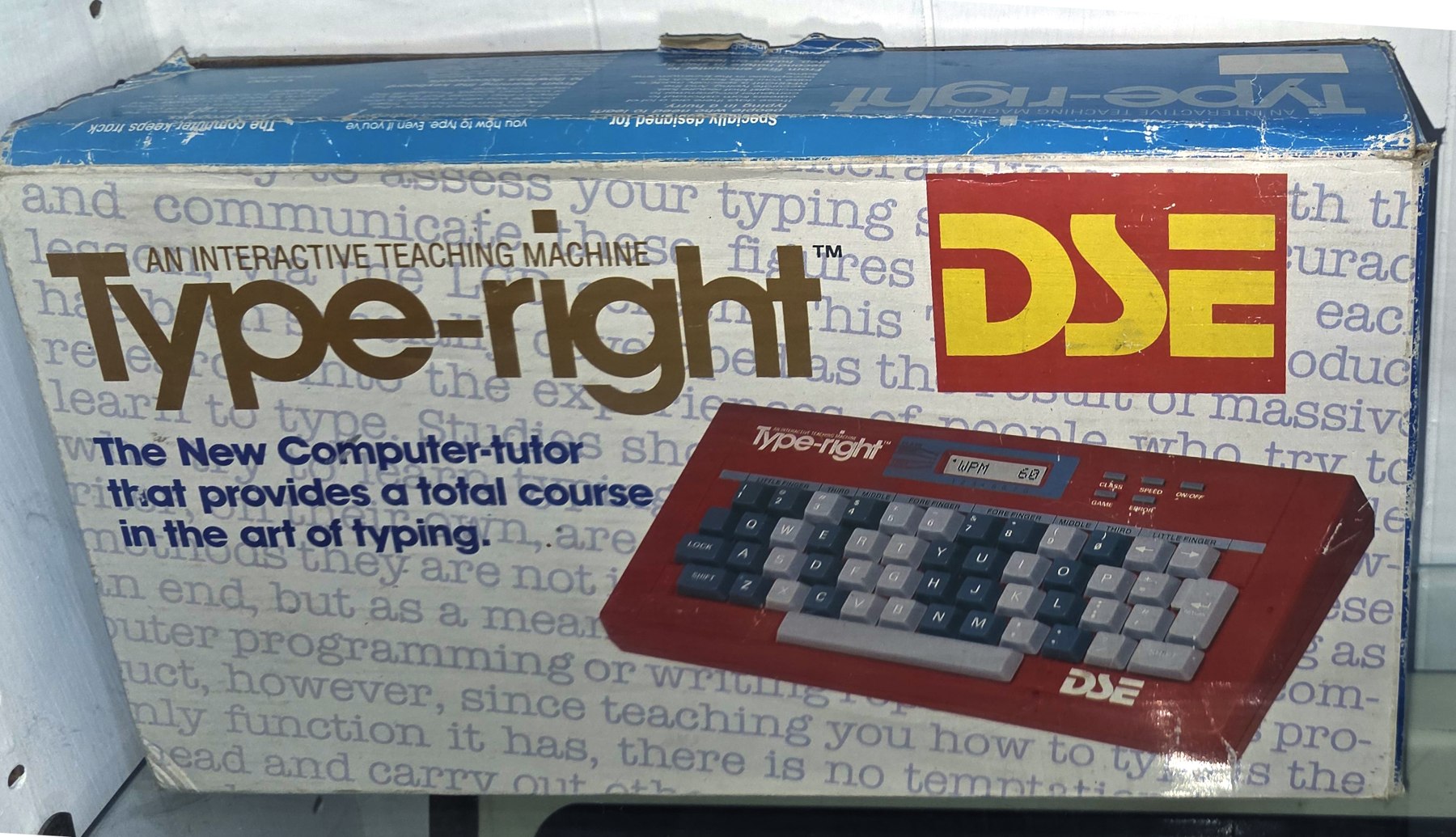
DSE Type-right typing tutor — collection photograph

Archive

DSE Type-right typing tutor

Packaging identified

The box describes an electronic typing tutor offering a course in typing. This is a packaging record; the contents and working condition have not been checked.

Ultraviolet EPROM eraser — probable — collection photograph

Peripherals

Ultraviolet EPROM eraser — probable

Probable identification

A small grey accessory sits beside packaging marked Ultraviolet EPROM Eraser. The box suggests its purpose, but the device’s own model plate is not visible.

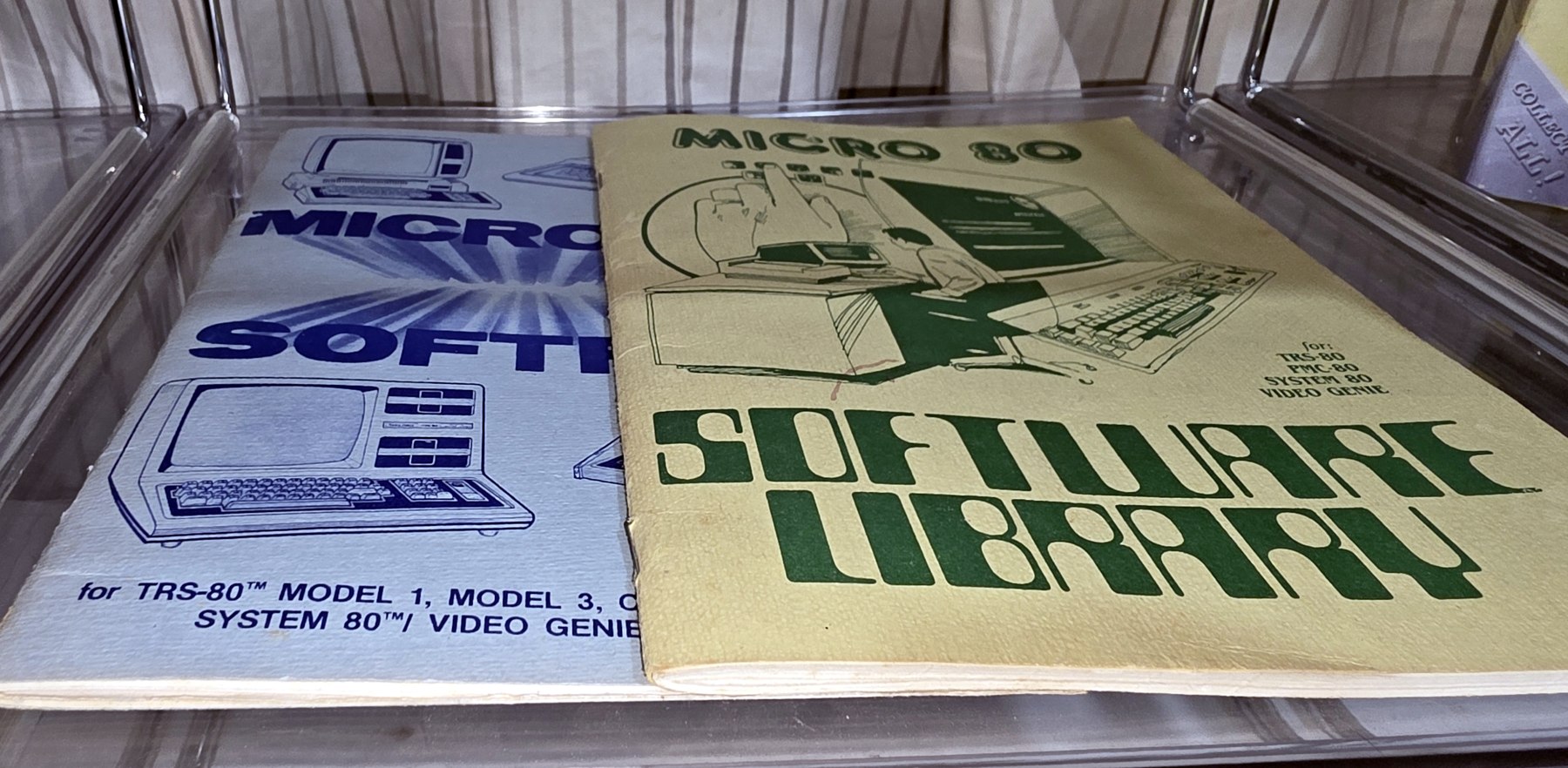
MICRO-80 Software Library — collection photograph

Archive

MICRO-80 Software Library

Title identified

Printed MICRO-80 Software Library material is displayed with other software documentation. The visible cover refers to TRS-80, System 80 and Video Genie computers.

Dick Smith boxed accessories — collection photograph

Archive

Dick Smith boxed accessories

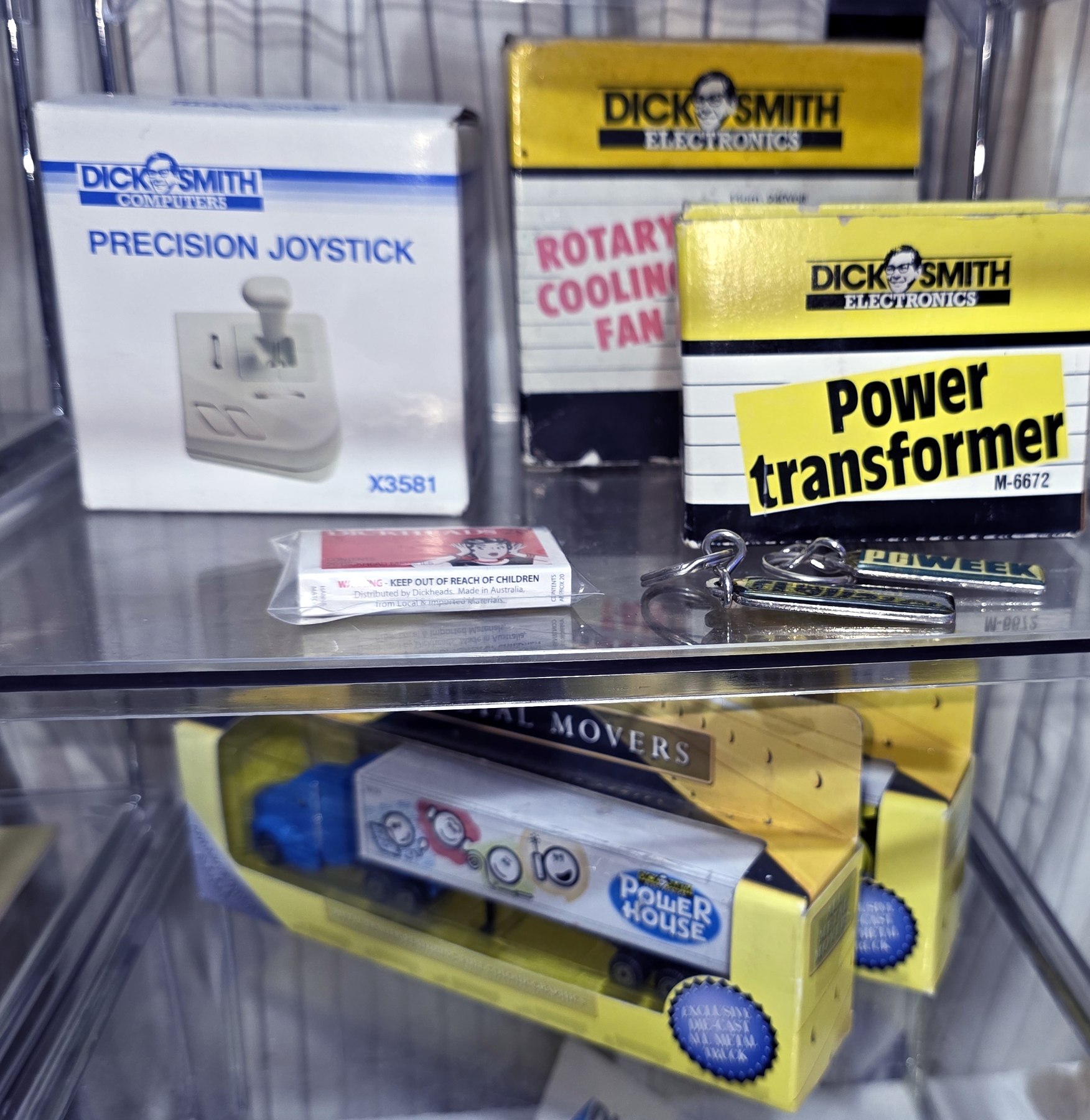
Packaging identified

Packaging includes a Precision Joystick, rotary cooling fan and power transformer. These are grouped as a display of accessories rather than counted as complete computers.

The Junior Computer — collection photograph

Archive

The Junior Computer

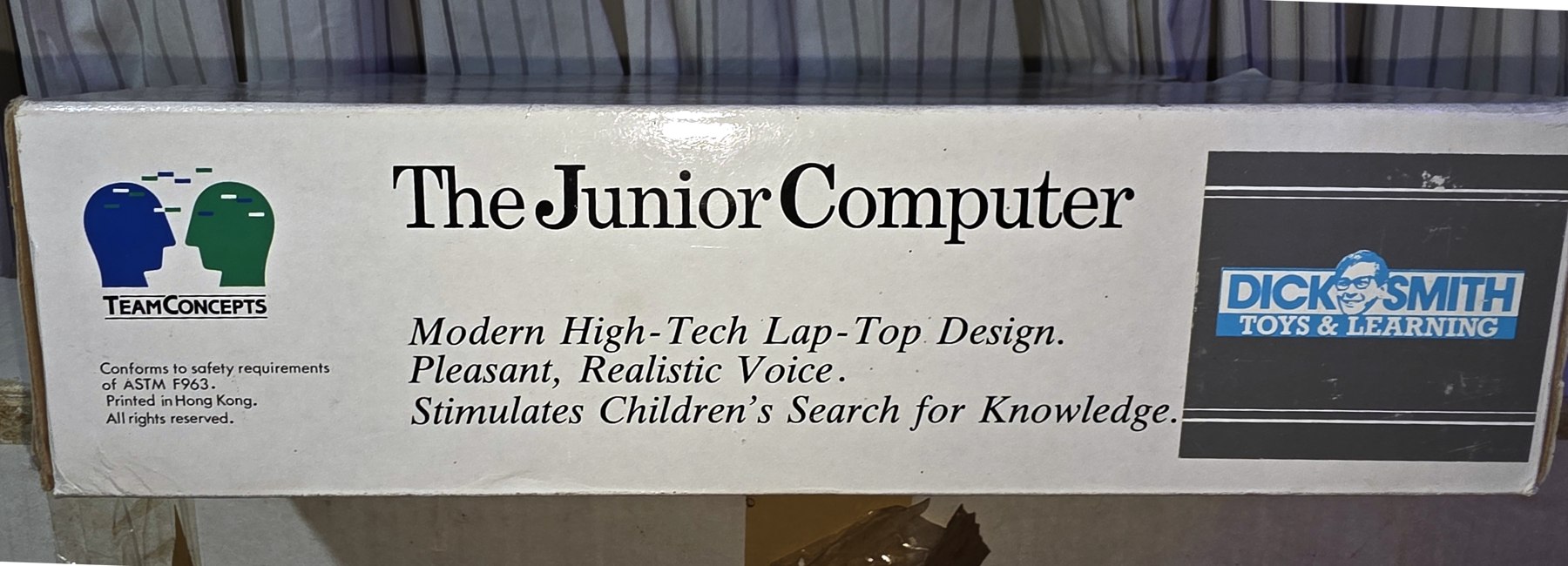
Packaging identified

The package carries TIAN Concepts and Dick Smith branding and describes a talking educational laptop-style product. This photograph records the box, with the device inside unverified.

Dick Smith programmable TV game console — collection photograph

Archive

Dick Smith programmable TV game console

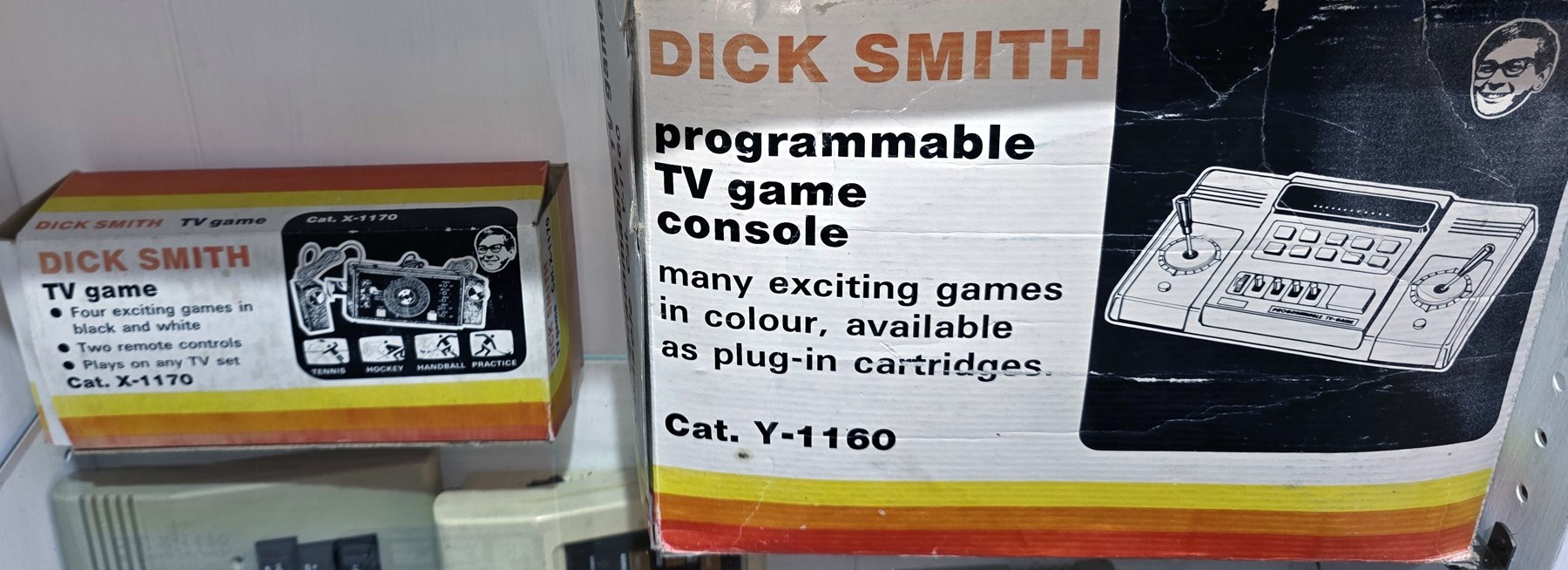
Packaging identified

The large box identifies a programmable TV game console, catalogue number Y-1160, with plug-in cartridges. A smaller TV game package is displayed alongside it.

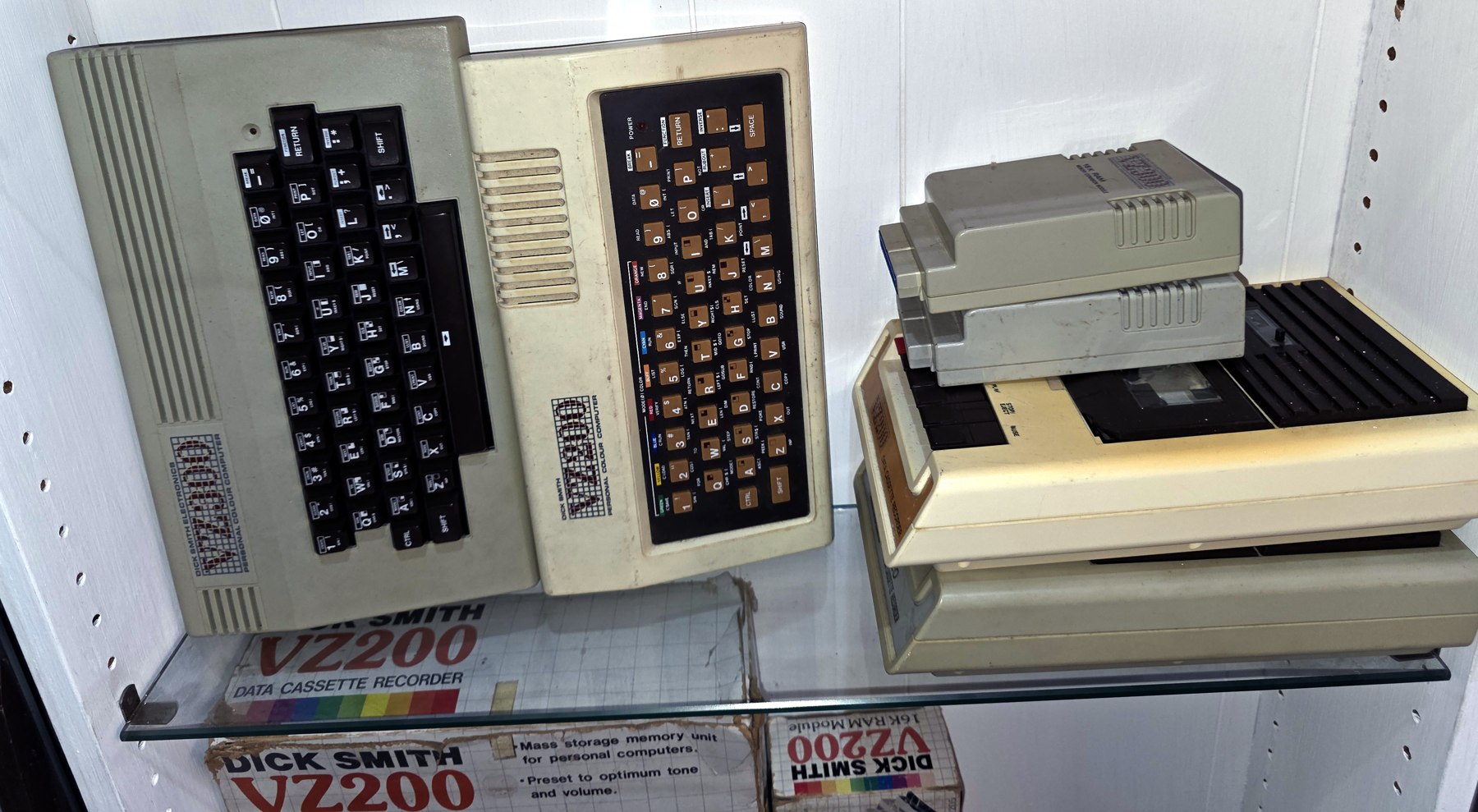
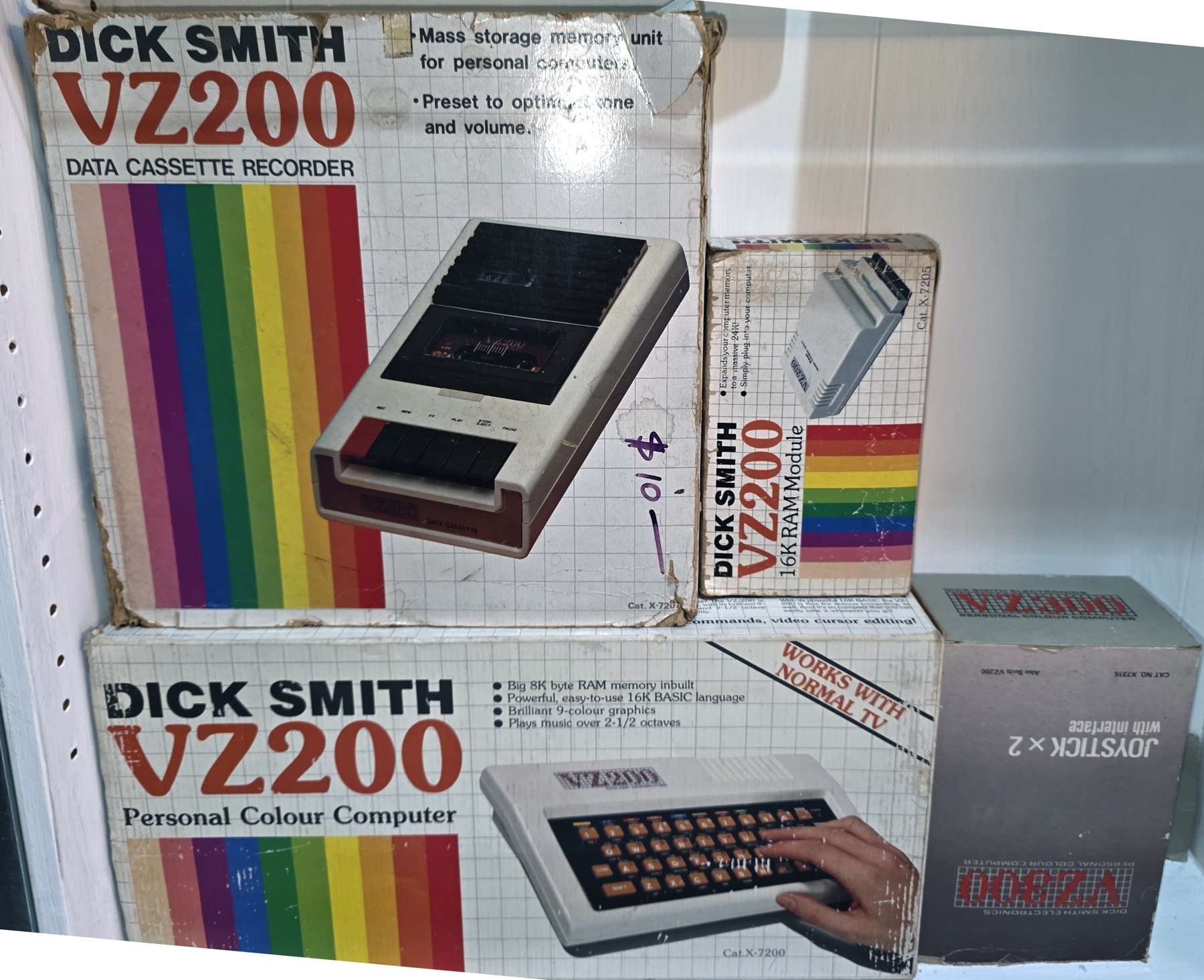
Dick Smith VZ computers — collection photograph

Computers

Dick Smith VZ computers

Label identified

VZ200 and VZ300-labelled keyboard computers share a shelf with disk equipment. A second photograph shows VZ200 computer, data cassette recorder and joystick packaging; related examples are grouped here rather than counted from their boxes.

Additional view of Dick Smith VZ computersView additional photograph ↗
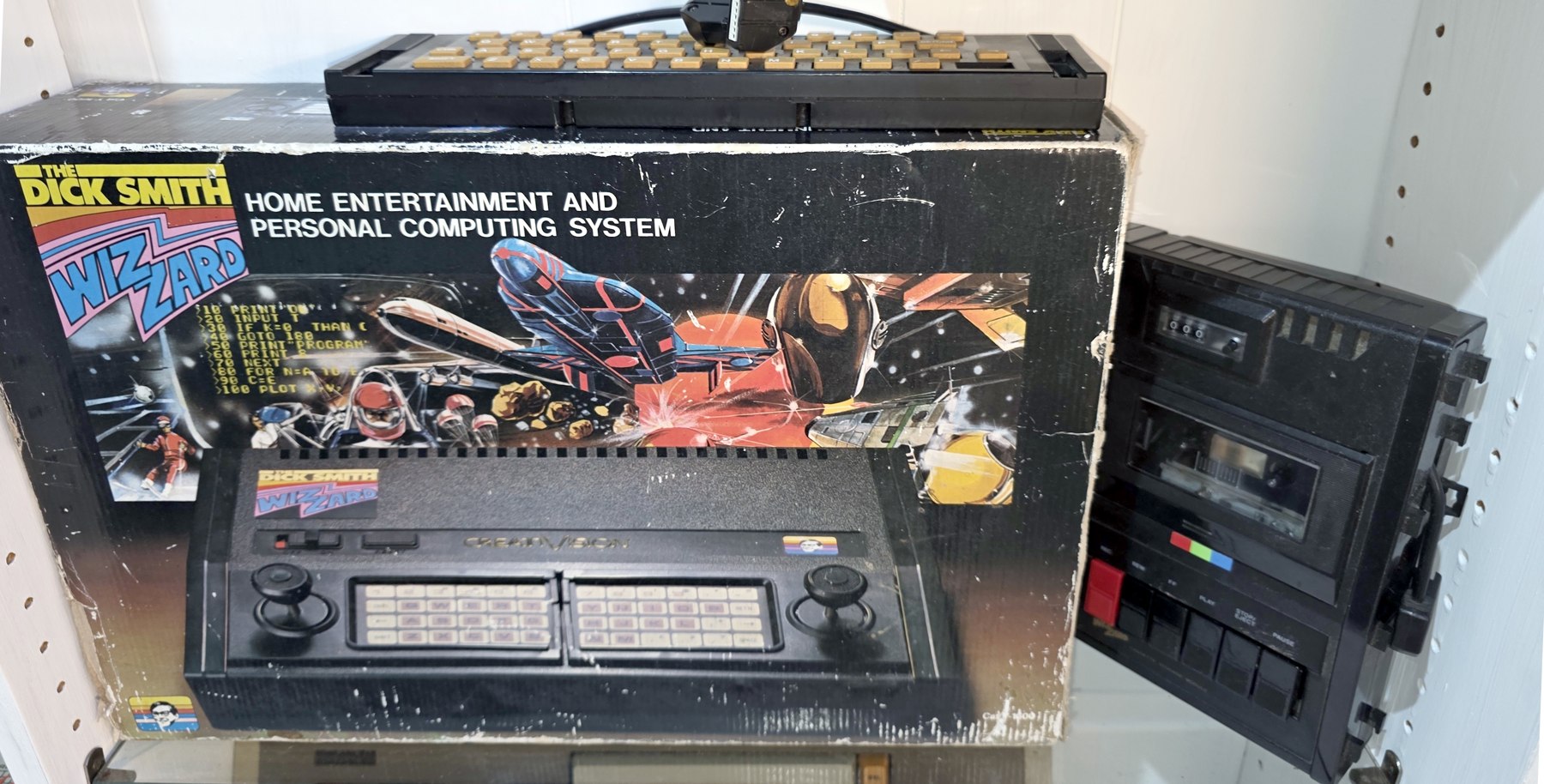
Dick Smith Wizzard — collection photograph

Computers

Dick Smith Wizzard

Label identified

The Wizzard console is displayed with its Home Entertainment and Personal Computing System box. The keyboard and handheld controllers are visible; the installed software and operating condition remain unverified.

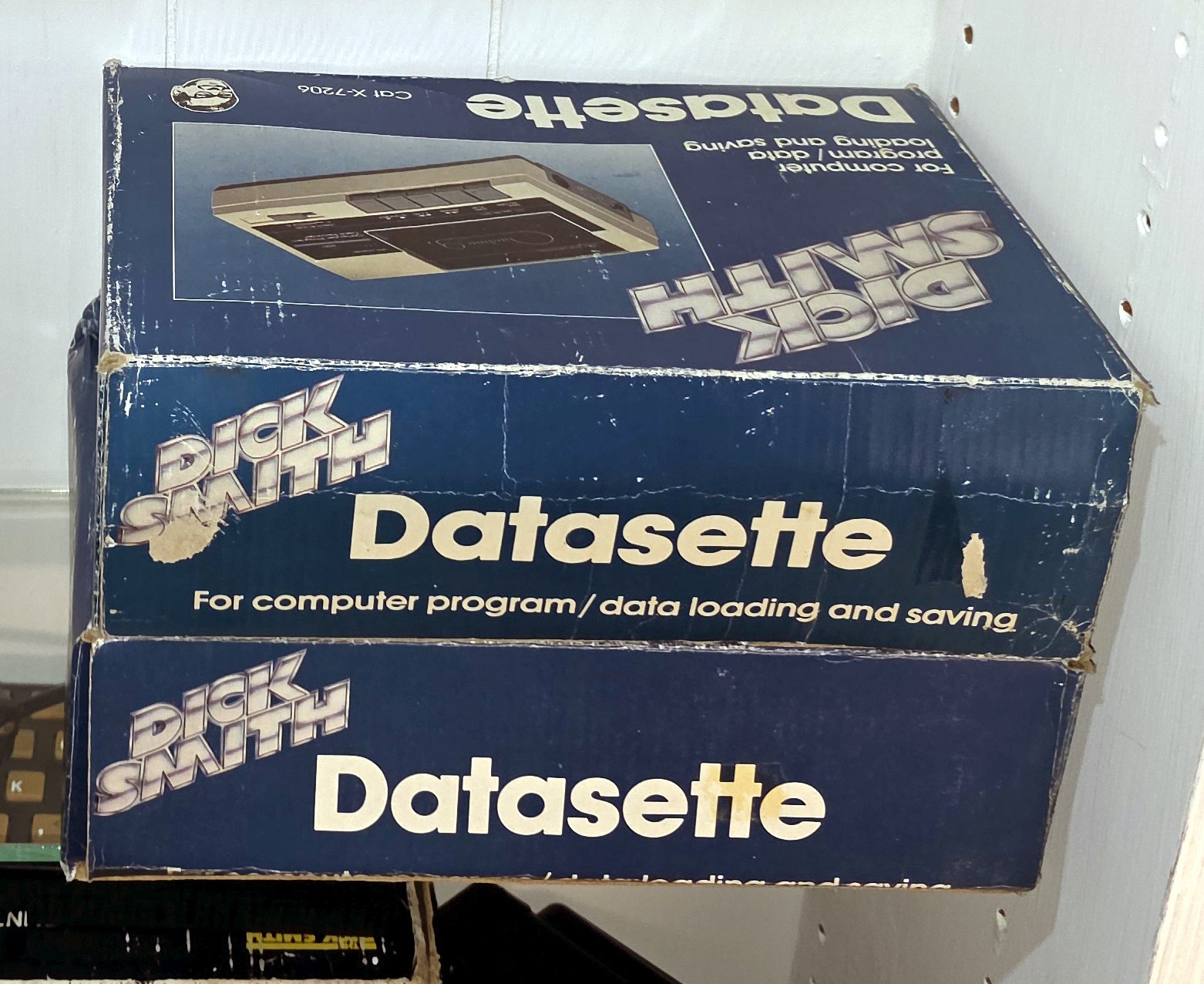
Dick Smith Datasette packaging — collection photograph

Archive

Dick Smith Datasette packaging

Packaging identified

The box describes a Datasette for loading and saving computer programs and data. It documents the cassette storage accessory; no contents are assumed.

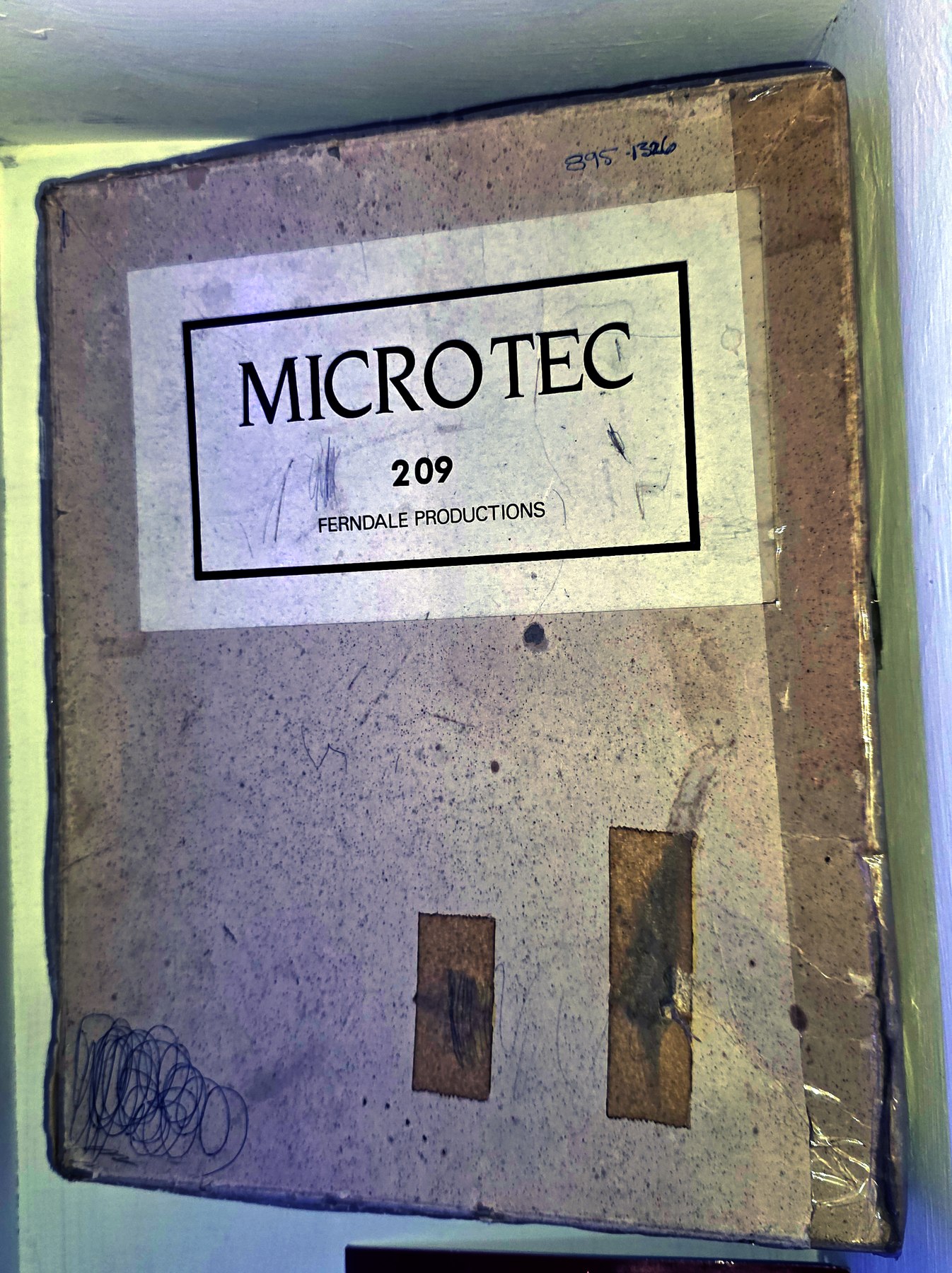
Pinnacle Productions MICROTEC 209 — collection photograph

Archive

Pinnacle Productions MICROTEC 209

Packaging identified

The worn carton is labelled MICROTEC 209, Pinnacle Productions. Its contents and the exact equipment configuration are not visible.

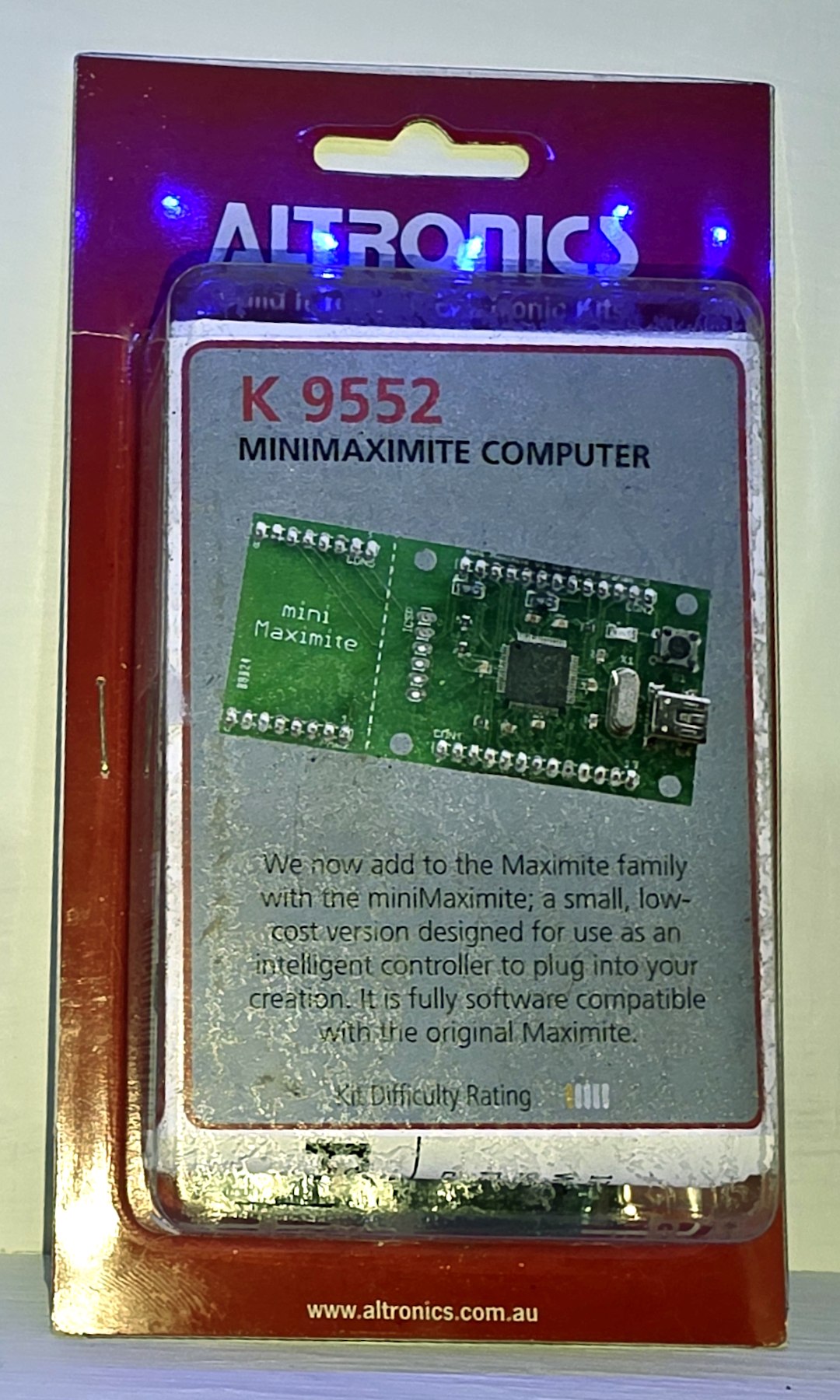
Altronics K9552 MiniMaximite kit — collection photograph

Computers

Altronics K9552 MiniMaximite kit

Packaging identified

The sealed kit packet is labelled K9552 MiniMaximite Computer. This later kit belongs to the continuing hobby-computing story represented in the room; the packet does not establish an assembled working system.

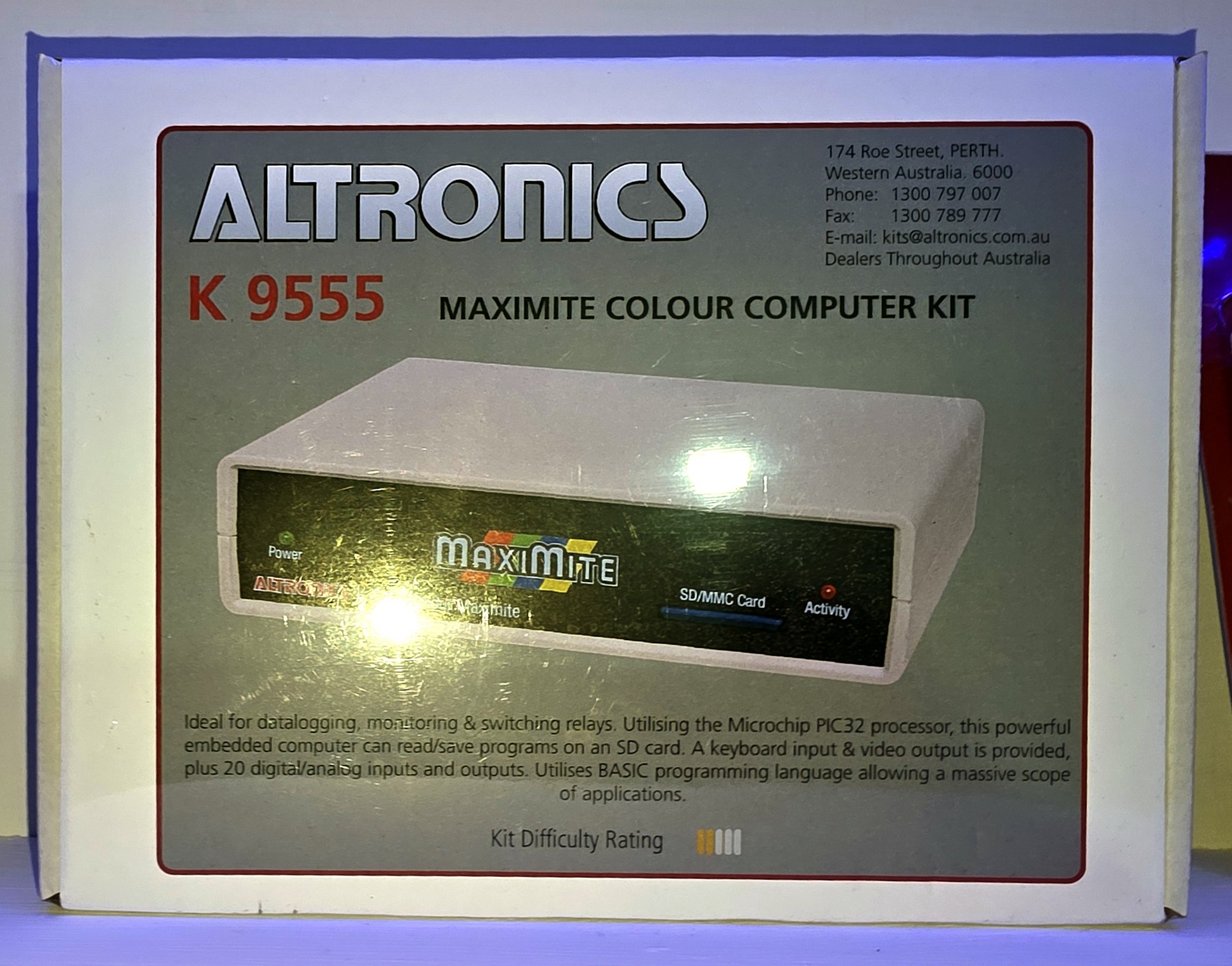
Altronics K9555 Maximite Colour kit — collection photograph

Computers

Altronics K9555 Maximite Colour kit

Packaging identified

The box identifies the K9555 Maximite Colour Computer Kit. It is catalogued from the packaging, without assuming the pictured assembled computer is inside.

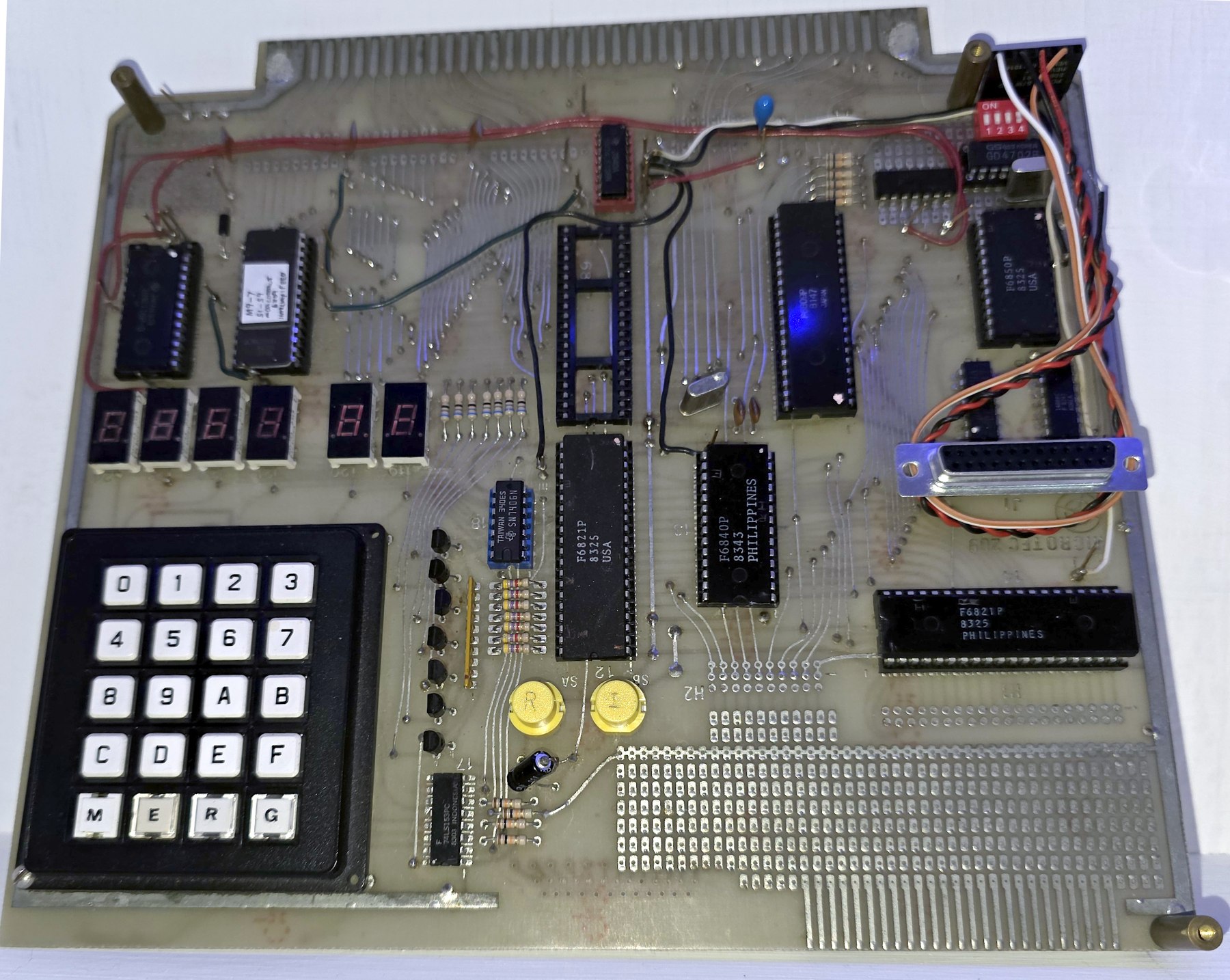
Hex-keypad computer board — collection photograph

Computers

Hex-keypad computer board

Awaiting identification

A populated board combines a hexadecimal keypad, six numeric displays and socketed chips. No dependable product name is visible, so the board remains an identification lead.

DREAM-style computer — probable — collection photograph

Computers

DREAM-style computer — probable

Probable identification

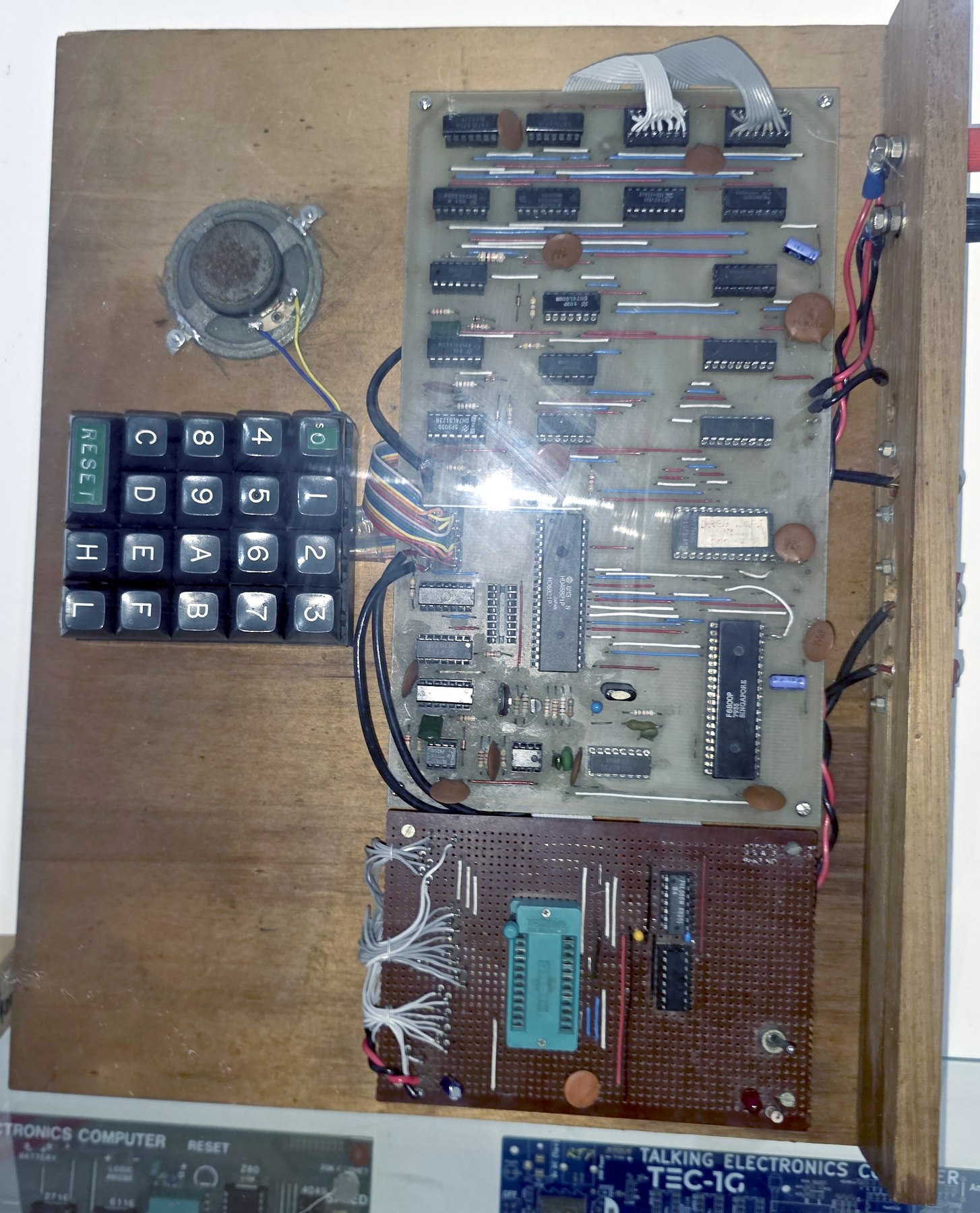
A board mounted on timber combines a hexadecimal keypad, speaker and expansion circuitry. Its layout suggests a DREAM-family hobby computer, but a readable board designation is needed to confirm the model.

DREAM-labelled ROM collection — collection photograph

Archive

DREAM-labelled ROM collection

Labels identified

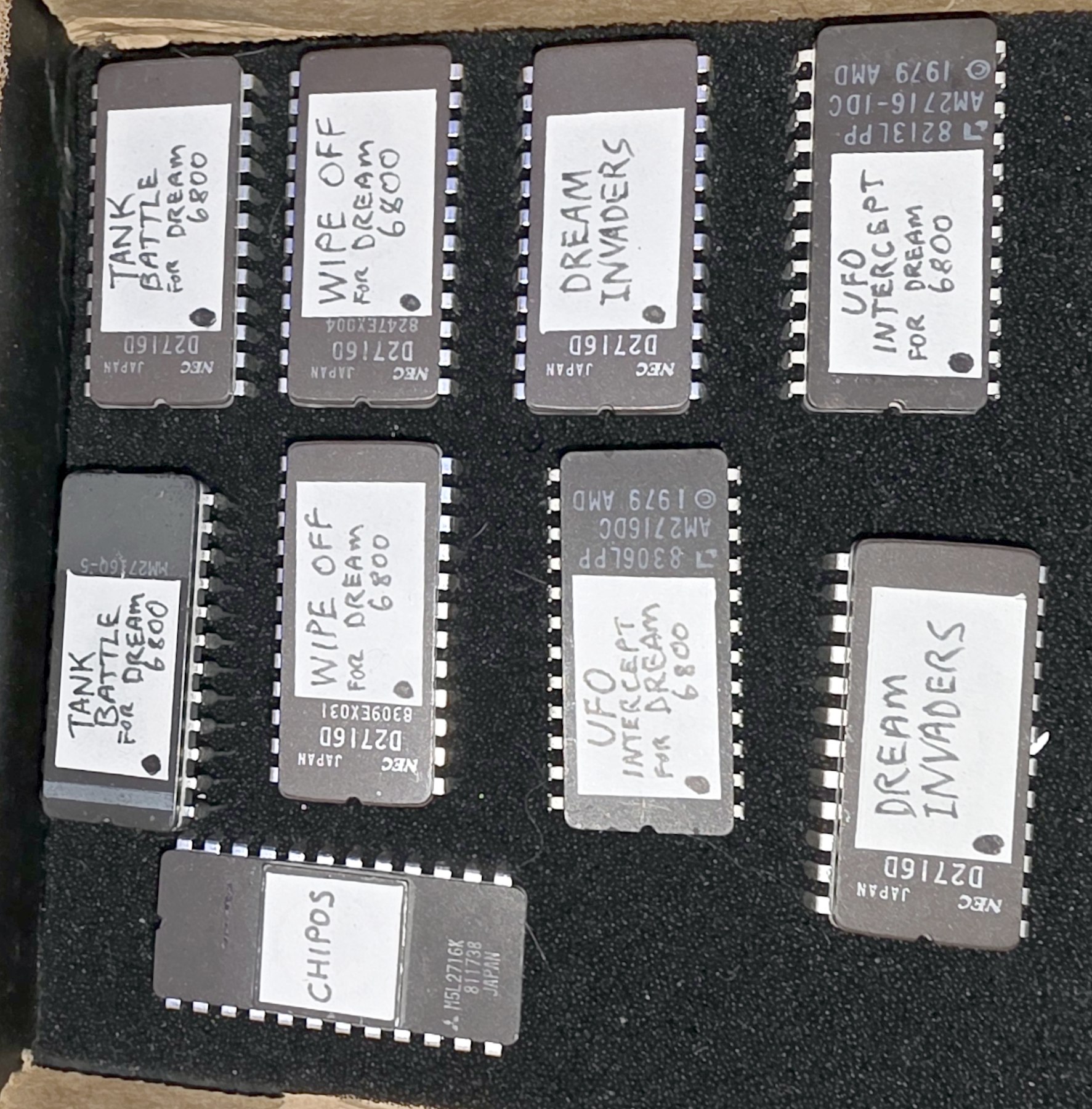
Handwritten chip labels include DREAM 1, DREAM 2, Invaders, Tanks and UFO. These are physical ROM artefacts; their actual contents have not been read or verified.

Talking Electronics TEC-1G — collection photograph

Computers

Talking Electronics TEC-1G

Label identified

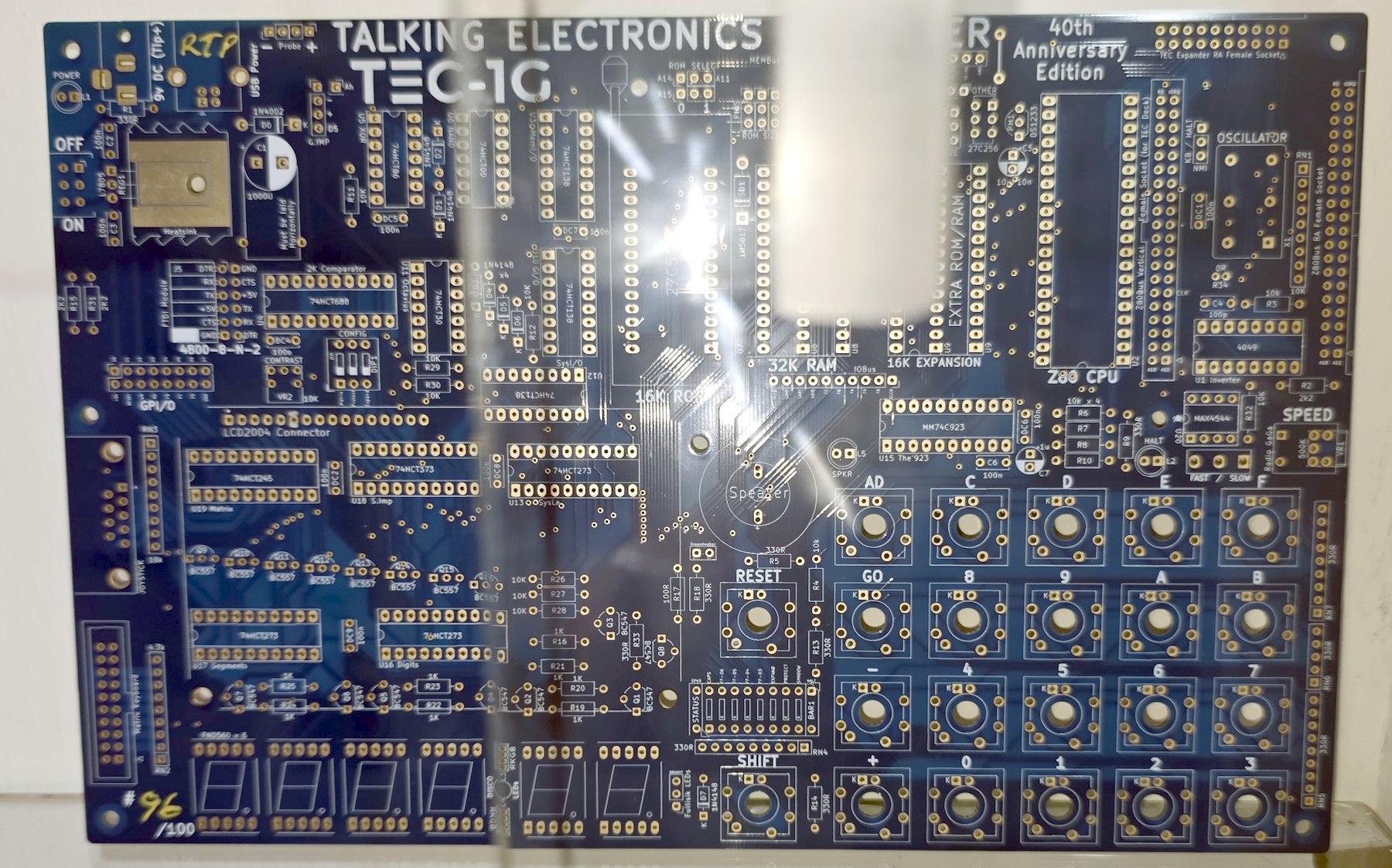
The blue board is clearly marked Talking Electronics TEC-1G. This modern continuation of the TEC-1 project is represented as a later development, not an original 1980s board.

Historical reference ↗
Talking Electronics TEC-1B — collection photograph

Computers

Talking Electronics TEC-1B

Label identified

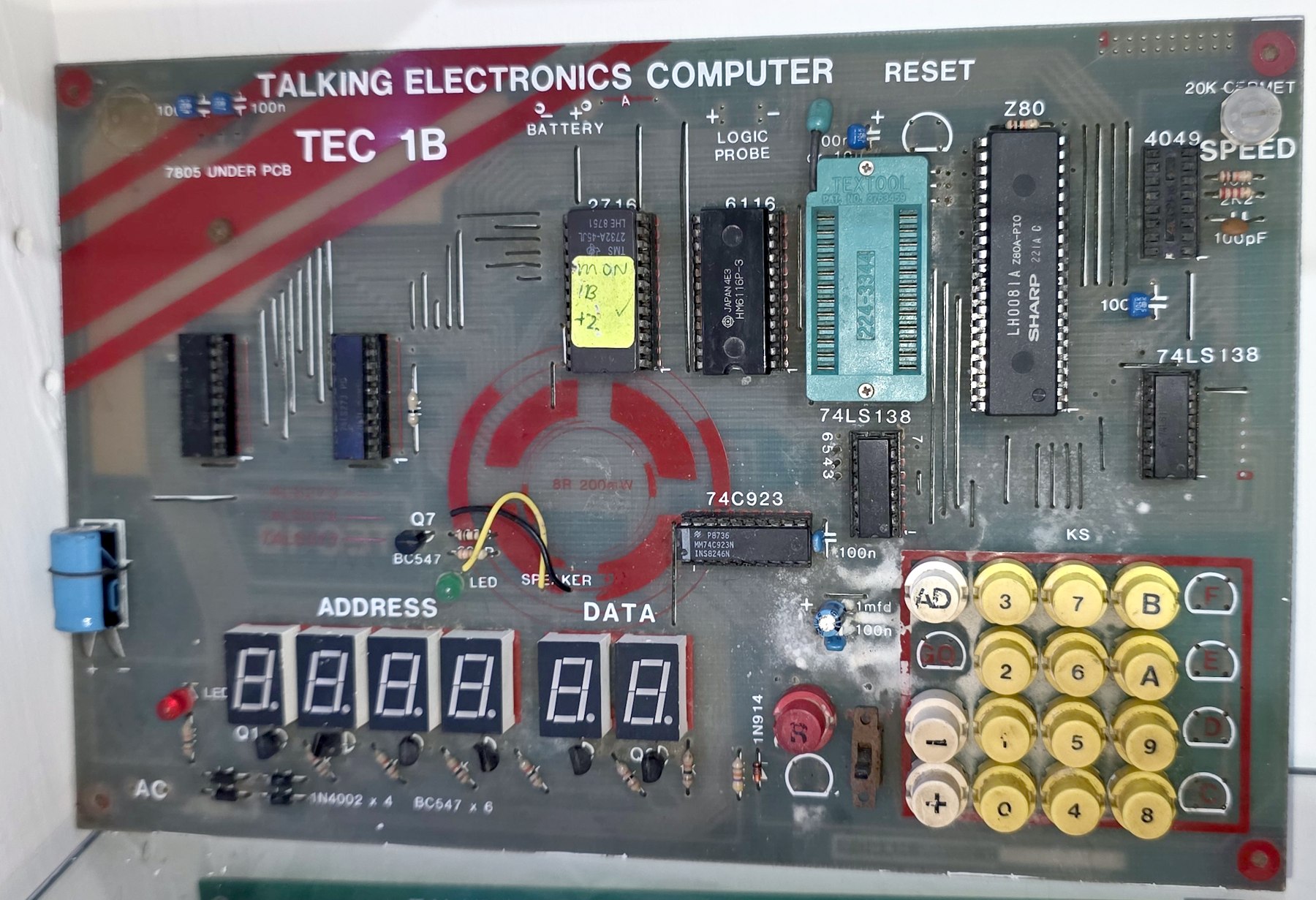
The board is marked TEC 1B and has a hexadecimal keypad and numeric display. Its exposed components make the computer’s construction part of the display.

Talking Electronics TEC-1D — collection photograph

Computers

Talking Electronics TEC-1D

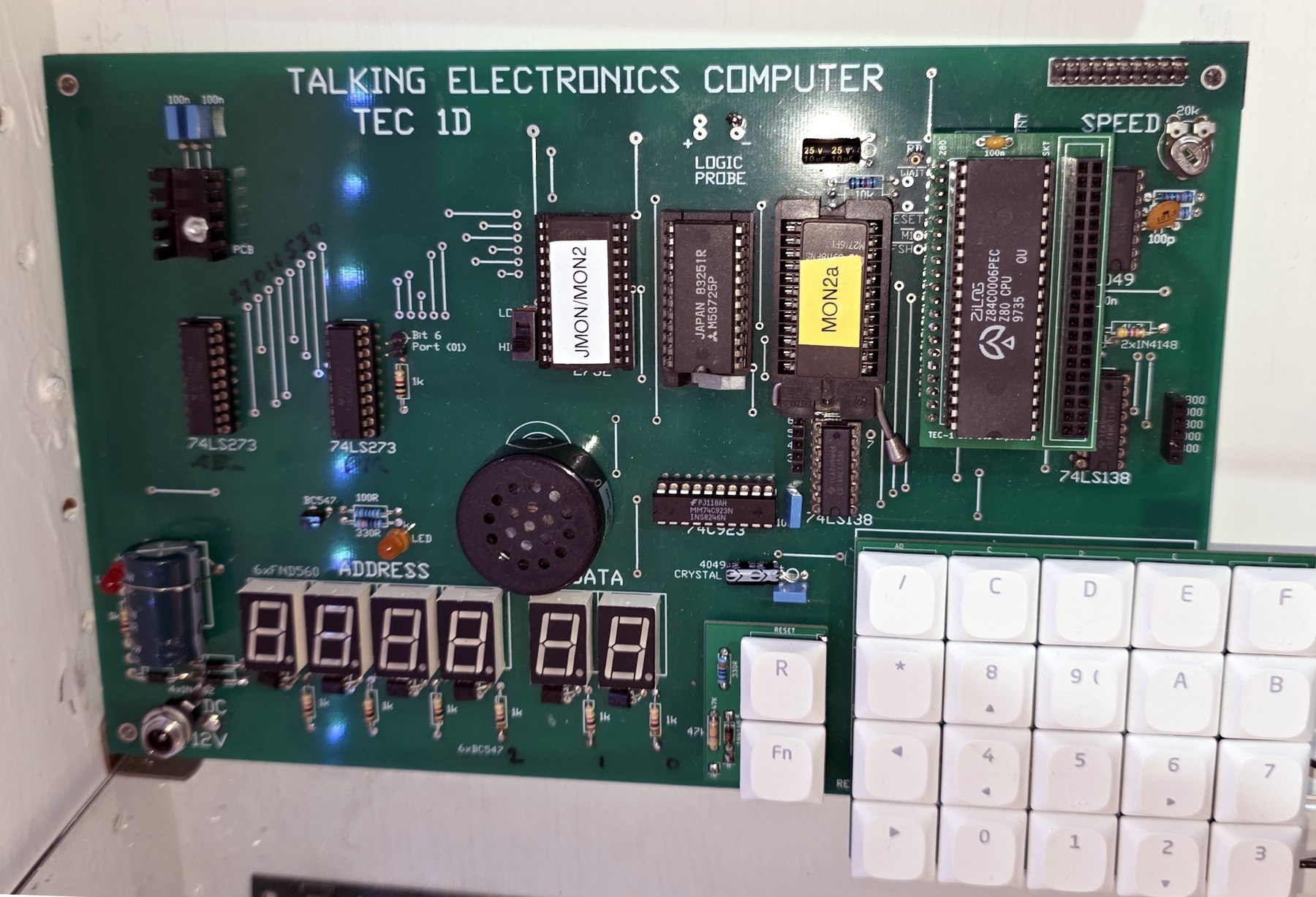
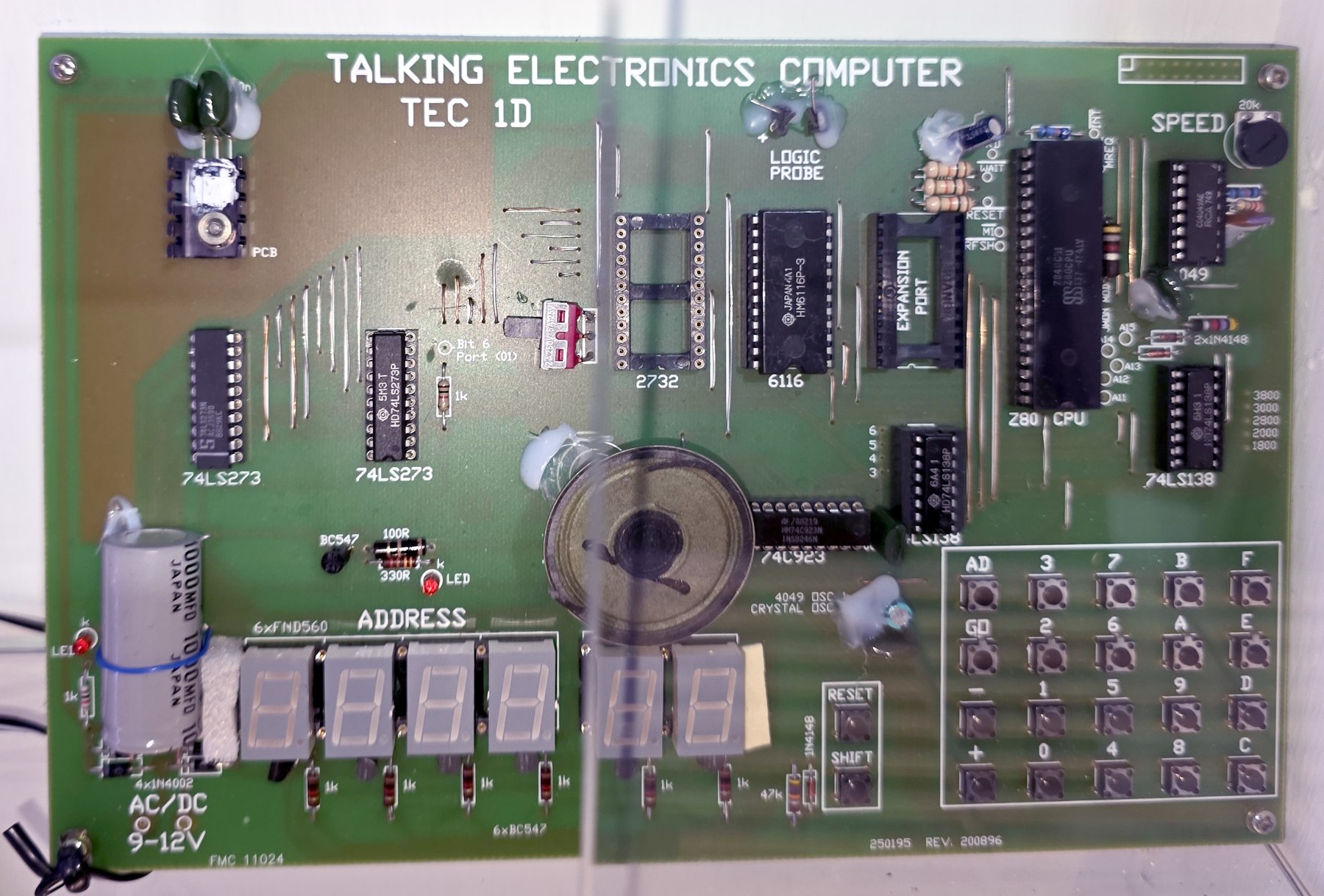
Label identified

Two TEC 1D-labelled boards are grouped as a model family. Their keypad fit-outs differ, so both examples are retained rather than treated as duplicate photographs.

Additional view of Talking Electronics TEC-1DView additional photograph ↗
Talking Electronics MICRO-P — collection photograph

Computers

Talking Electronics MICRO-P

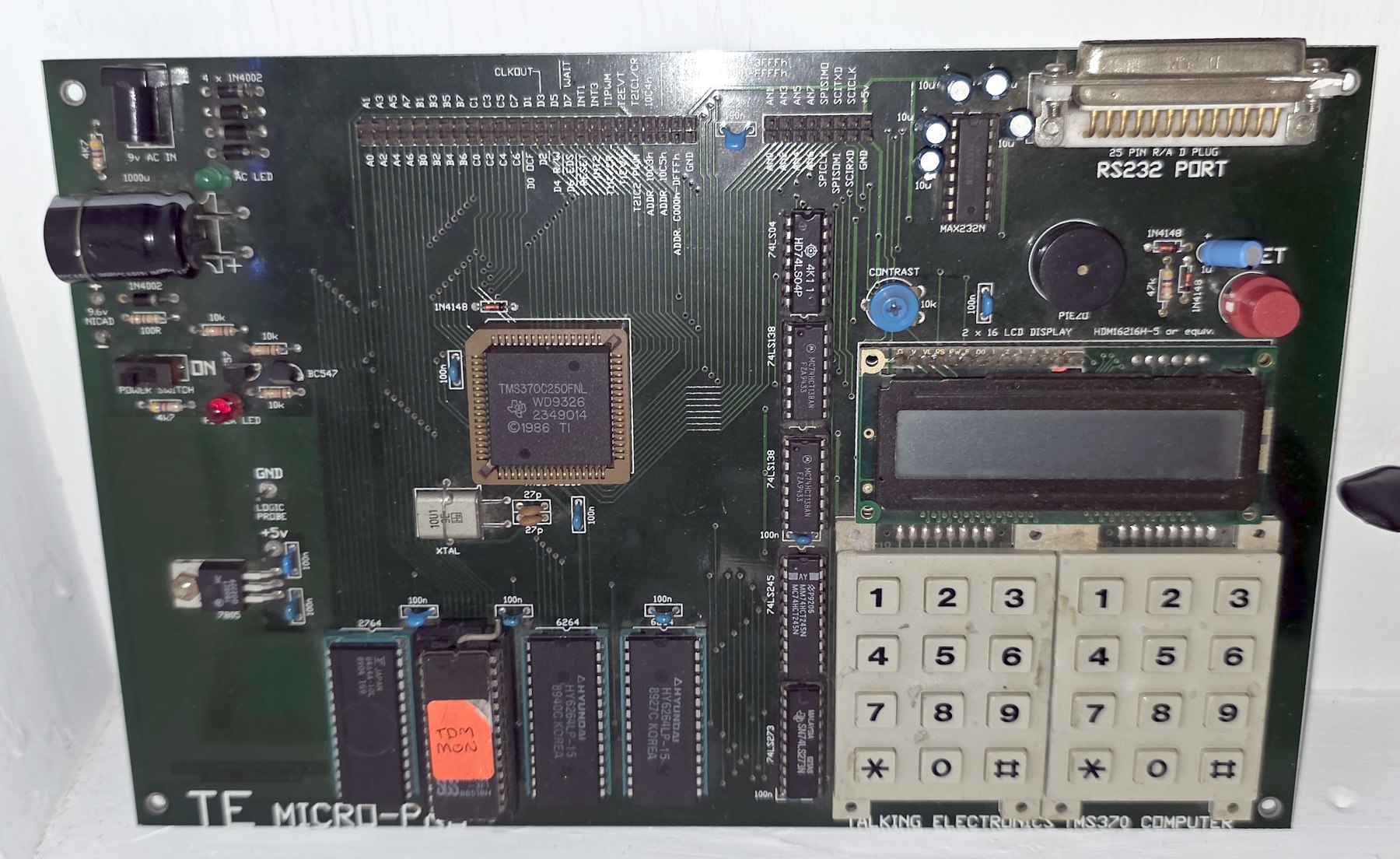
Label identified

The board carries TE MICRO-P branding and a Texas Instruments TMS370-series chip. Two keypads and a small LCD form its user interface; the exact firmware and revision remain unverified.

Talking Electronics Mini Microcomp-2 — collection photograph

Computers

Talking Electronics Mini Microcomp-2

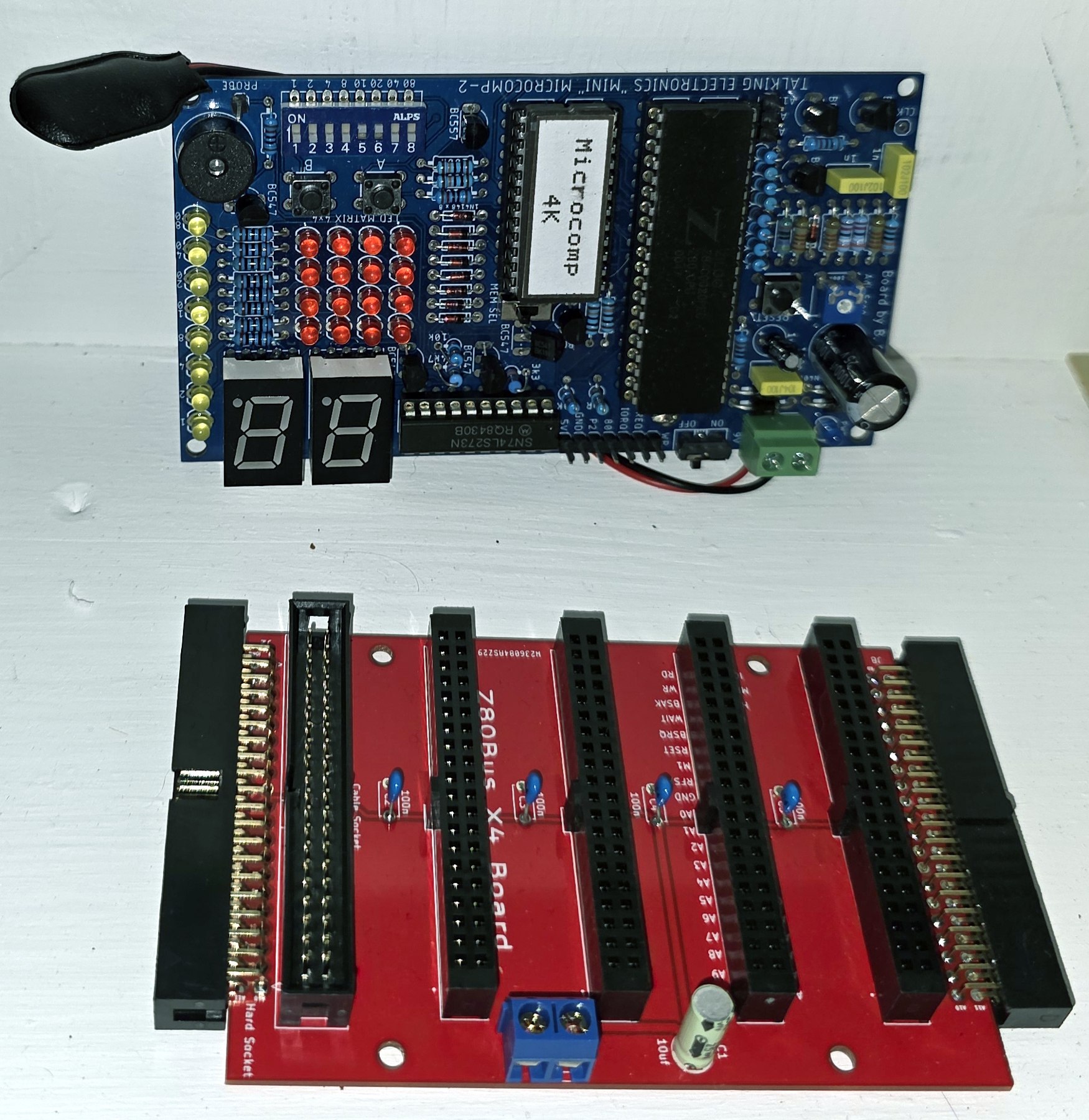
Label identified

A compact blue Mini Microcomp-2 board is shown with a separate red expansion board. The display and controls are built directly onto the small computer; the installed program is not verified.

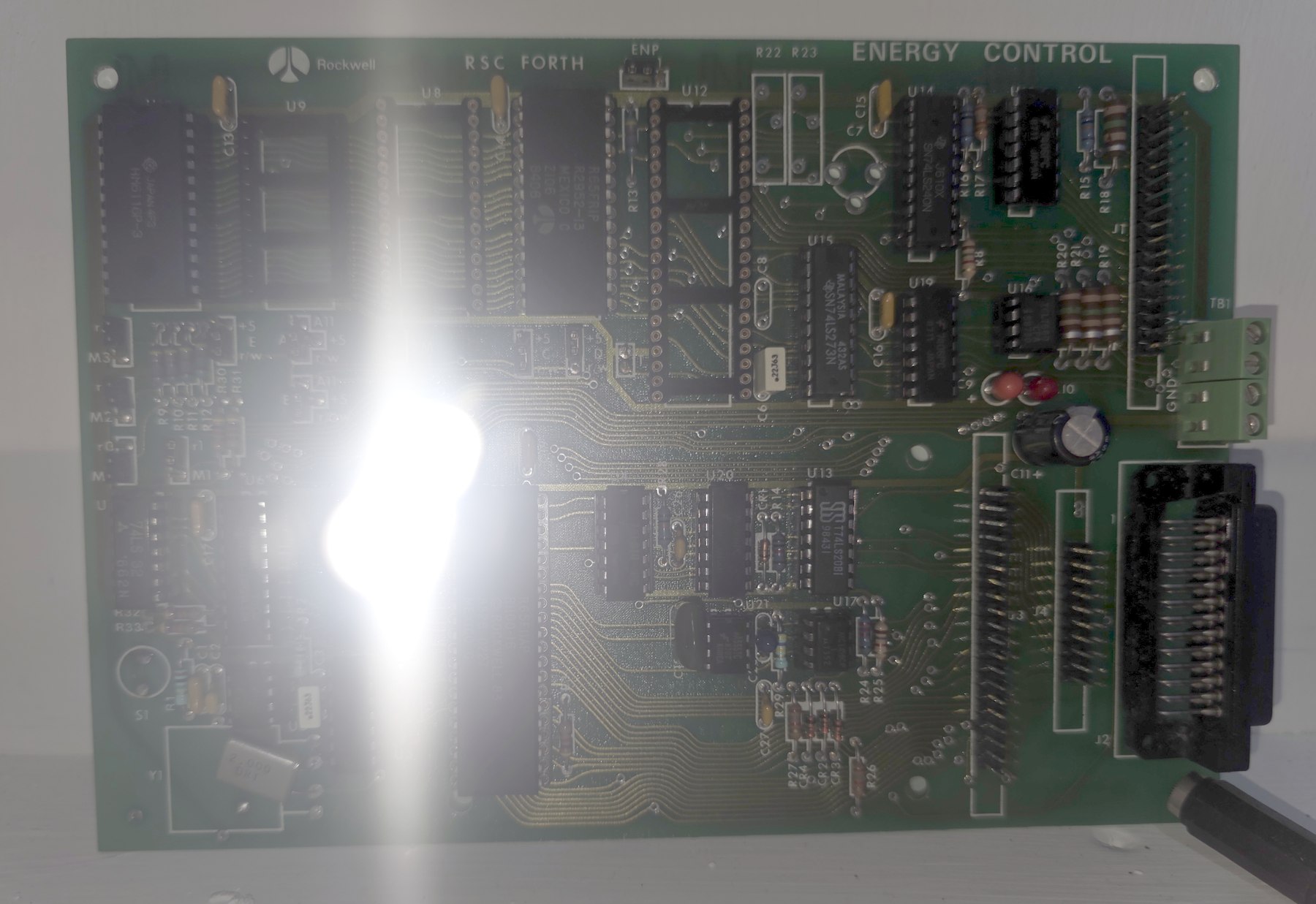
Rockwell RSC FORTH control board — collection photograph

Computers

Rockwell RSC FORTH control board

Board markings identified

Rockwell and RSC FORTH markings are visible on this populated control board. Glare obscures some details, so no magazine kit number or exact system configuration is assigned.

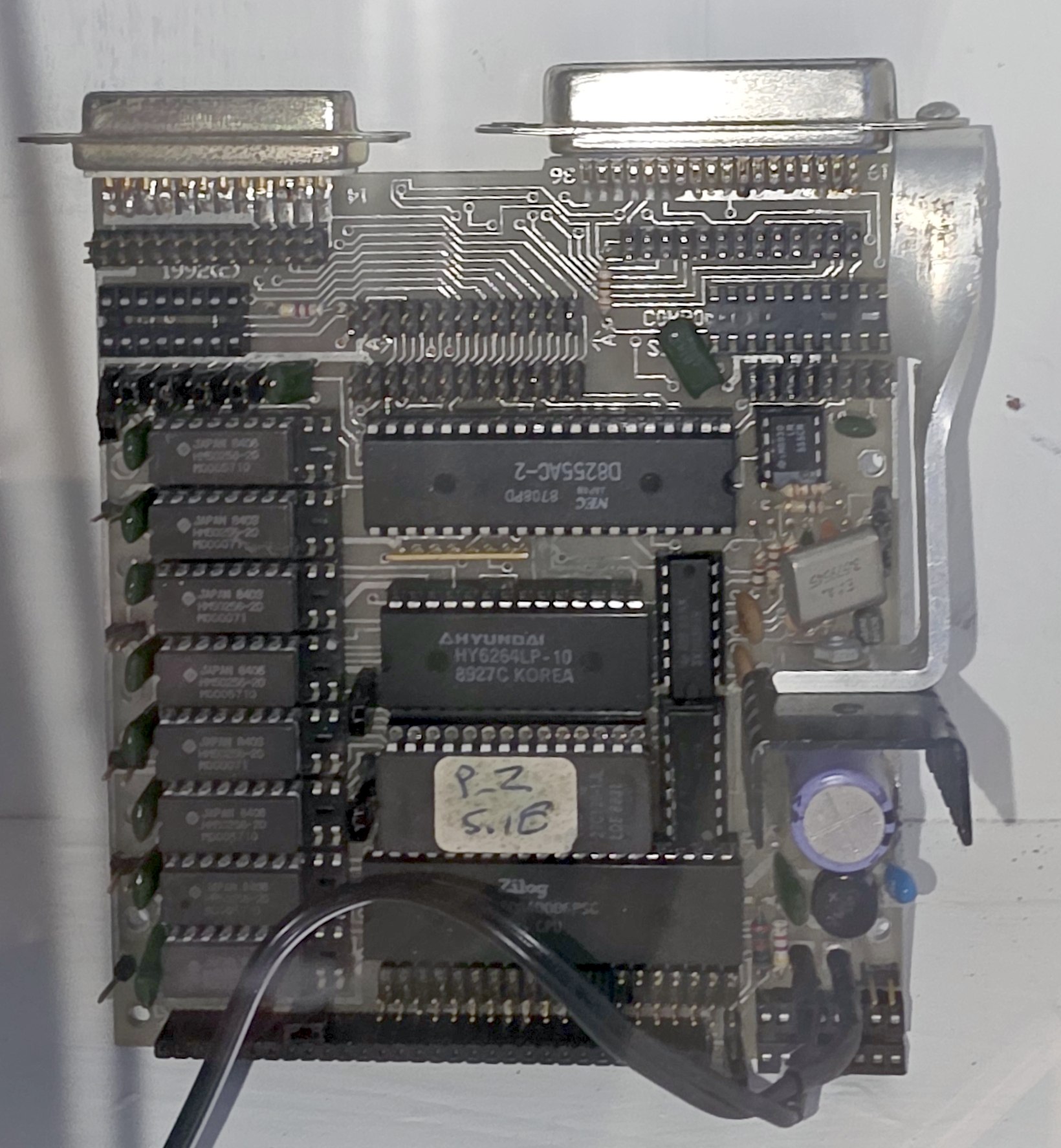
Z80 board in a clear enclosure — collection photograph

Computers

Z80 board in a clear enclosure

Model unconfirmed

A compact board sits in a curved transparent enclosure, with socketed chips and a handwritten ROM label. The visible components suggest a Z80-based system, but the product name remains unconfirmed.

Gold-coloured keyboard computer — collection photograph

Computers

Gold-coloured keyboard computer

Probable family; model unconfirmed

A gold-coloured case surrounds a compact keyboard with dark blue modifier keys. Its shape resembles a Microbee-family machine, but no legible badge establishes a specific model.

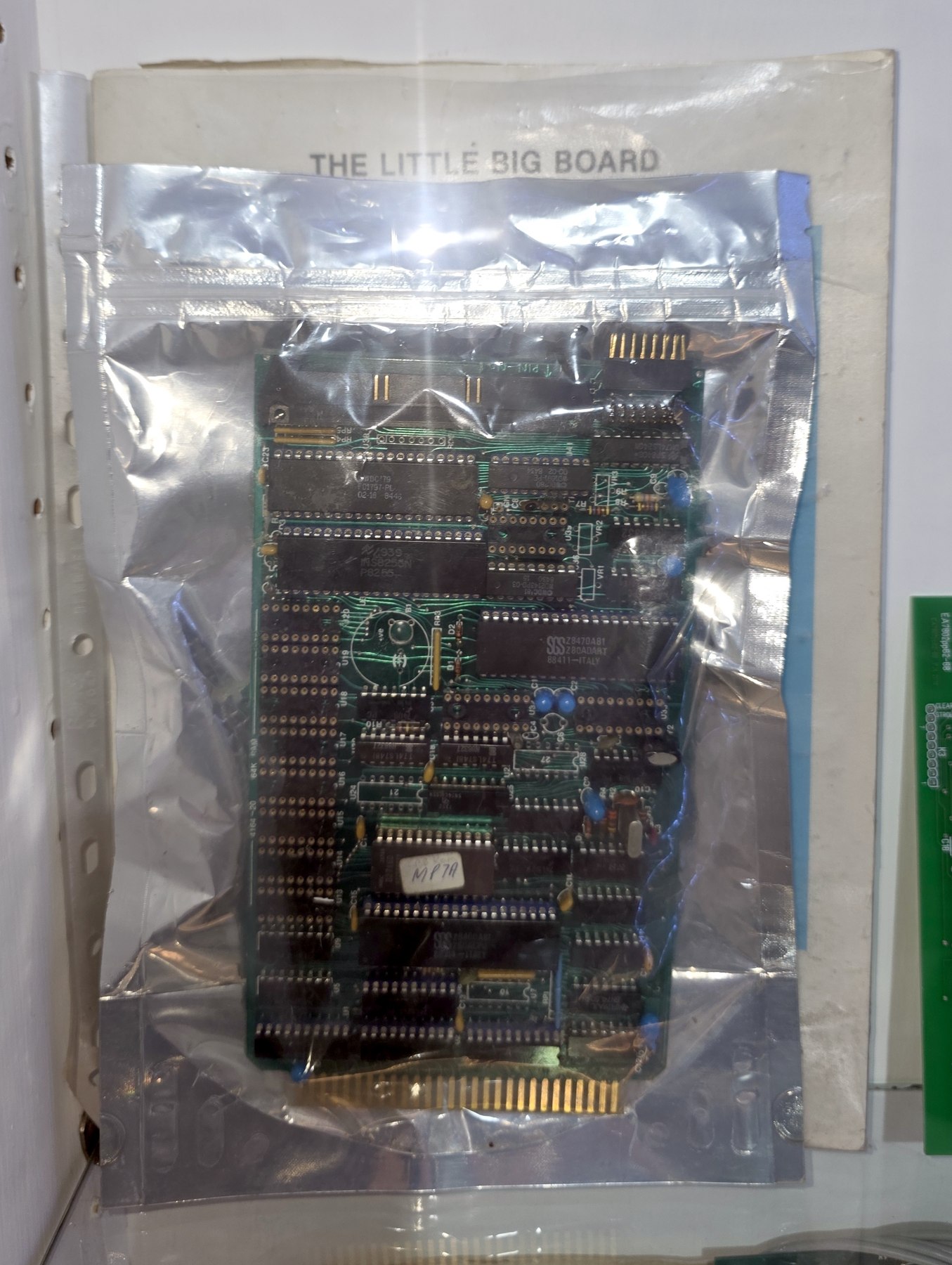
Pulsar Little Big Board — collection photograph

Computers

Pulsar Little Big Board

Label identified

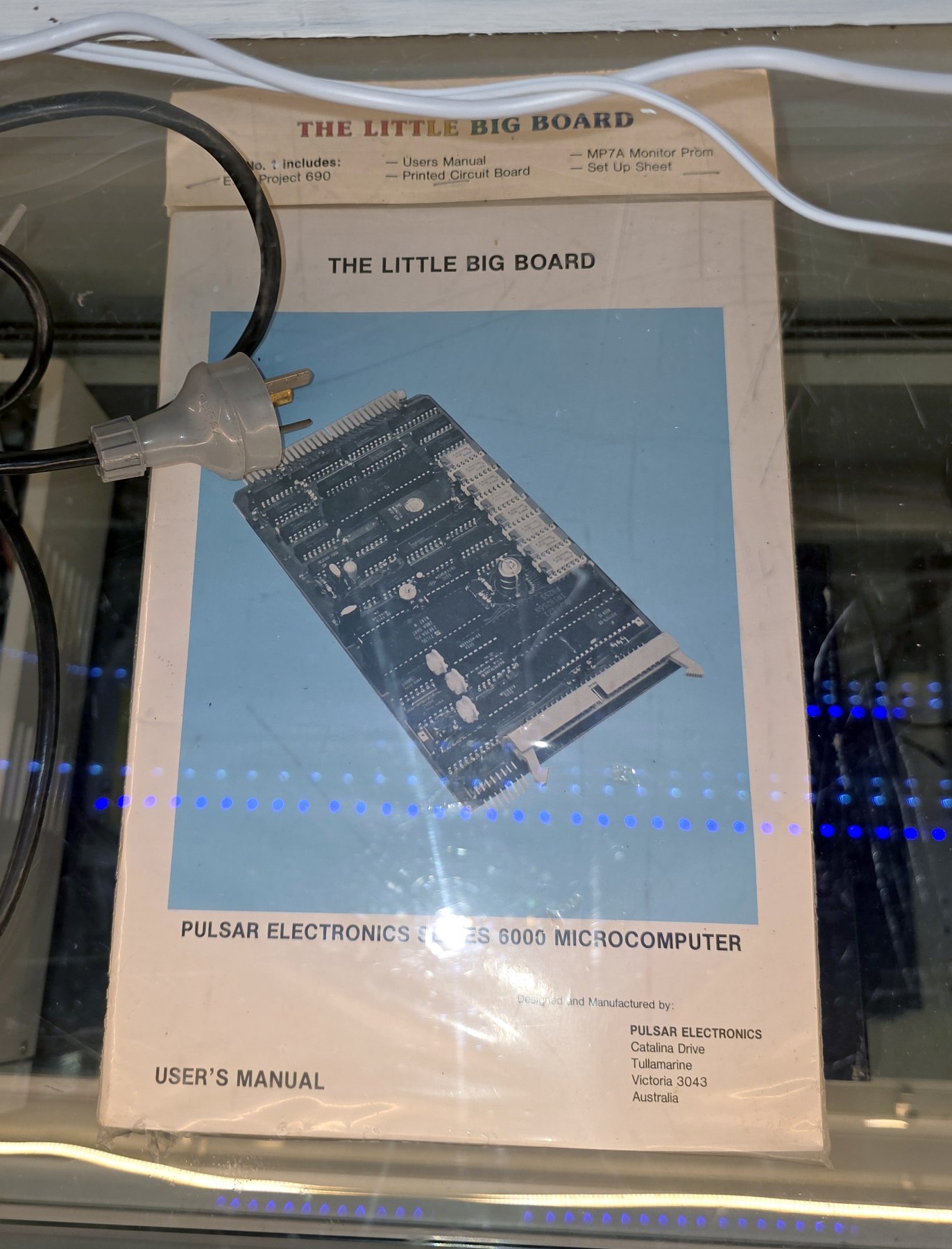
A populated board is displayed in a sleeve labelled The Little Big Board. The companion Pulsar Electronics user manual identifies a 6800 microcomputer; the board’s precise revision is not shown.

Additional view of Pulsar Little Big BoardView additional photograph ↗
Single-board computer in a metal chassis — collection photograph

Computers

Single-board computer in a metal chassis

Awaiting identification

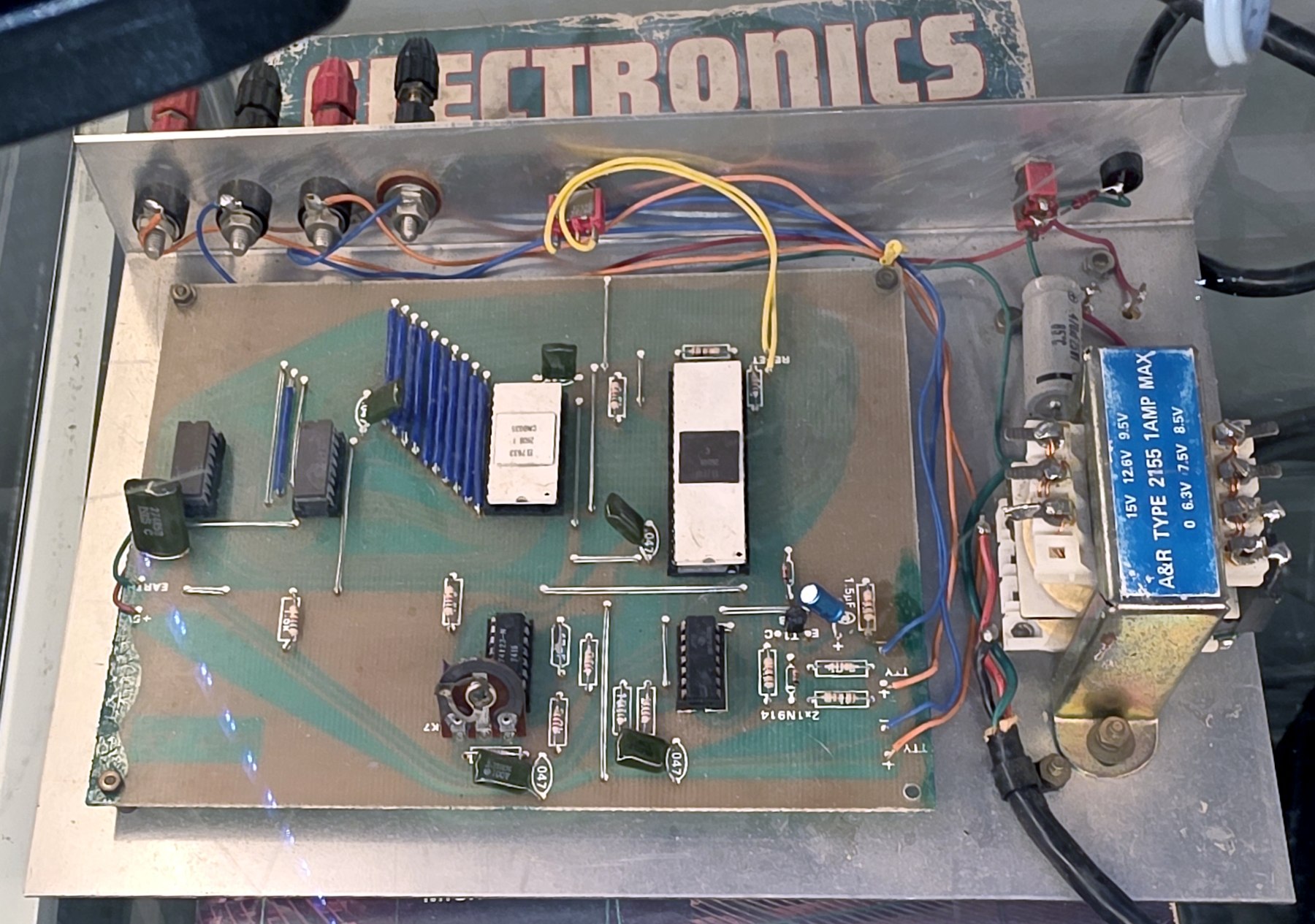
This sparse board has a ceramic processor package, socketed chips and a separate transformer. Without a readable board designation, its design is left open rather than assumed to match the cased Mini-SCAMP.

Dick Smith Super-80 boards — collection photograph

Computers

Dick Smith Super-80 boards

Label identified

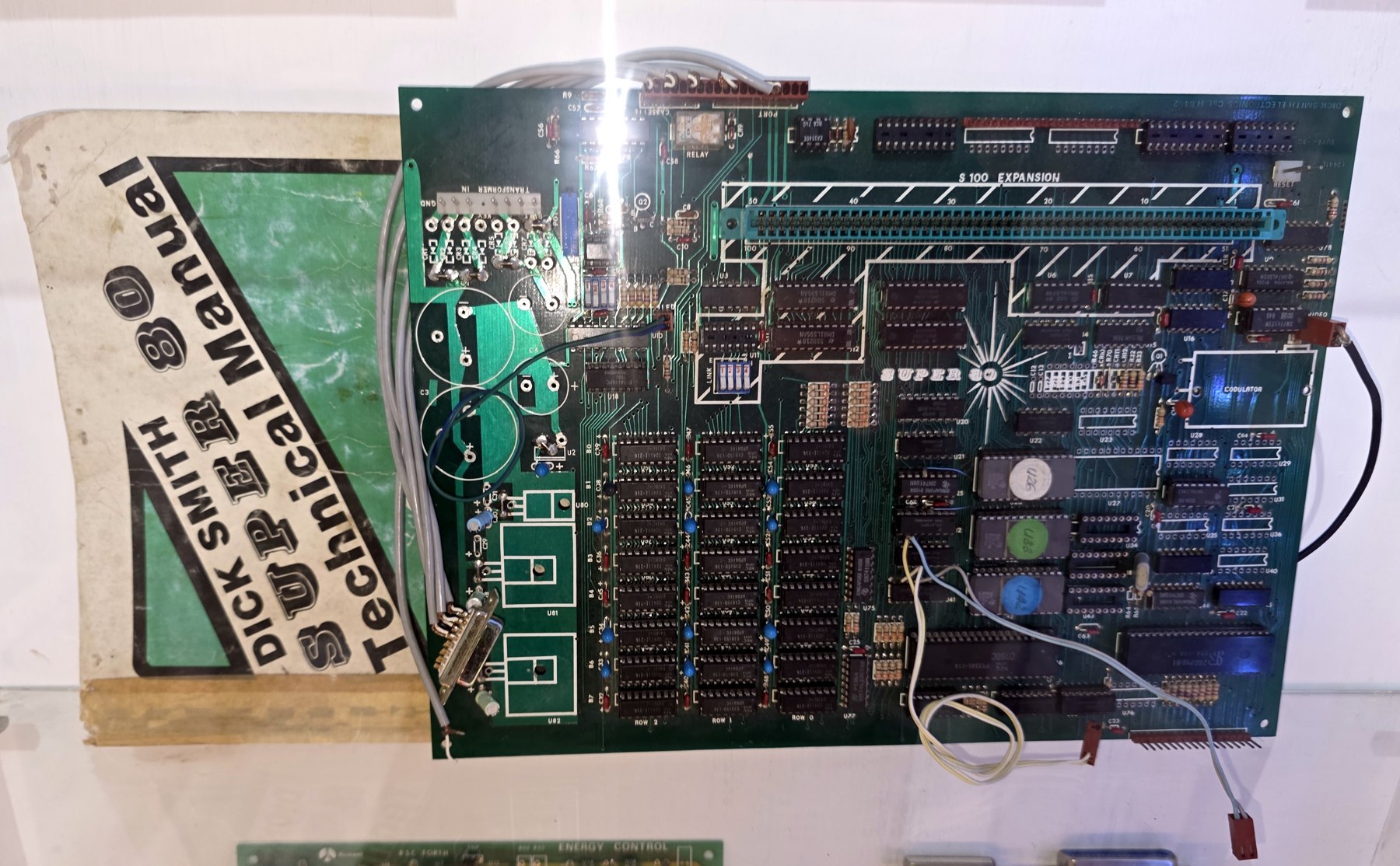
Circuit boards are displayed beside a Dick Smith Super-80 Technical Manual. The documentation identifies the design being represented, while individual board revisions remain to be checked.

Bare video-display circuit board — collection photograph

Archive

Bare video-display circuit board

Model unconfirmed

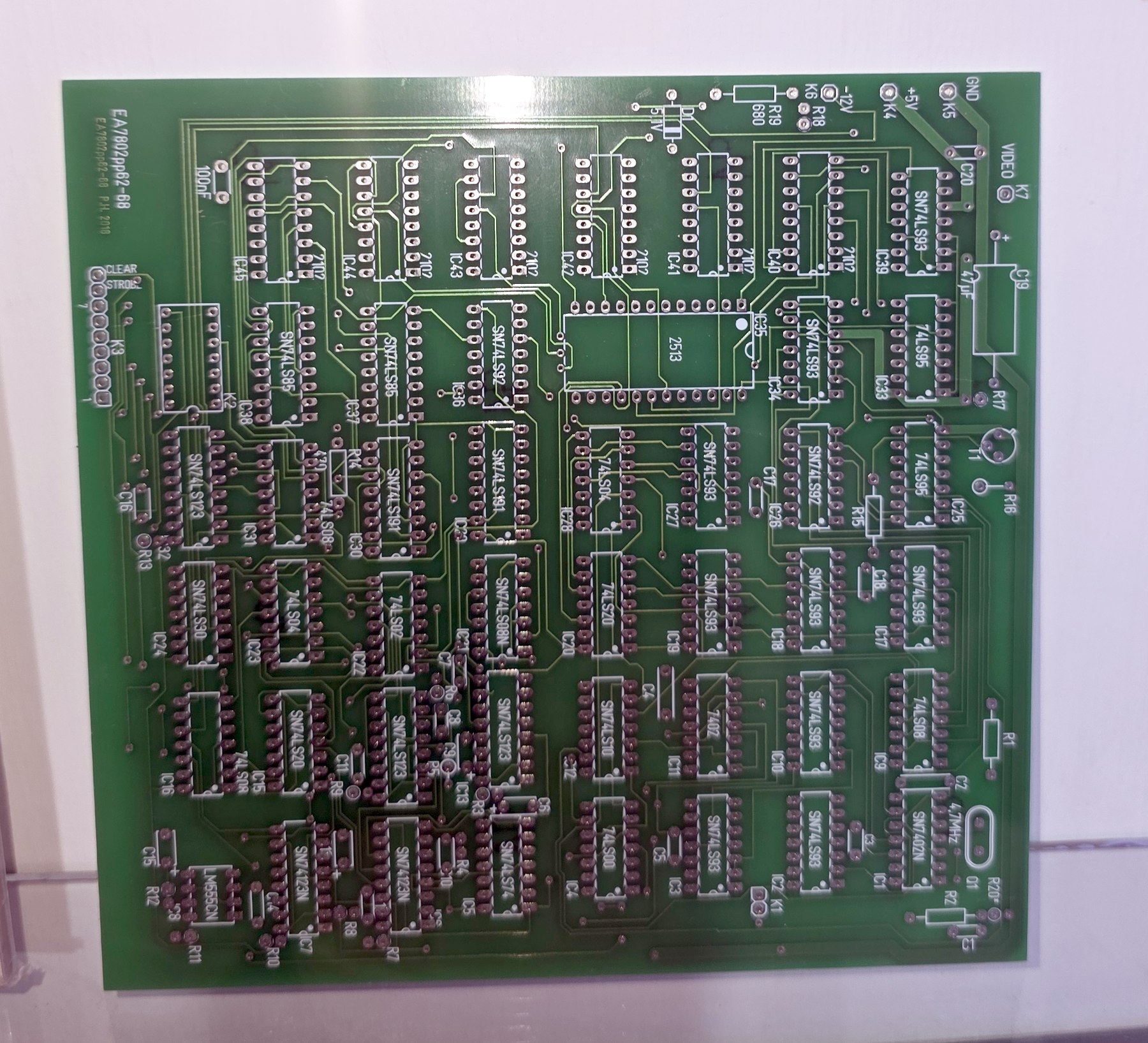
An unpopulated circuit board has VIDEO and component-position markings. It appears to be a hobby-computer video-display design; its exact revision and whether it is an original or reproduction are unconfirmed.

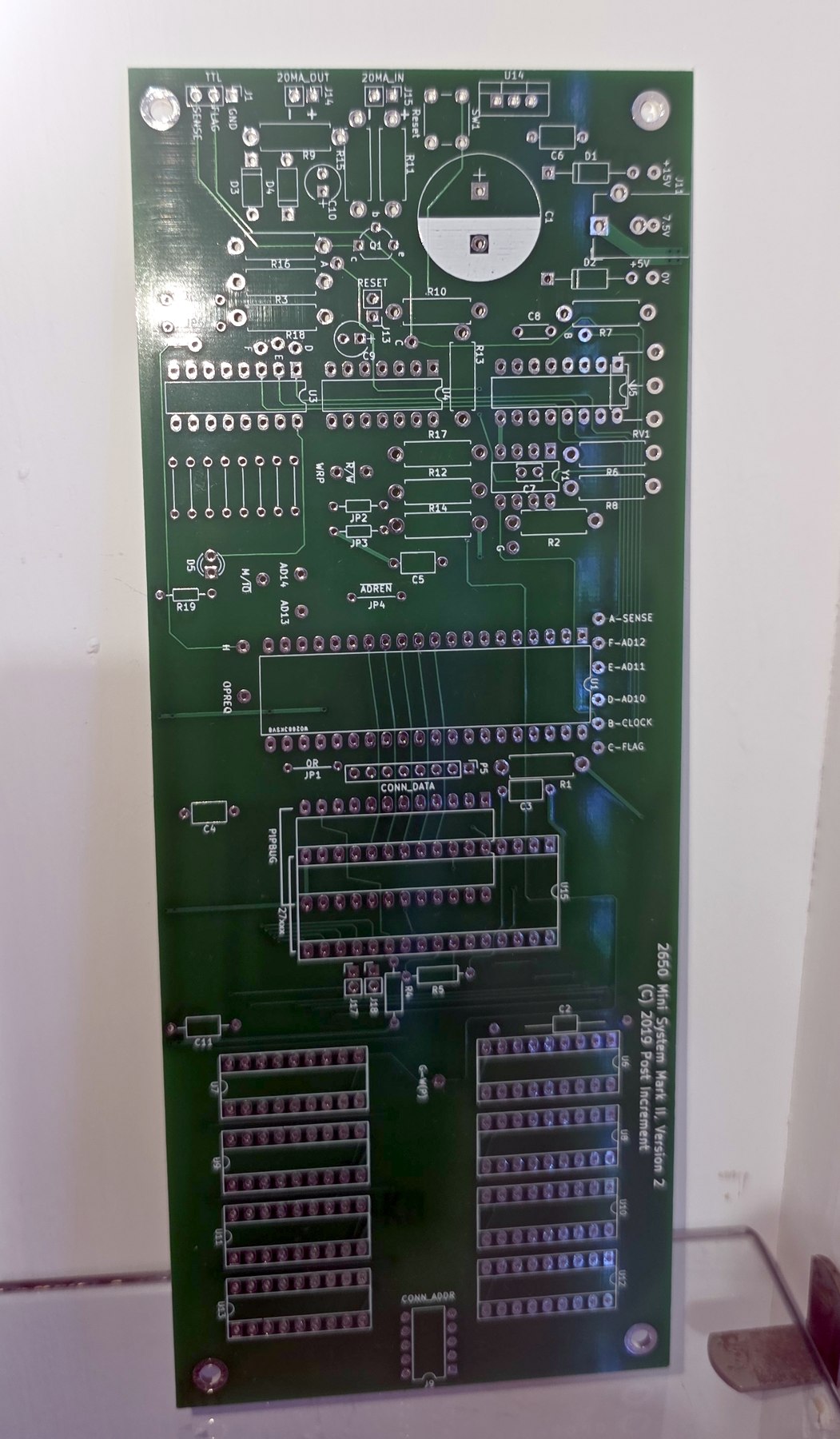
2650 Mini System Mark II reproduction PCB — collection photograph

Archive

2650 Mini System Mark II reproduction PCB

Board markings identified

The bare board is marked 2650 Mini System Mark II, Version 2 and 2019. Its date identifies it as a later board, preserving an earlier design rather than being presented as a 1970s original.

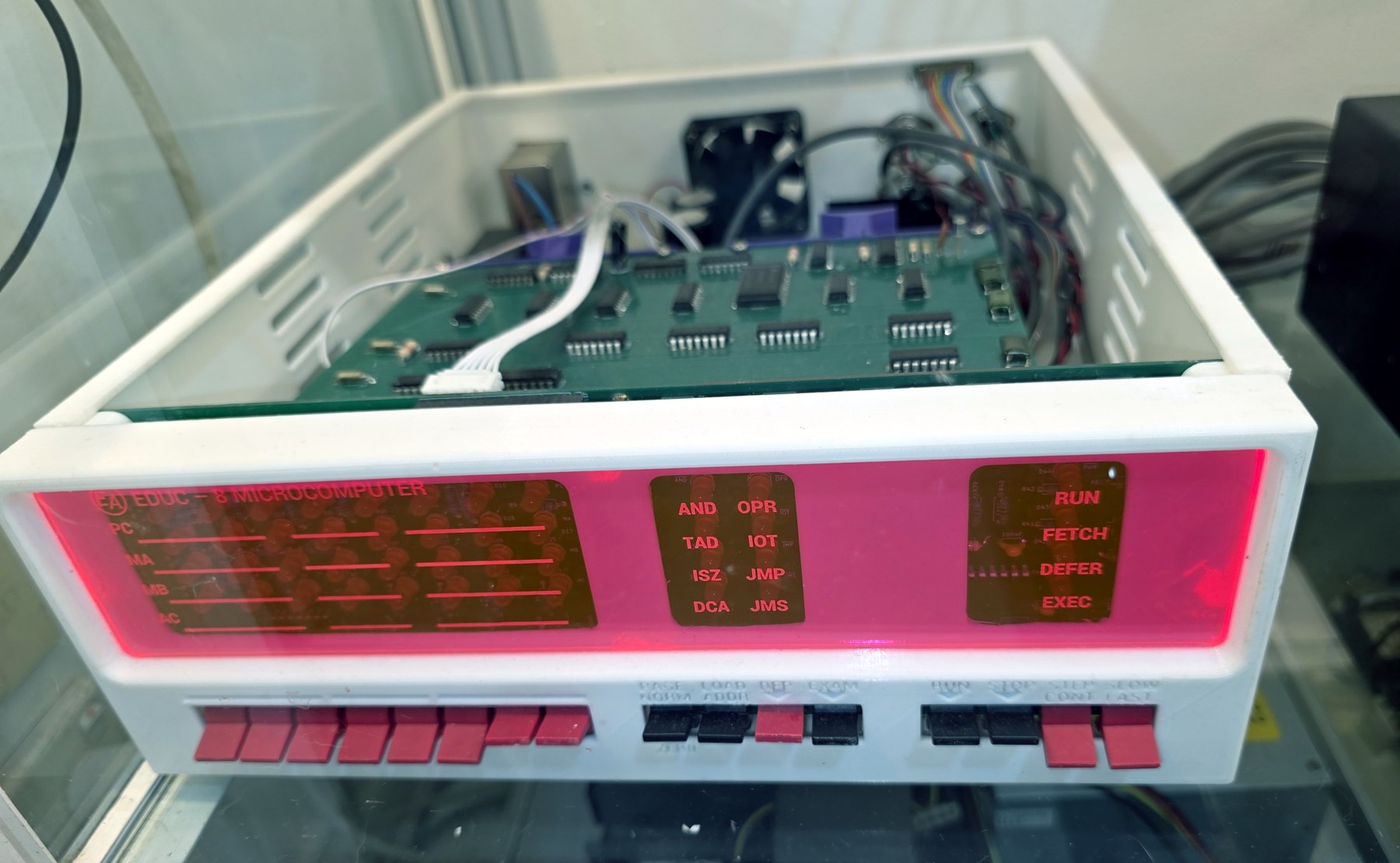
Electronics Australia EDUC-8 — collection photograph

Computers

Electronics Australia EDUC-8

Label identified

The EDUC-8 front panel has rows of indicators and switches, with the lid open to reveal its boards. The design uses logic chips rather than a single microprocessor, illustrating an early hands-on approach to building a computer.

Historical reference ↗
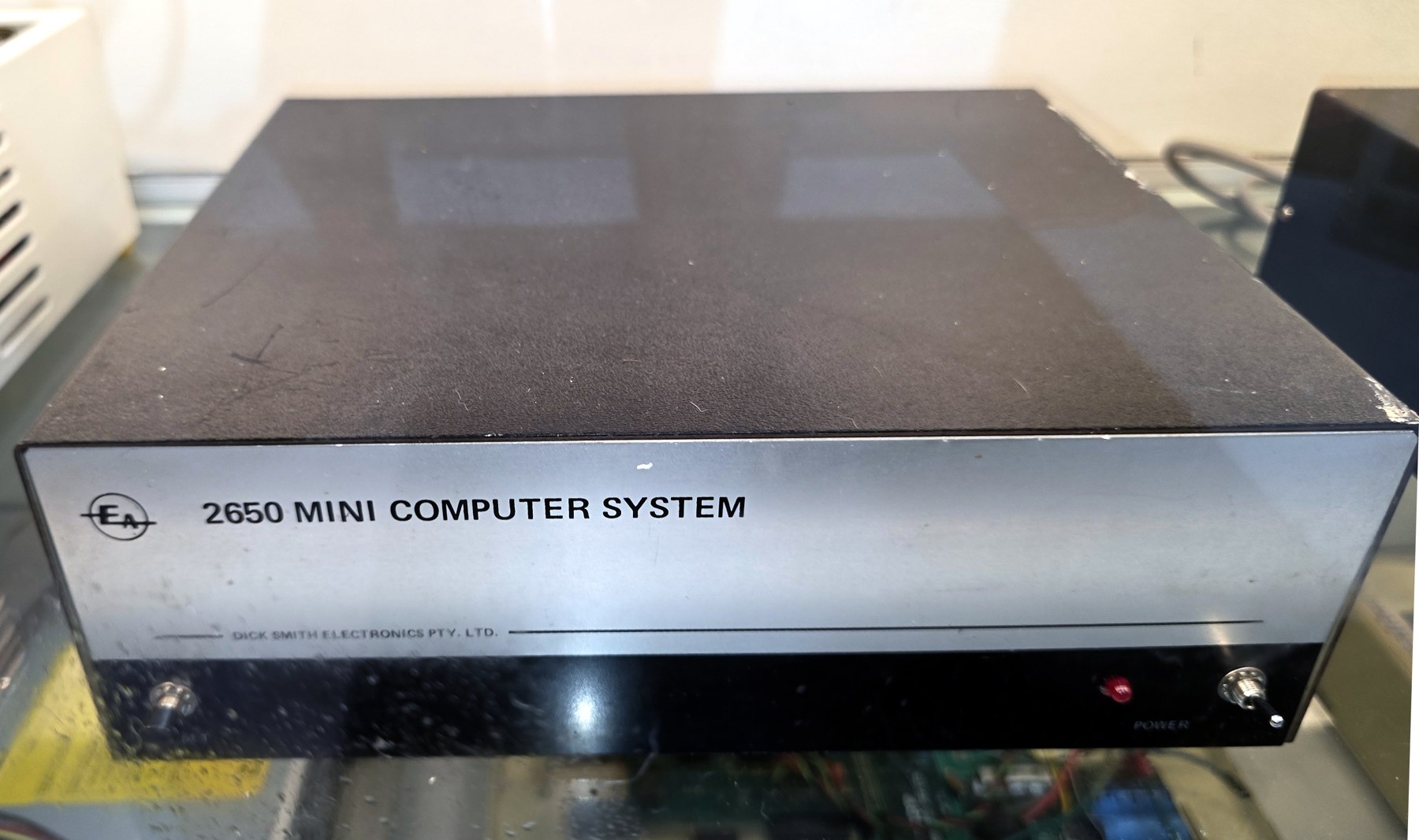
EA 2650 Mini Computer System — collection photograph

Computers

EA 2650 Mini Computer System

Label identified

The case is clearly labelled 2650 Mini Computer System with the Electronics Australia emblem. Its dark front window and metal case are recorded here; installed memory and internal revisions are not visible.

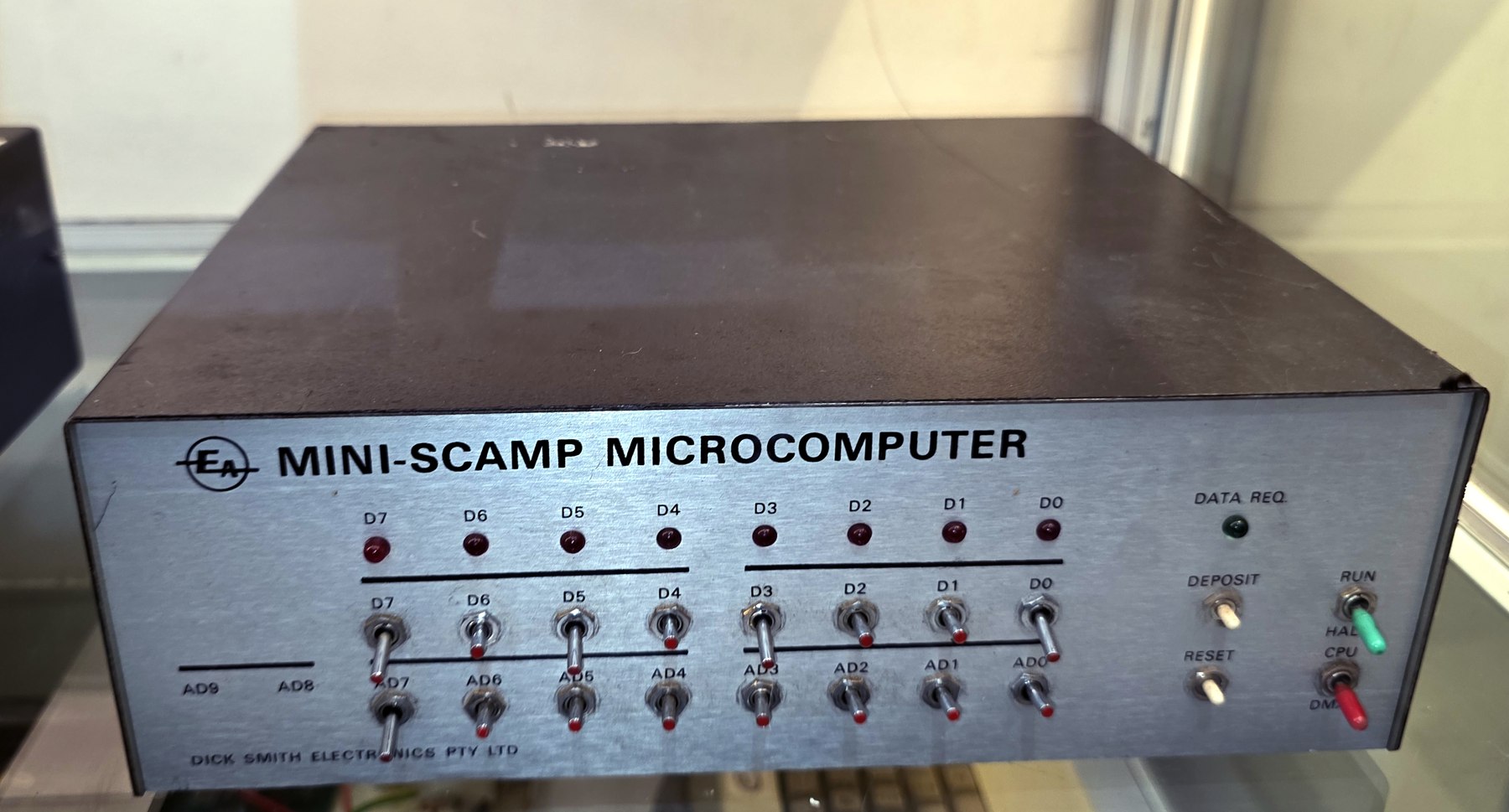
EA Mini-SCAMP Microcomputer — collection photograph

Computers

EA Mini-SCAMP Microcomputer

Label identified

The front panel reads Mini-SCAMP Microcomputer and carries the Electronics Australia emblem. Toggle switches and indicator lights provide the visible interface to this cased hobby computer.

Metal-cased keyboard computer & interior — collection photograph

Computers

Metal-cased keyboard computer & interior

Awaiting identification

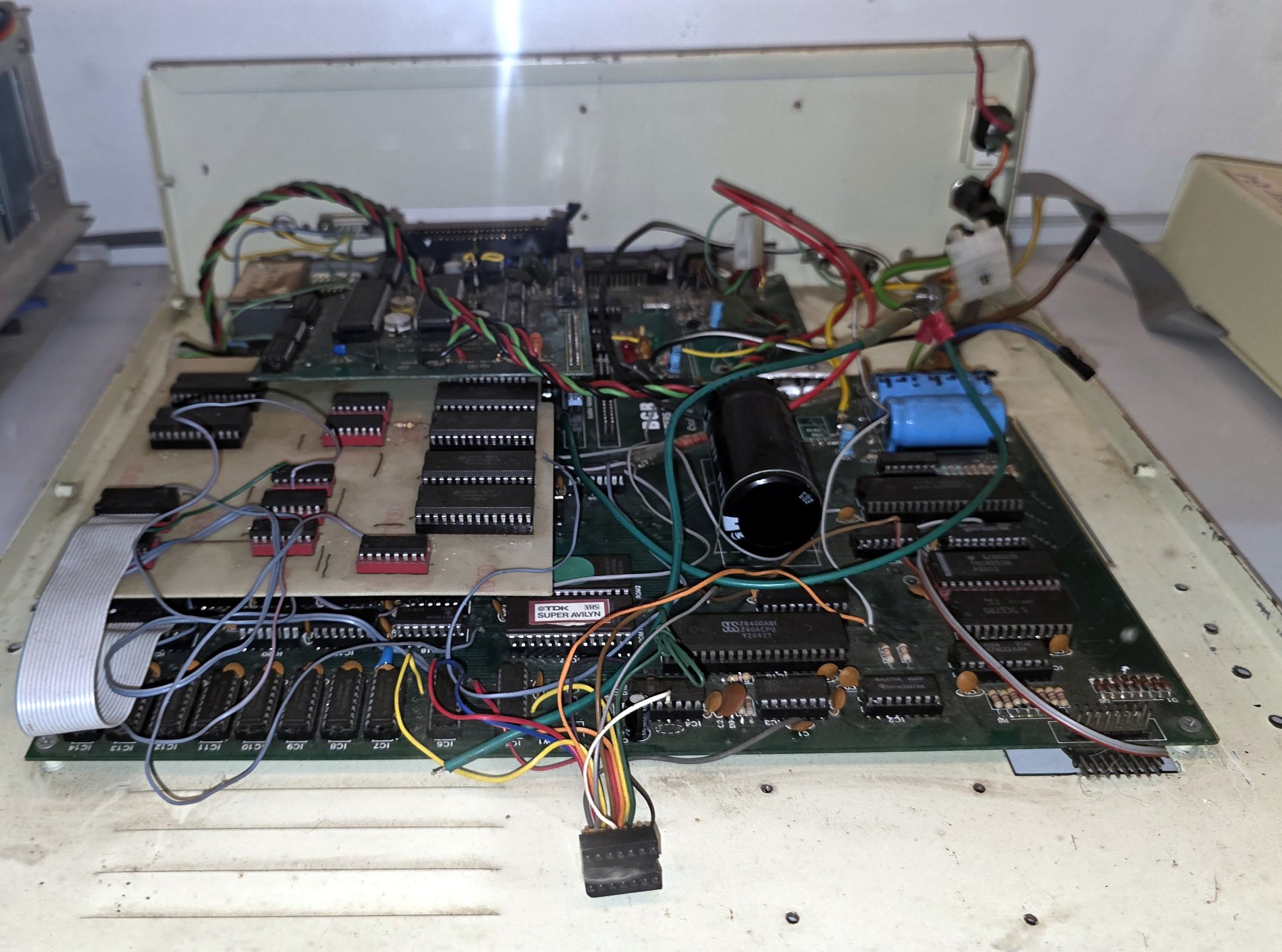
A sloping metal case is shown with a keyboard, followed by a closely related open-case view with hand wiring and multiple boards. The exact design and whether these photographs show the same unit need confirmation.

Additional view of Metal-cased keyboard computer & interiorView additional photograph ↗
Open desktop chassis — collection photograph

Computers

Open desktop chassis

Awaiting identification

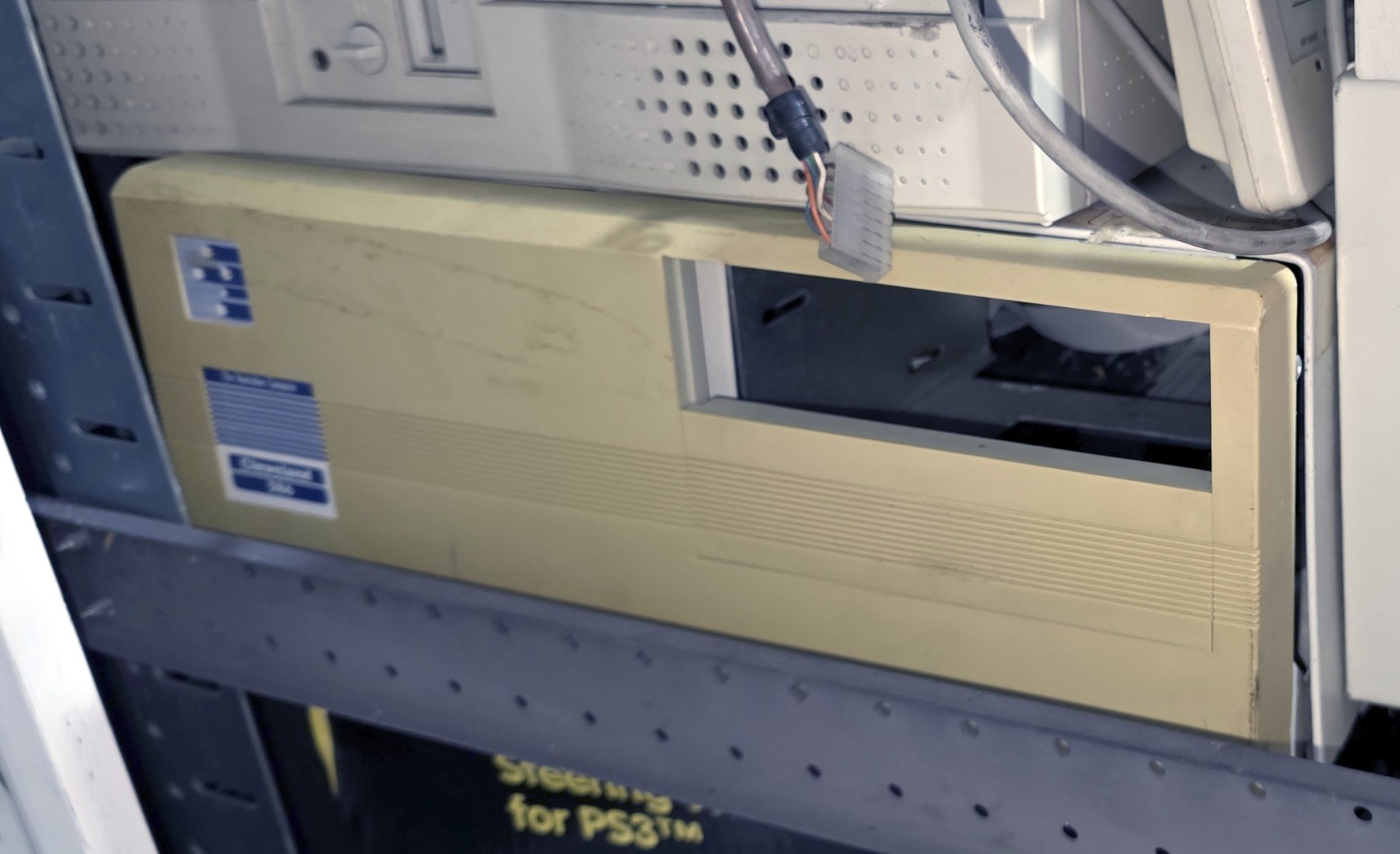
The open chassis reveals a power supply, hard drive and circuit boards. With no dependable exterior model label in this view, the maker and configuration remain unidentified.

Latam desktop-era towers — collection photograph

Computers

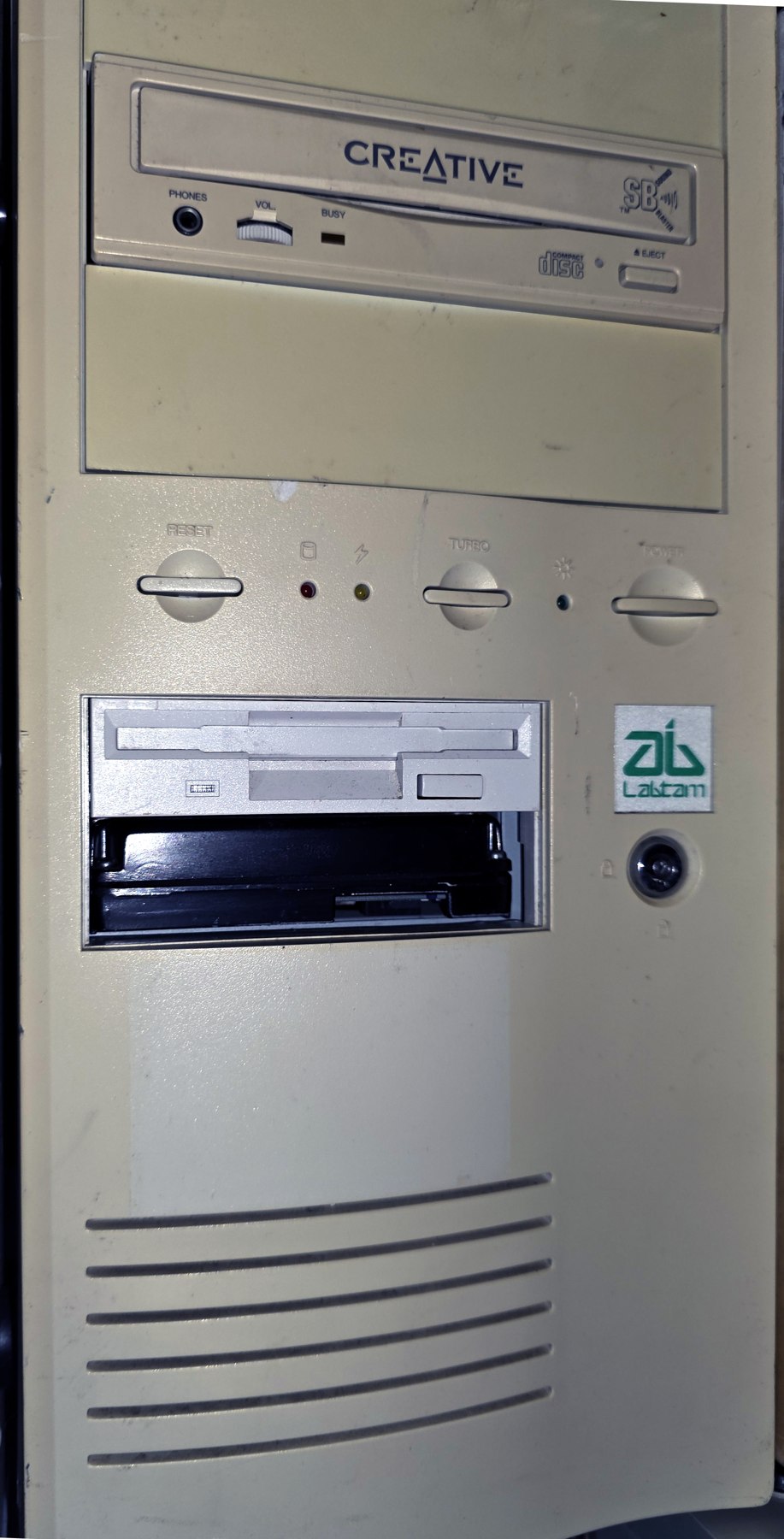
Latam desktop-era towers

Brand identified; models unconfirmed

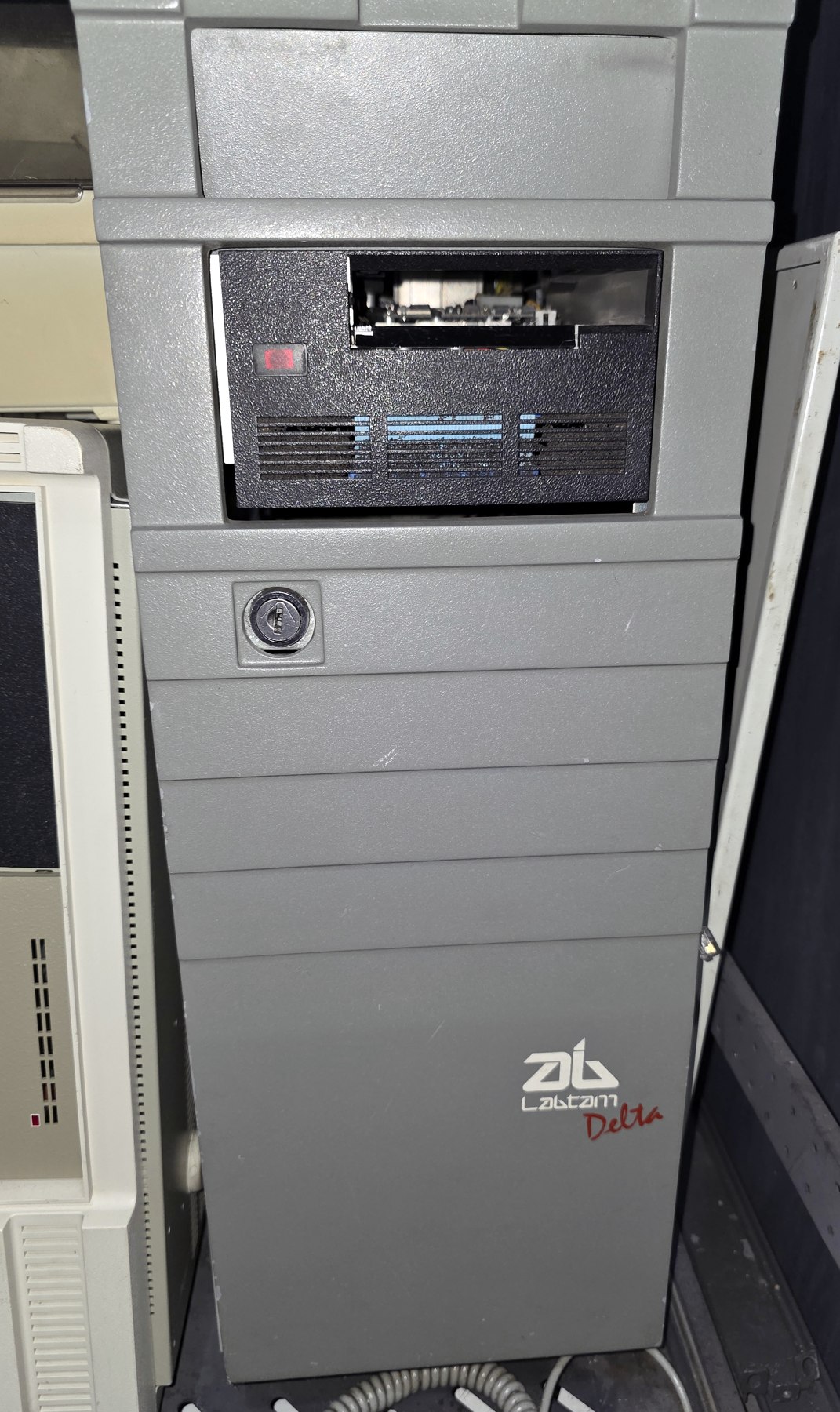
Two different tower cases carry Latam branding. Their drive arrangements and front panels differ, so both examples are retained in one maker entry; processor and model details are not visible.

Additional view of Latam desktop-era towersView additional photograph ↗
Cream CRT monitor — collection photograph

Displays

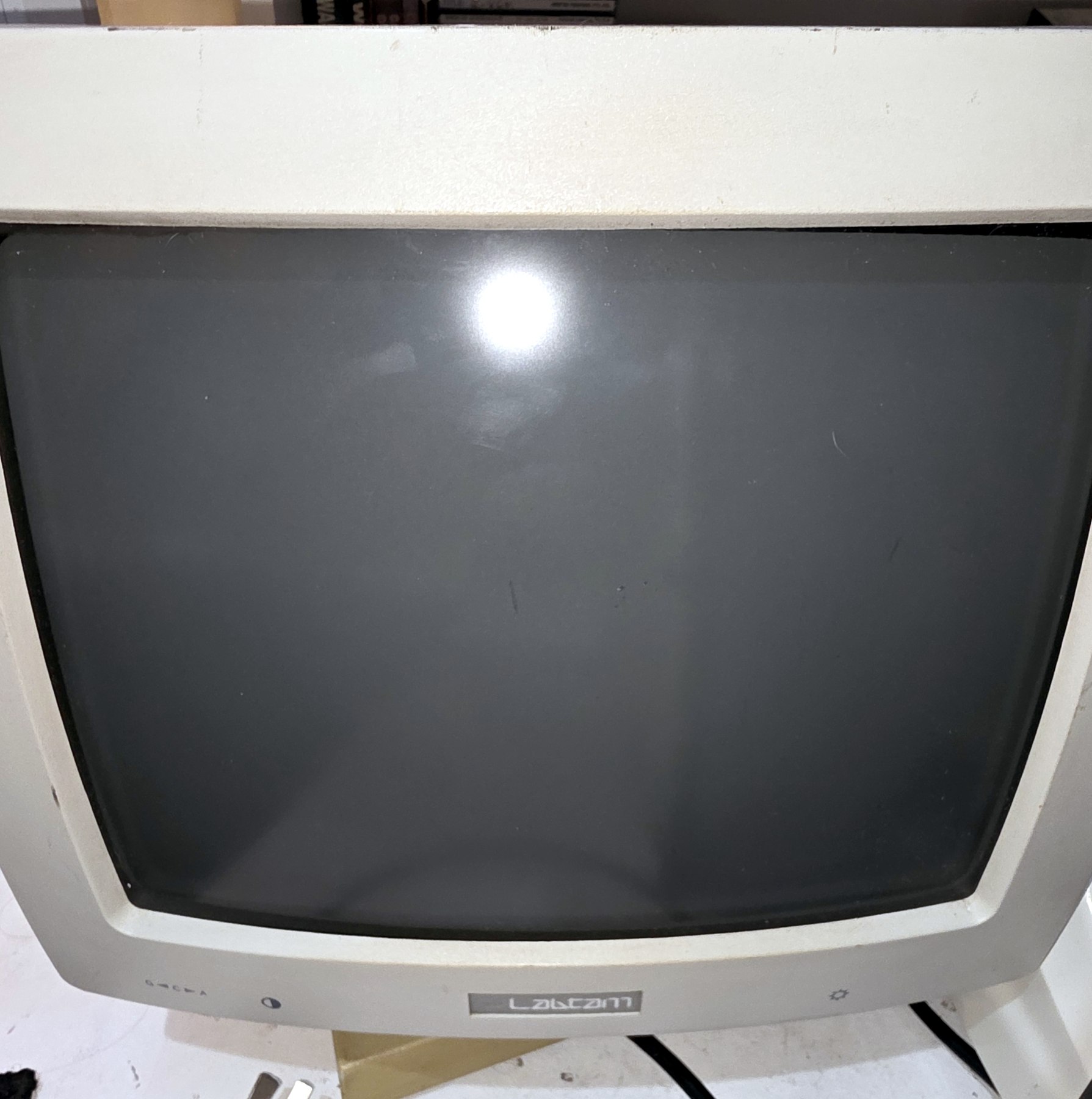
Cream CRT monitor

Awaiting identification

A large cream CRT has a small badge along its lower bezel. The photograph does not resolve a dependable model name, so no pairing with a nearby PC is assumed.

Early desktop PC with multiple drives — collection photograph

Computers

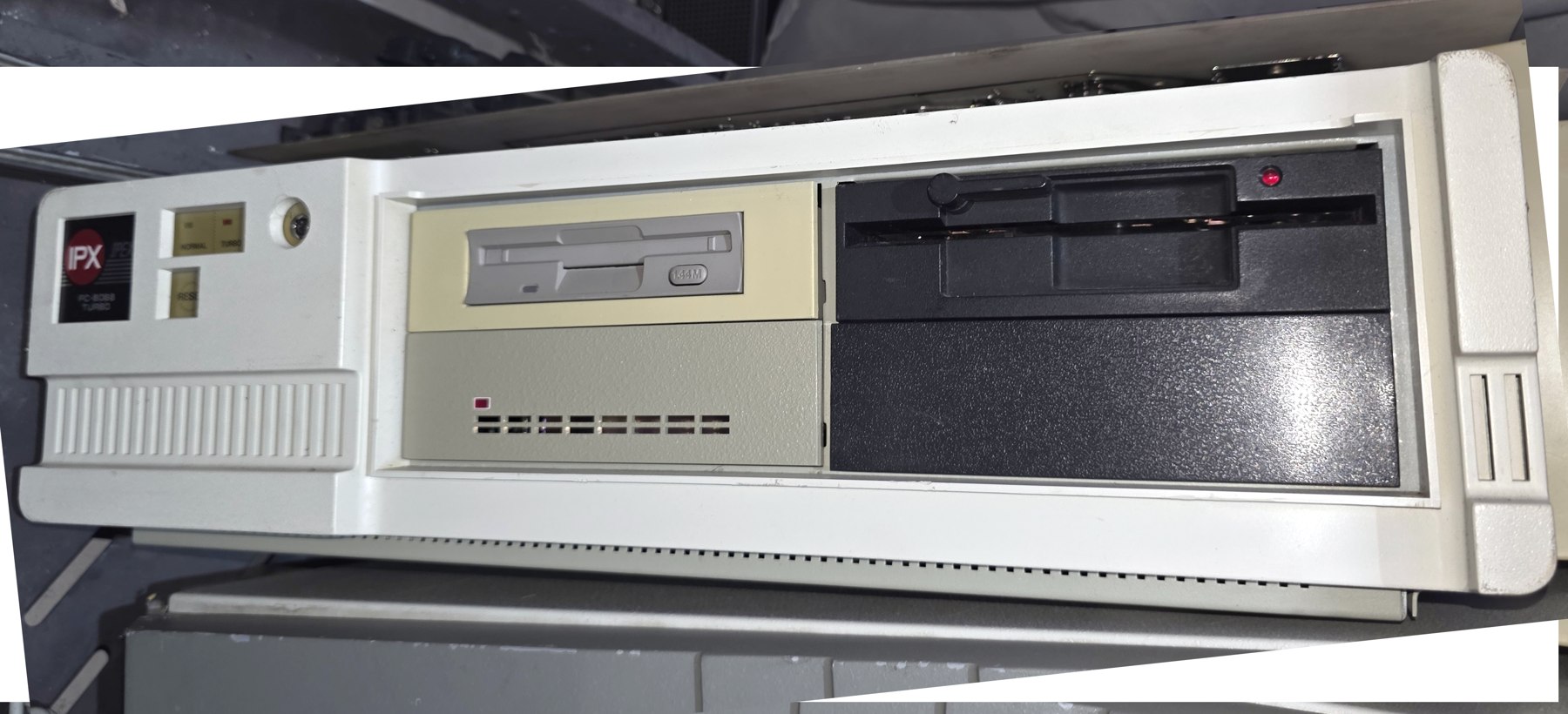
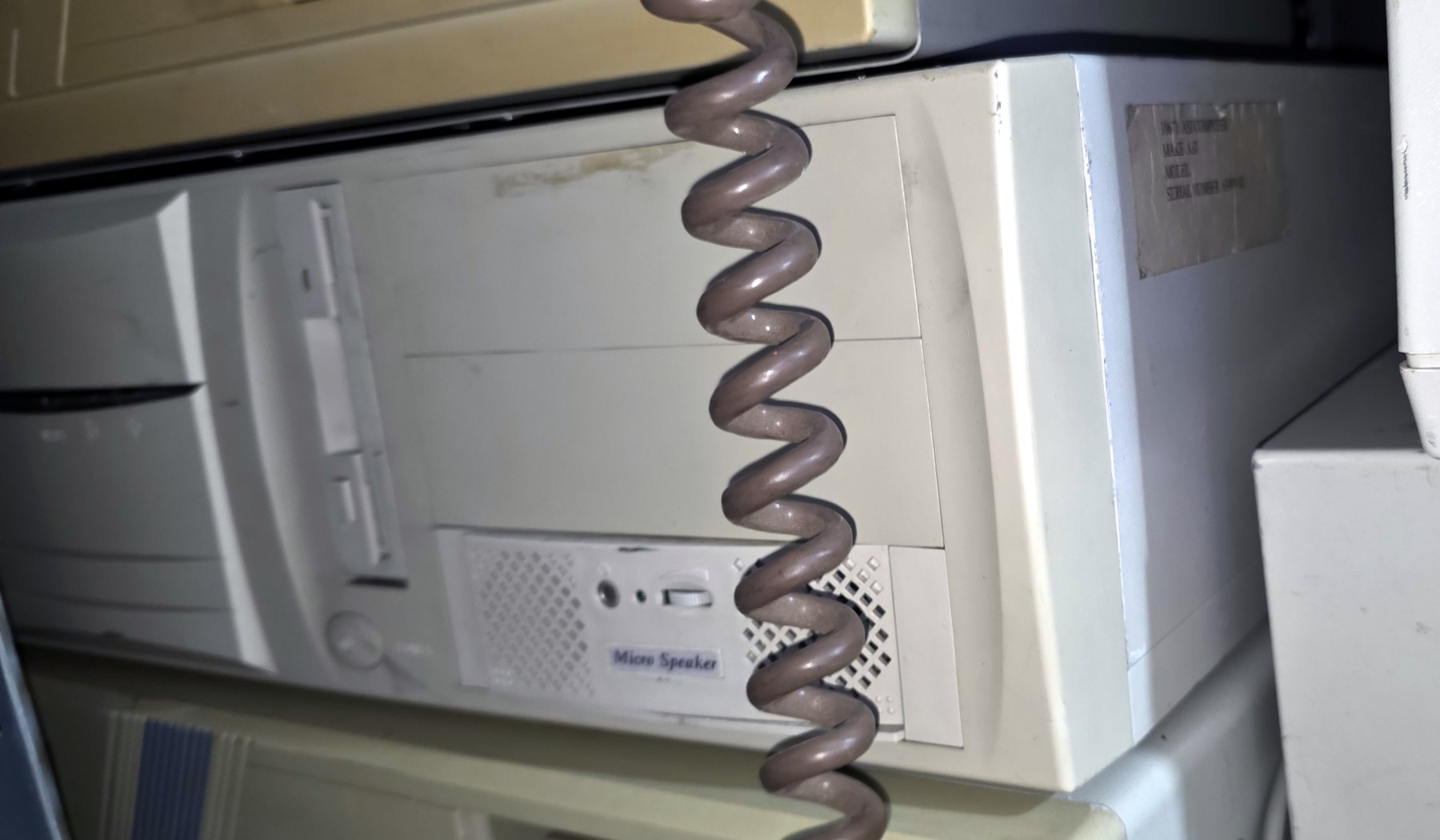
Early desktop PC with multiple drives

Awaiting identification

This desktop has several front drive bays and a small dark badge. The badge is not clear enough to assign a maker confidently; the case alone does not identify its processor.

Fairlight rack equipment & control keyboard — collection photograph

Computers

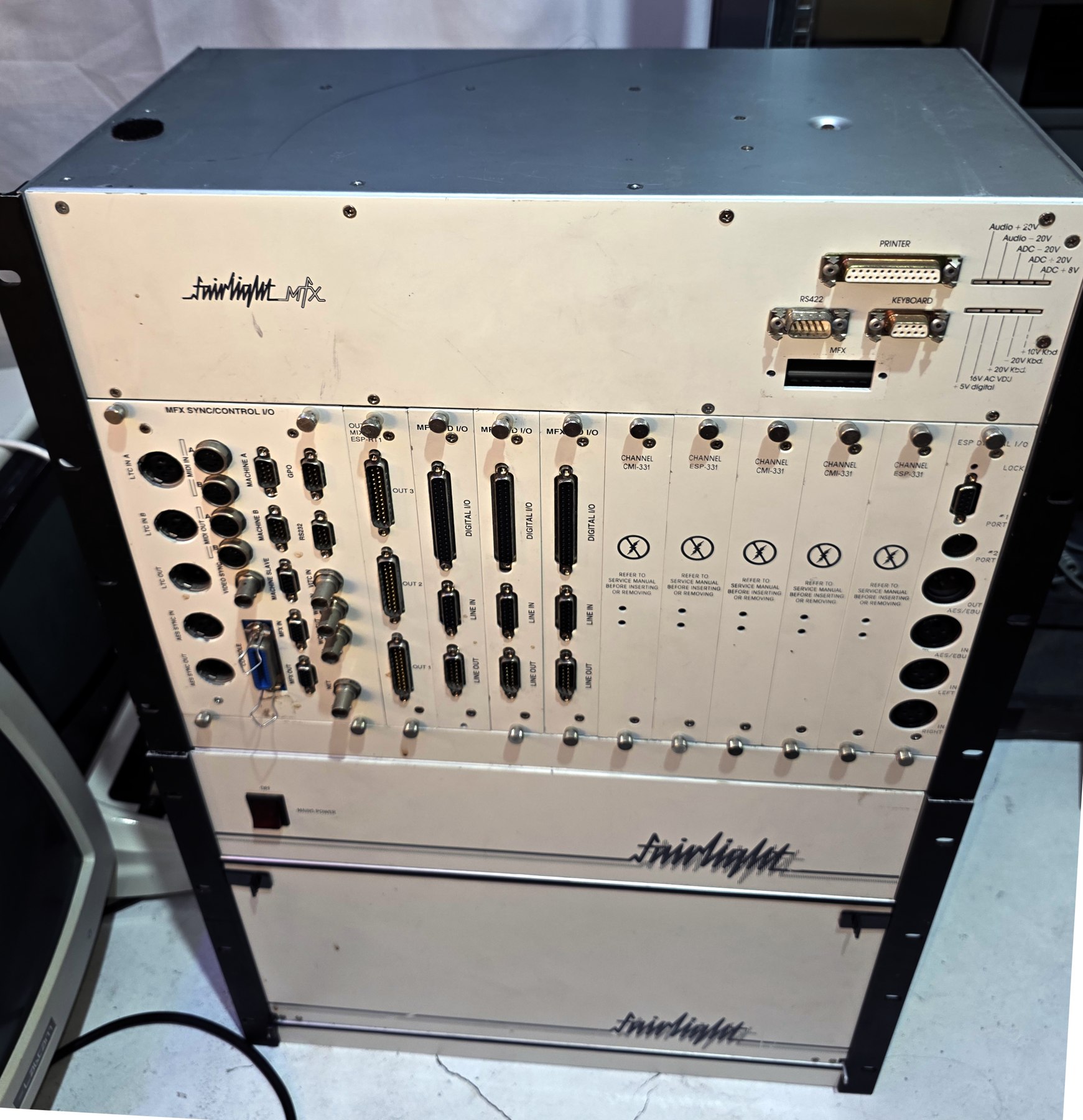
Fairlight rack equipment & control keyboard

Brand identified; model unconfirmed

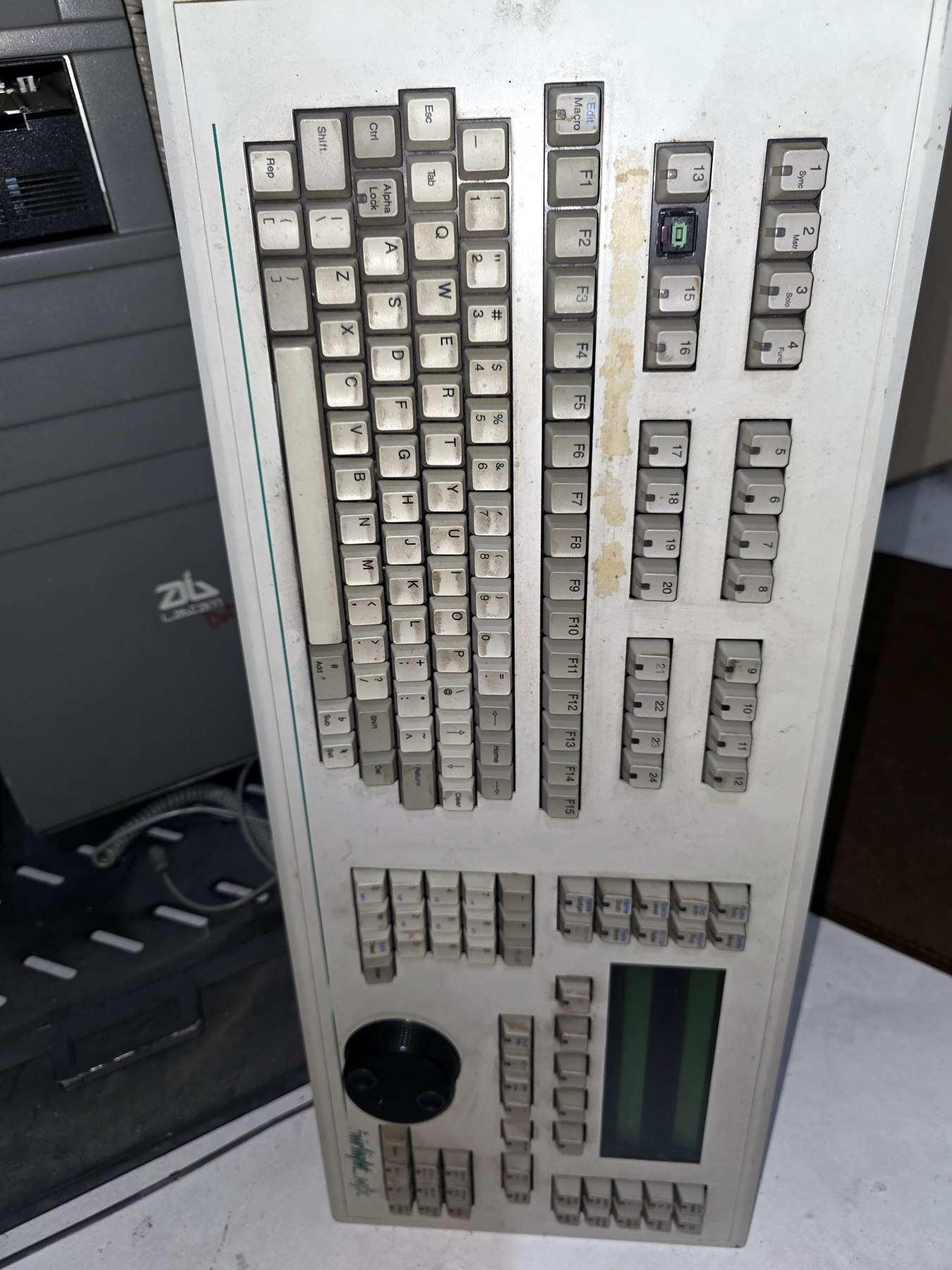
The rack units carry Fairlight branding, with MFX lettering visible on the upper panel. A companion photograph shows a specialised keyboard with a jog wheel, LCD and function keys. The precise rack and controller models remain unconfirmed.

Additional view of Fairlight rack equipment & control keyboardView additional photograph ↗
Integrated CRT and keyboard unit — collection photograph

Computers

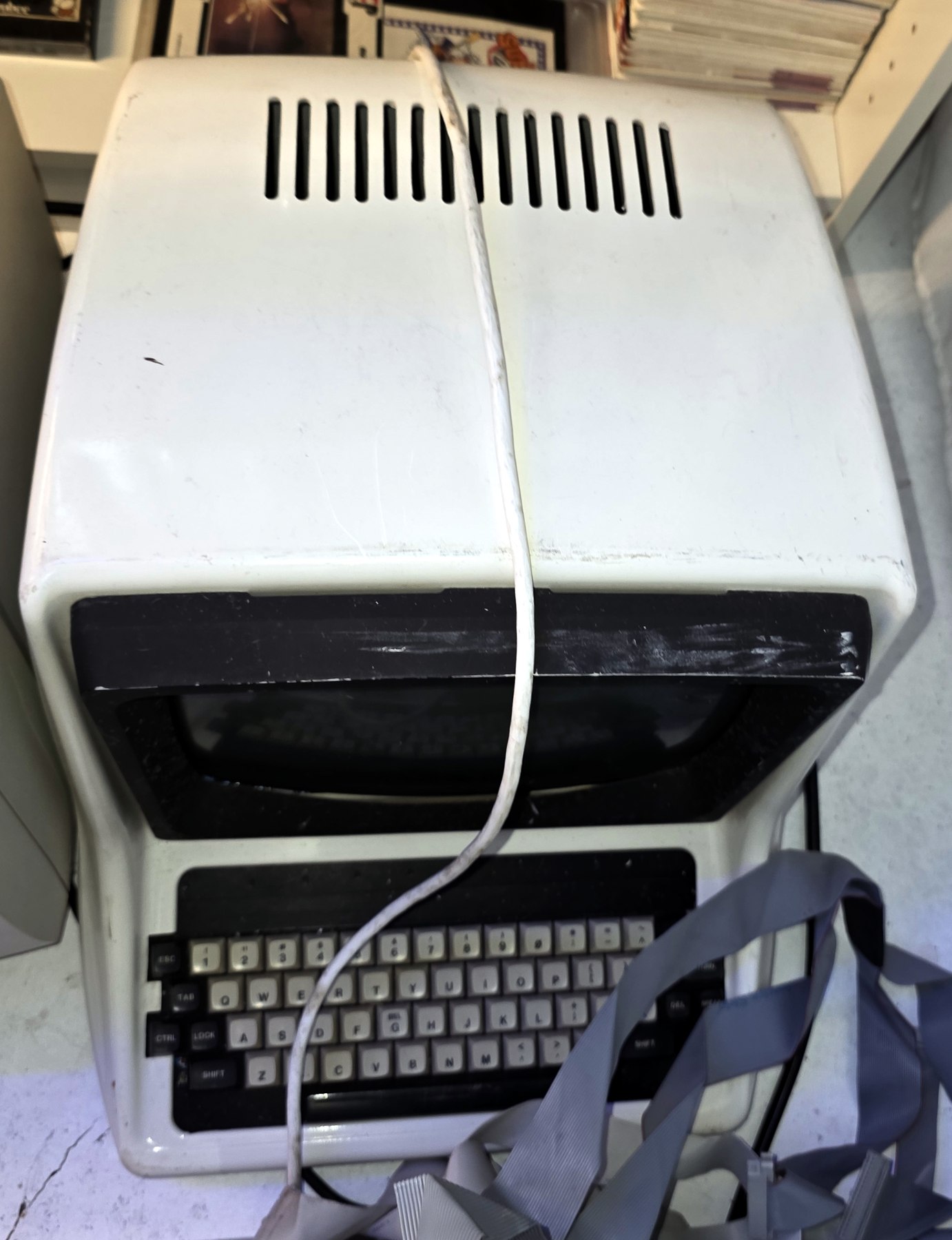
Integrated CRT and keyboard unit

Awaiting identification

A rounded pale enclosure combines a CRT and built-in keyboard. Cables obscure its front and no clear badge is visible, so it is not assigned to a particular terminal or computer family.

Desktop PC with Creative CD drive — collection photograph

Computers

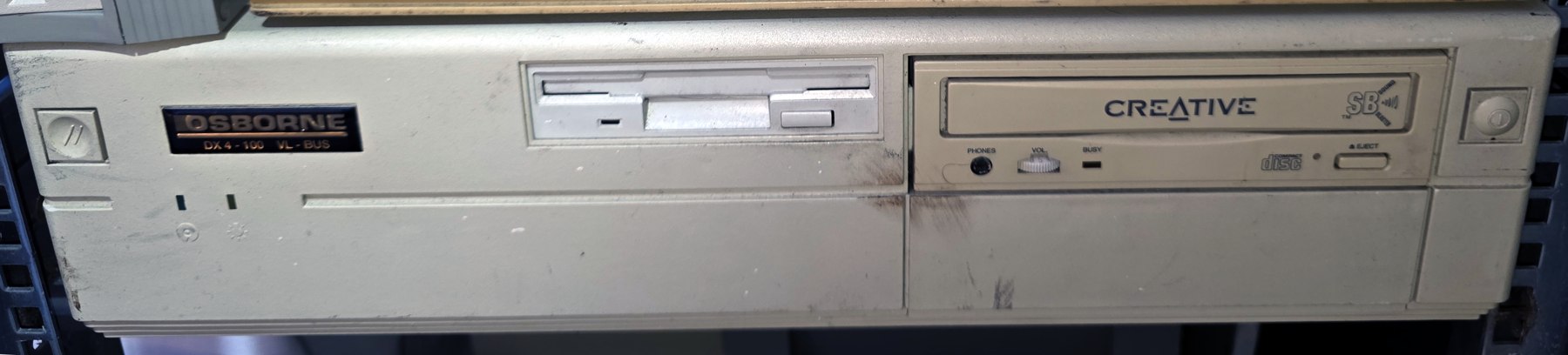
Desktop PC with Creative CD drive

Awaiting identification

A beige desktop contains a floppy drive and a Creative-branded optical drive. The drive brand does not establish the computer maker, whose small badge is not clear enough to transcribe.

Blue Chip desktop PC — collection photograph

Computers

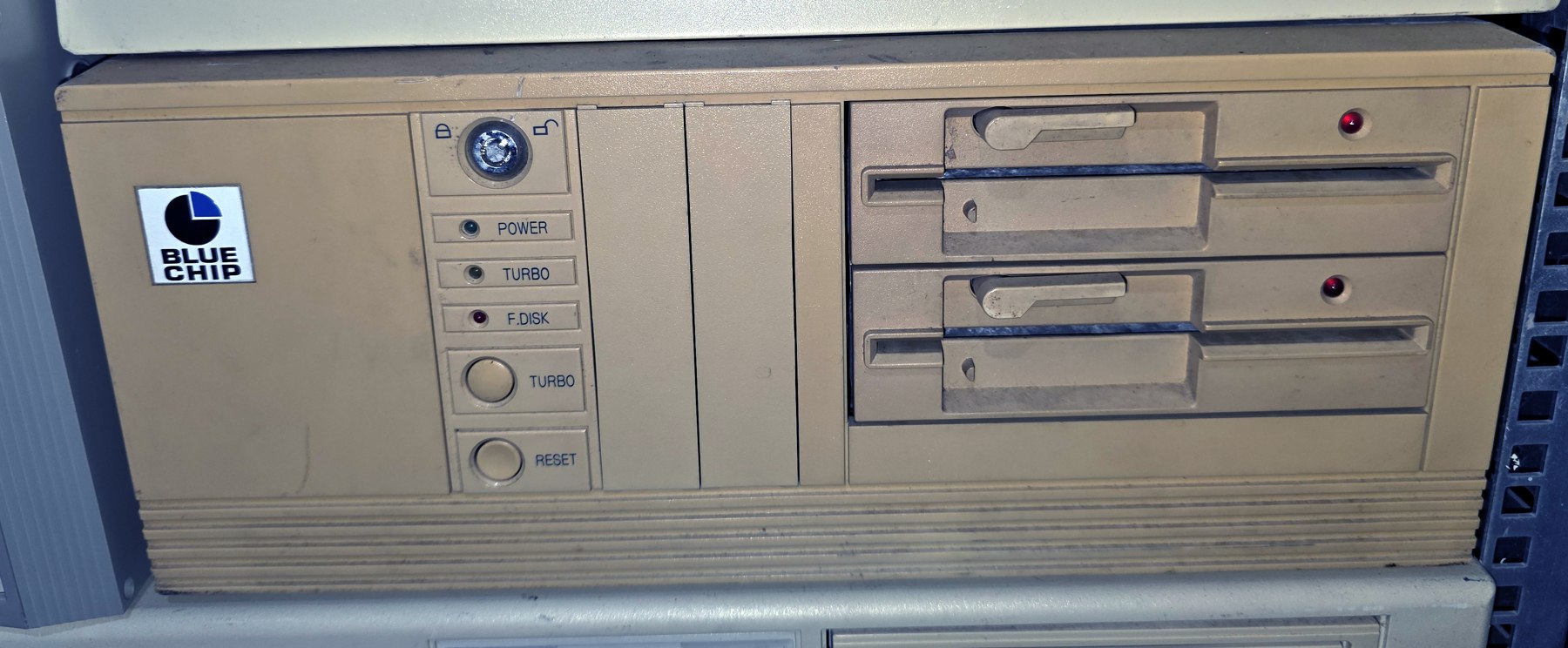
Blue Chip desktop PC

Brand identified; model unconfirmed

A Blue Chip badge is visible on this desktop’s front panel. Several drive bays occupy the right side; the model and installed processor are not shown.

ASI Computer desktop — collection photograph

Computers

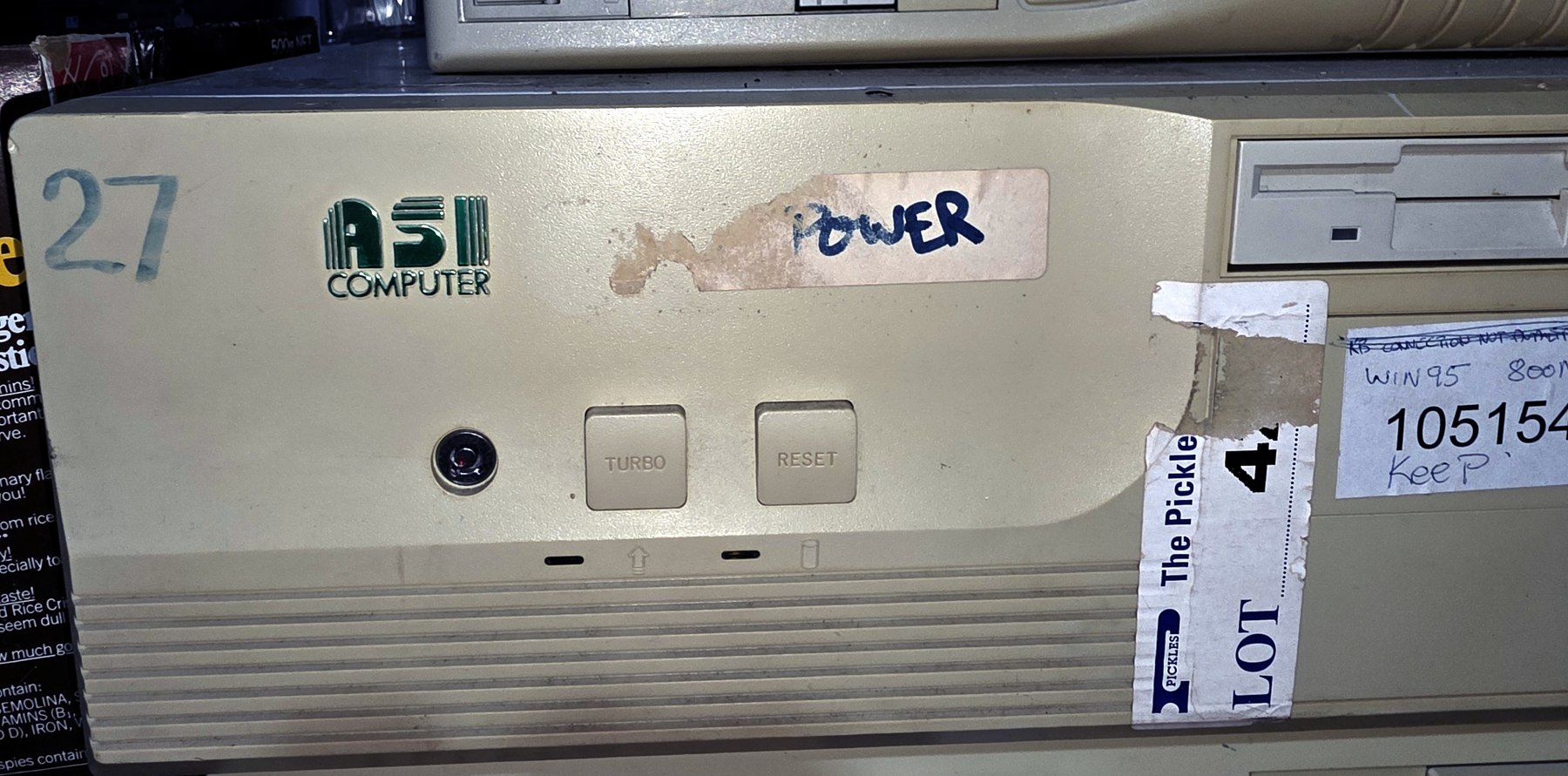
ASI Computer desktop

Brand identified; model unconfirmed

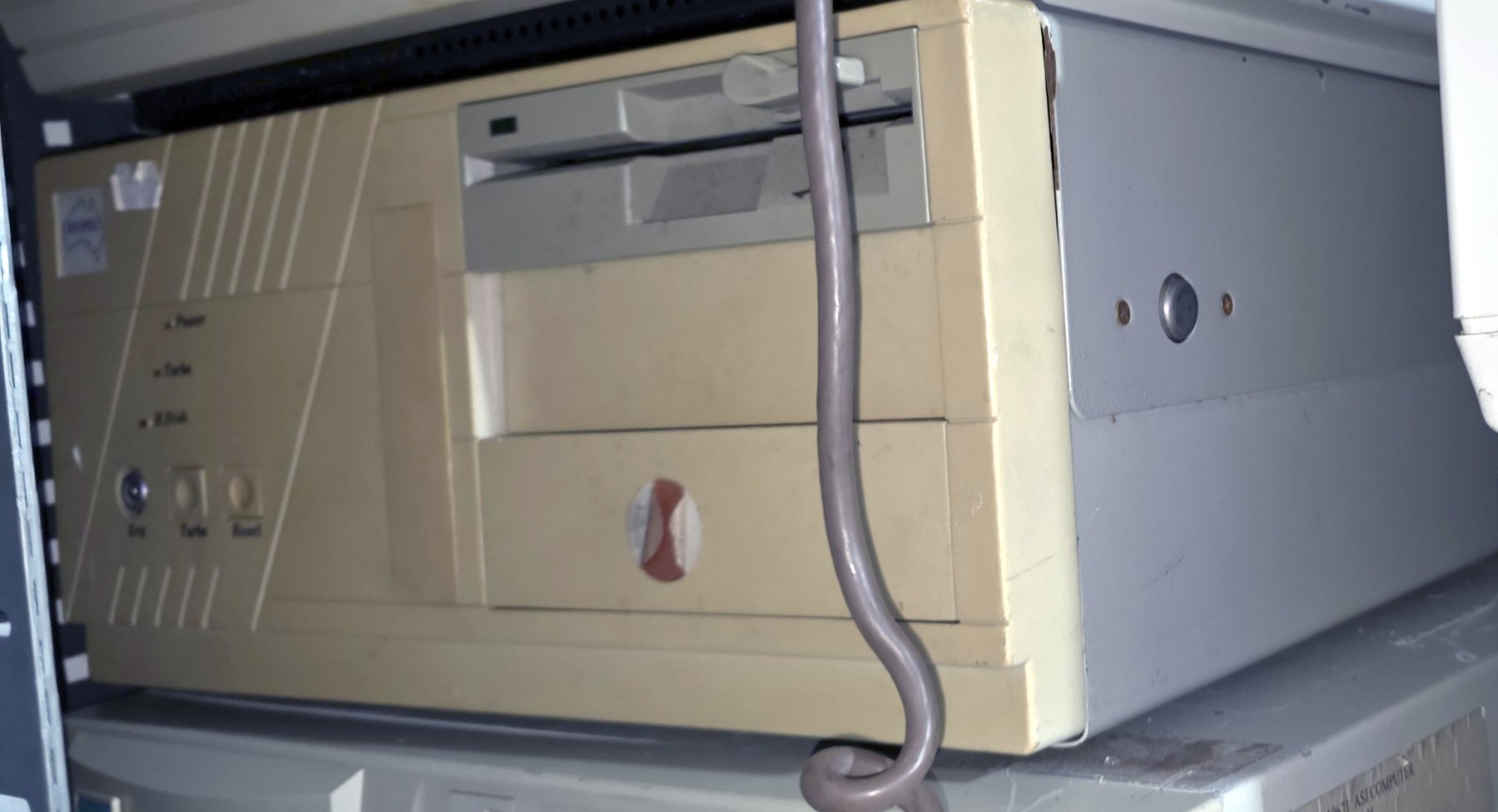
The case carries ASI Computer branding and has a front floppy drive. This photograph supports the maker label, while the original model and hardware configuration remain unchecked.

Harris Technology tower — collection photograph

Computers

Harris Technology tower

Brand identified; model unconfirmed

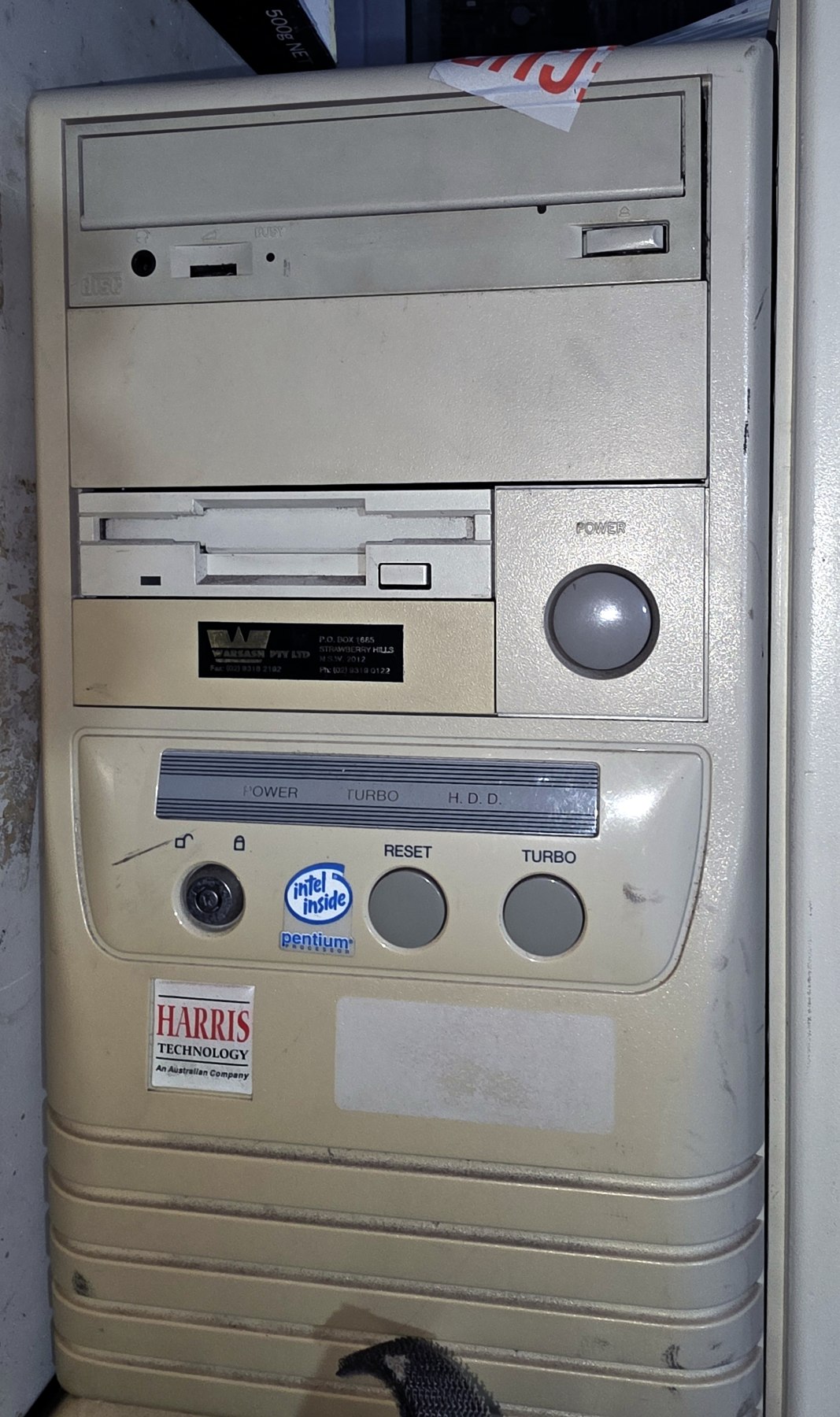
A Harris Technology sticker appears on this tower with several front drive bays. It records the branding on the collected machine, not proof that every fitted component is original.

MEGA-labelled desktop systems — collection photograph

Computers

MEGA-labelled desktop systems

Brand identified; model unconfirmed

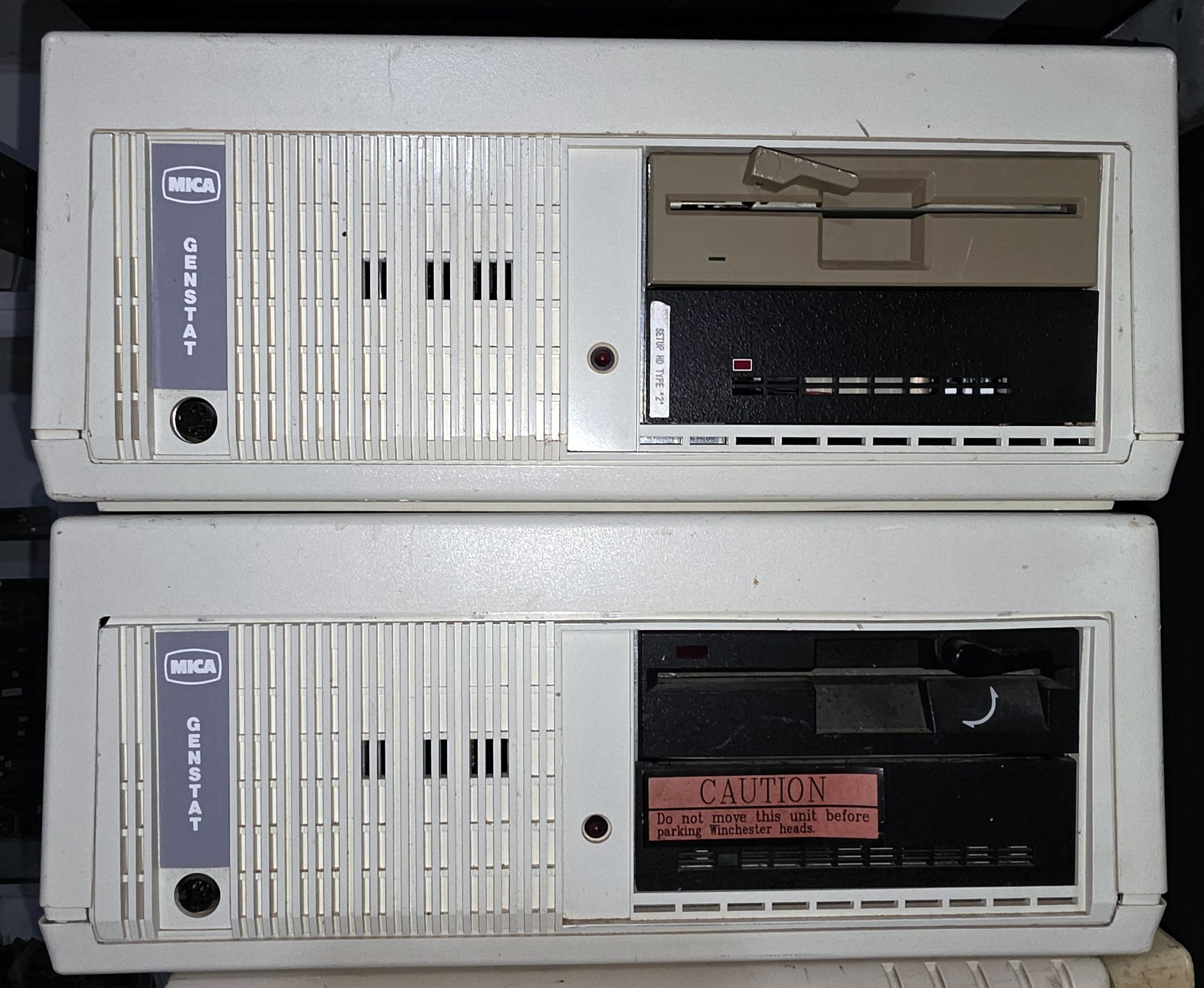
Two similar desktop cases carry MEGA badges and vertical model lettering. Both physical examples are retained; the smaller model text needs a clearer photograph before transcription.

Pennywise computer unit — collection photograph

Computers

Pennywise computer unit

Brand identified; model unconfirmed

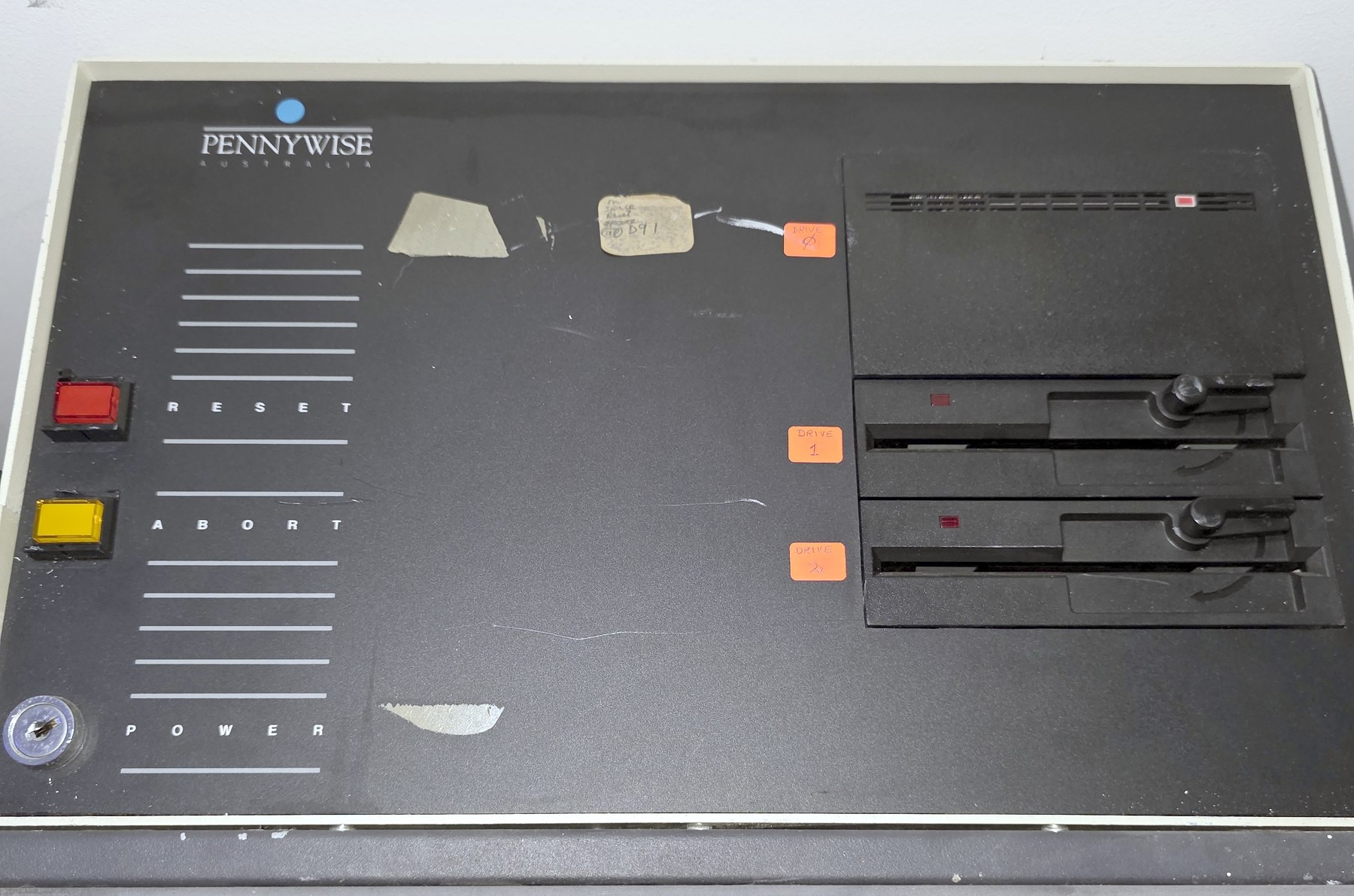
The dark front panel carries a Pennywise badge, coloured controls and multiple drive openings. Its exact model and internal configuration cannot be determined from this view.

Keyboard collection — collection photograph

Peripherals

Keyboard collection

Collection view

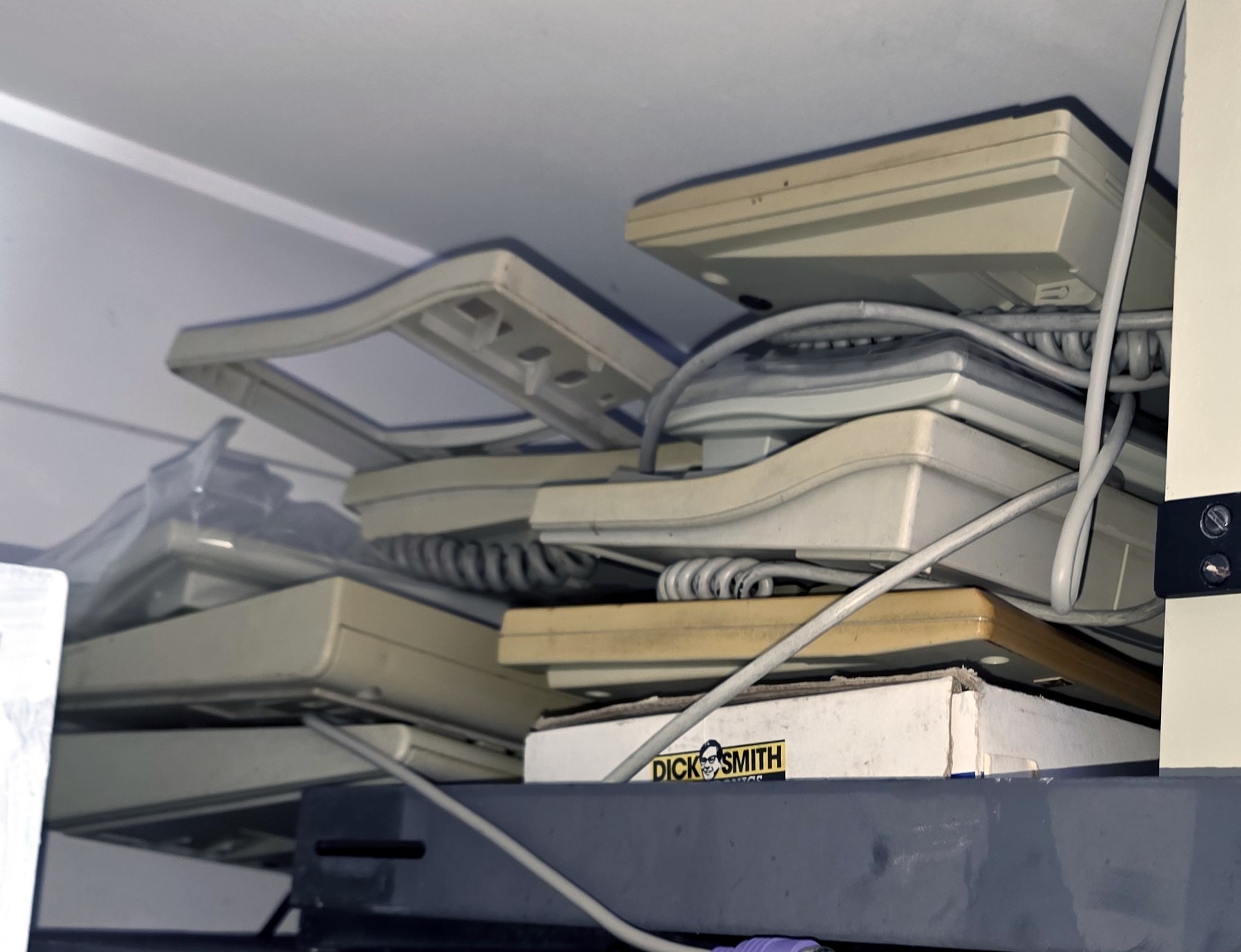
Several keyboards and cables are stacked together. No clear model labels establish their original system pairings, so the stack is recorded as a group.

Electronic kit boards & documentation — collection photograph

Archive

Electronic kit boards & documentation

Collection view

Packets of circuit boards and printed instructions line a shelf. The photograph records the kit collection; individual part numbers and completeness need closer inspection.

Optical handheld device — unidentified — collection photograph

Peripherals

Optical handheld device — unidentified

Awaiting identification

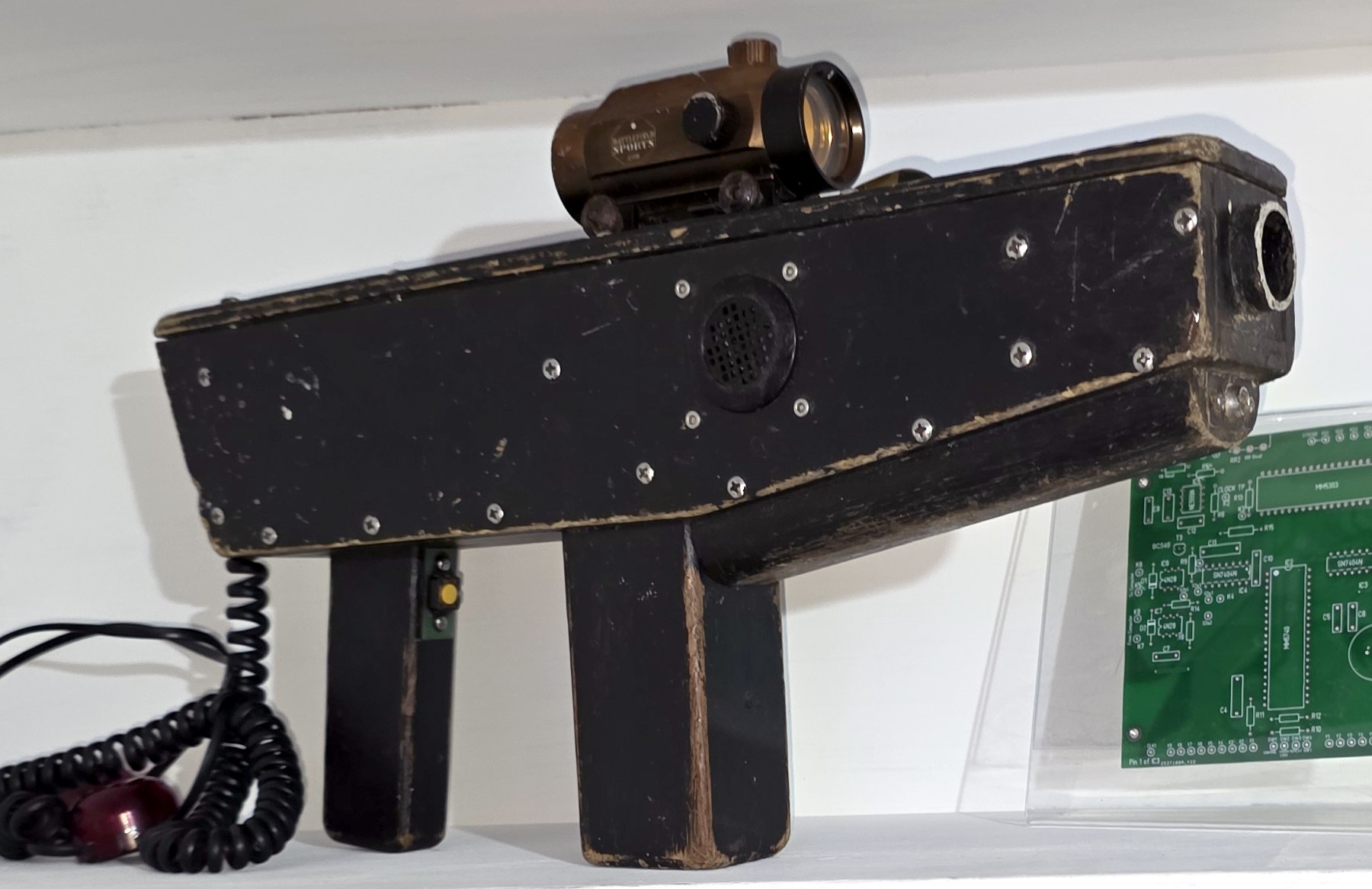
A black handheld enclosure has a grip, cable and tube-like optical fitting. Its purpose and maker are unconfirmed; it is retained for identification without assuming it is a computer input device or game accessory.

Signed equipment panel — collection photograph

Archive

Signed equipment panel

Awaiting identification

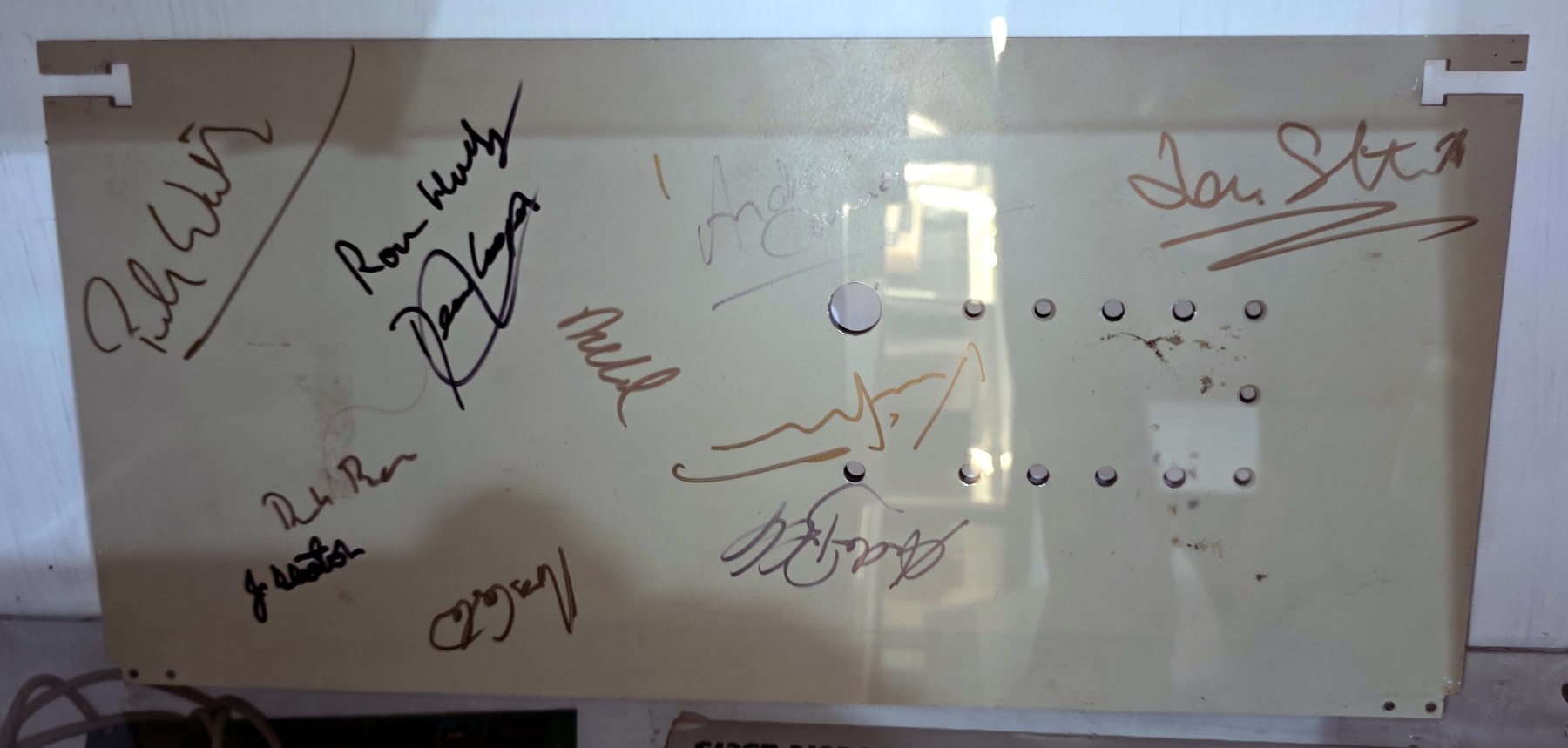
A metal panel bears several handwritten signatures. Neither the signatories nor the machine from which the panel came have been established.

NetComm 64/128 communications modem — collection photograph

Peripherals

NetComm 64/128 communications modem

Packaging identified

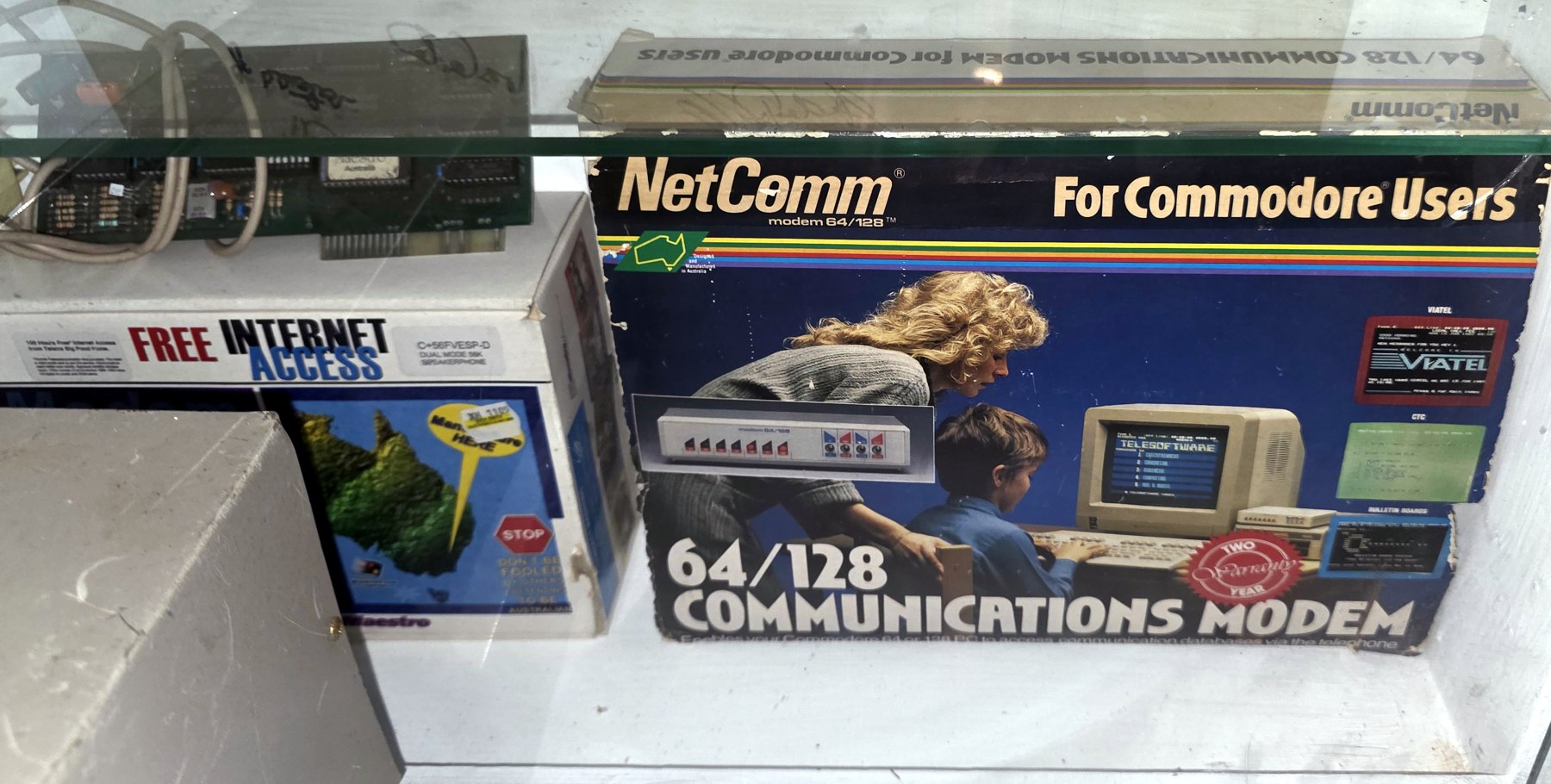
The box identifies a NetComm communications modem for Commodore 64/128 users. The package is catalogued separately from the other NetComm devices; its contents remain unchecked.

Micro Byte HC120 — collection photograph

Computers

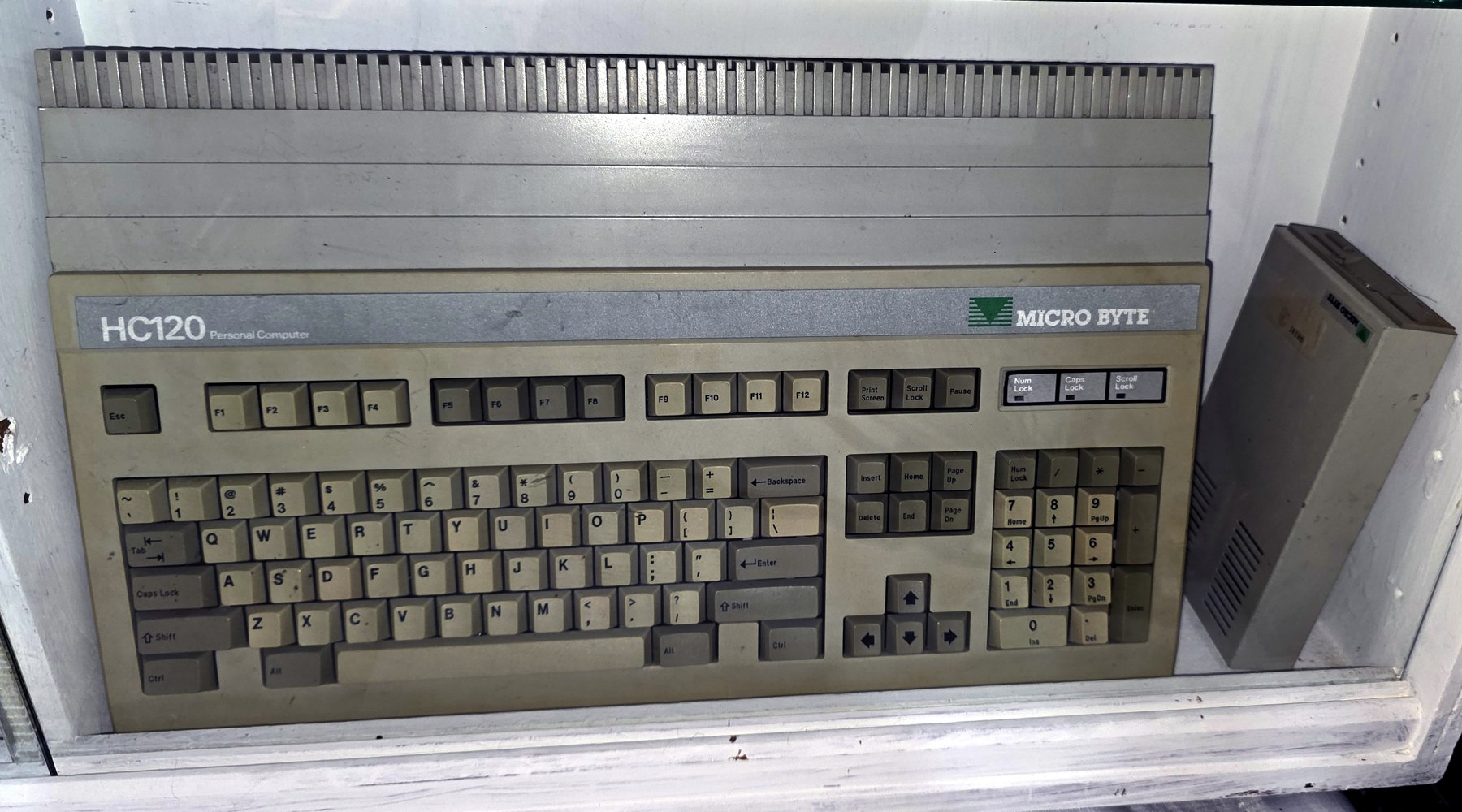
Micro Byte HC120

Label identified

The front panel clearly reads HC120 and Micro Byte. This keyboard computer has a numeric keypad on the right; its memory, storage and internal revision are not visible.

Bench instruments & cassette recorder — collection photograph

Peripherals

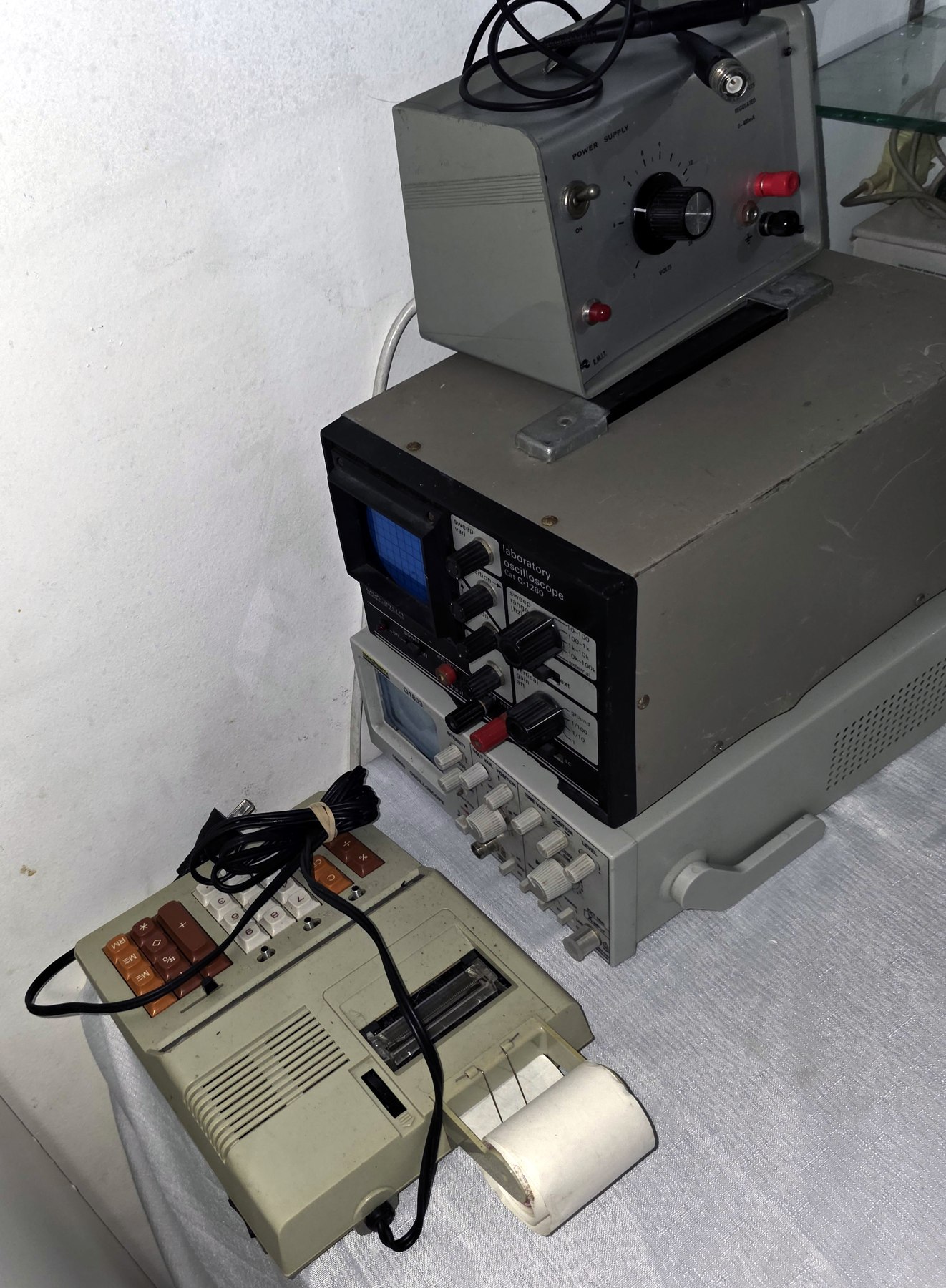
Bench instruments & cassette recorder

Collection view

A group of bench instruments is shown with a portable cassette recorder. Their labels are not all legible, so the photograph is retained as a supporting-equipment survey.

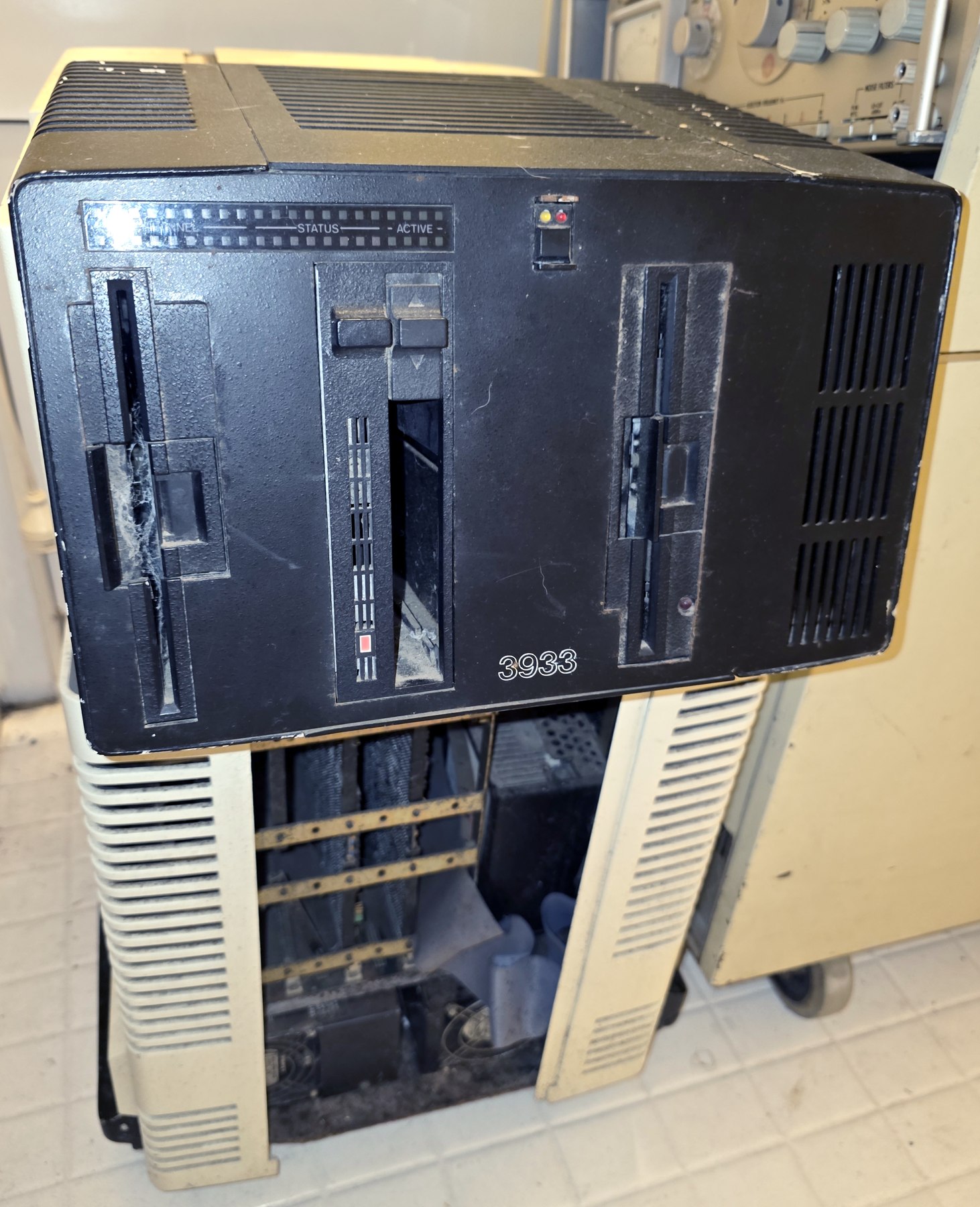
Black computer chassis — unidentified — collection photograph

Computers

Black computer chassis — unidentified

Awaiting identification

A black chassis has drive openings and front-panel indicators. Its small emblem is not clear enough for a reliable maker or model identification.

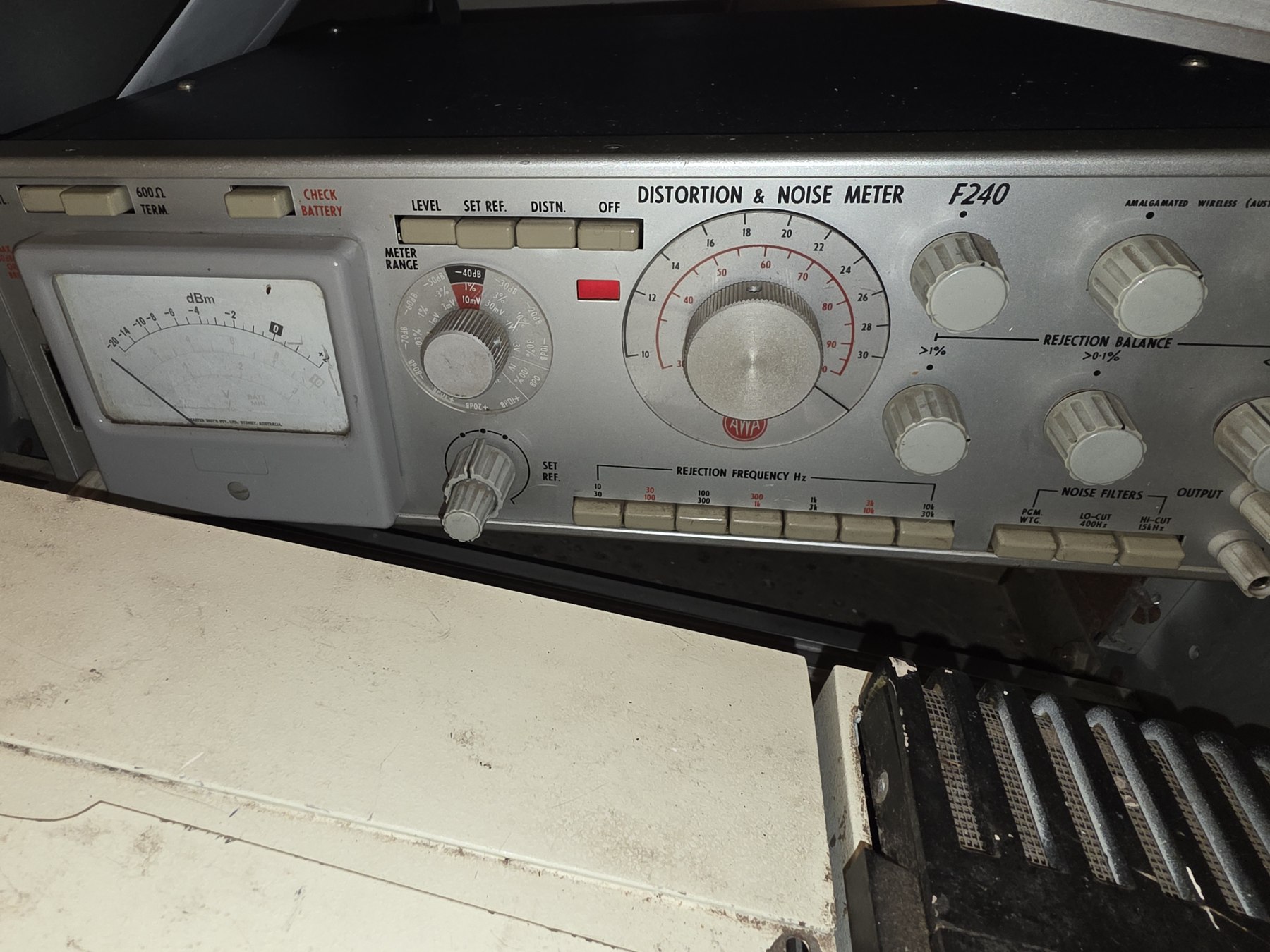
F240 distortion & noise meter — collection photograph

Peripherals

F240 distortion & noise meter

Model marking identified

The instrument’s panel reads Distortion & Noise Meter F240. Its analogue meter and range controls identify it as test equipment; the manufacturer and calibration status are not established.

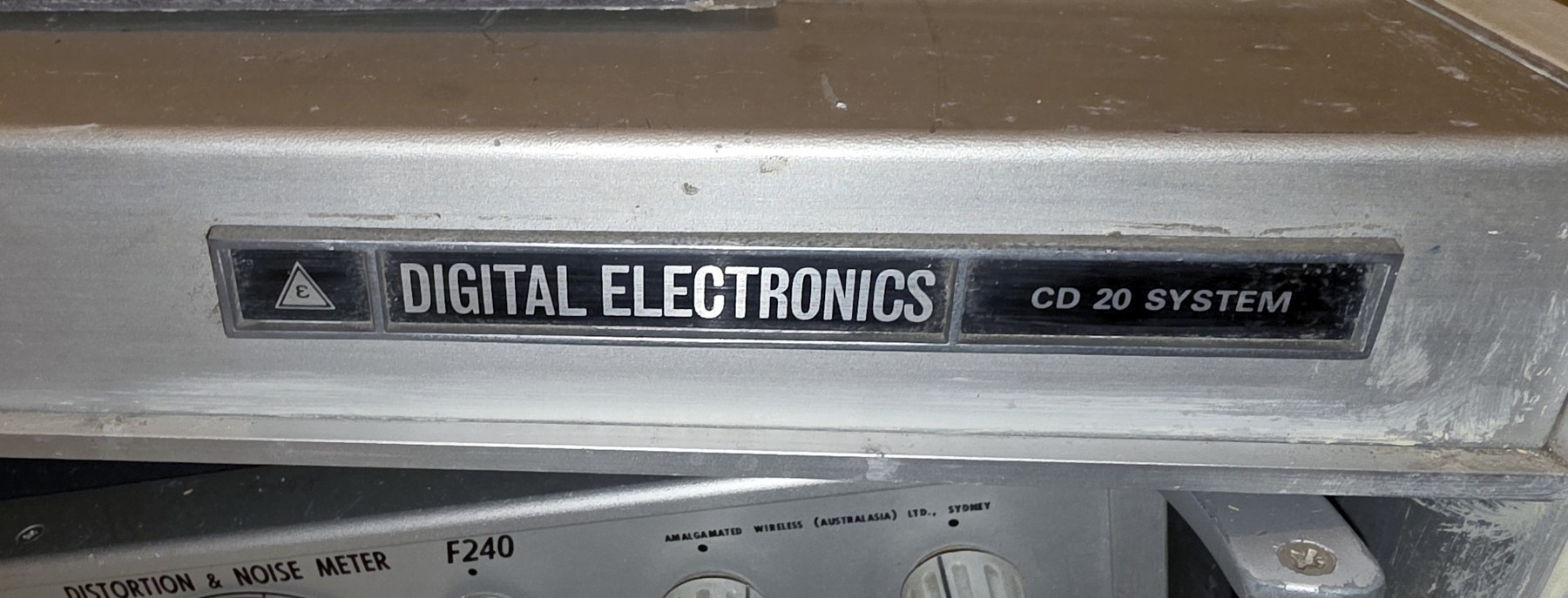
Digital Electronics CD20 System — collection photograph

Peripherals

Digital Electronics CD20 System

Label identified; function unconfirmed

The close-up badge reads Digital Electronics CD20 System. This limited view establishes the label but not the equipment’s complete function or configuration.

Two photo sets, one collection. Identifications will be refined as more labels and documentation become available.